
Every few weeks someone senior — an investor, a journalist, once a rather stern hotelier — looks at what we are building and asks the same polite question: so this is a dating app? I have learned to enjoy the moment, because the question is a fossil. It preserves, perfectly, the last era’s assumption that strangers meet through software for exactly one reason, and that the software’s job ends at the introduction. The honest answer takes longer than politeness allows, so I am writing it down. What we work on is called social discovery, and I believe it is not a feature of the next decade’s social life but the shape of it. This essay is my attempt to say what the category is, why it exists now and not earlier, and where I think it goes — including where we are taking it next.
A definition first, since the term is young enough to be misused. Social discovery is the practice of meeting people you do not yet know — for friendship, for love, for work, for the pleasure of an interesting evening — through systems designed to end in a real-world meeting rather than a conversation thread. The category’s unit of value is not the match, the follower or the message. It is the completed meeting between two verified humans. Everything else is plumbing.
How We Got Here
It helps to see the last thirty years as three regimes, each organised around a different scarce thing.
The first regime was the social network, and its scarcity was reach. The technology’s gift was letting you broadcast to people you already knew — school friends, colleagues, the diaspora of everyone you had ever met. It was miraculous and it was backwards-looking: it made old ties cheap to maintain and did almost nothing to create new ones. Robert Putnam had documented, in his research on America’s collapsing social capital, how the joining institutions — the clubs, leagues and congregations that once manufactured new acquaintance as a by-product — were emptying out. The social network arrived just in time to console us for their loss without replacing them.
The second regime was the matching app, and its scarcity was candidates. Dating apps solved discovery in the narrowest sense: an inventory of strangers, filtered and ranked. What they never solved — what their economics quietly discouraged solving — was conversion. The industry measured itself in matches and sessions, and the distance between a match and a table in a restaurant remained the user’s problem. I have written before about why we built SPARK around precisely this gap: matching turned out to be the trivial half of the problem, and the half everyone competed on anyway.
The third regime is the one beginning now, and its scarcity is neither reach nor candidates. Both are now infinite, which is exactly the difficulty. The scarce resources of this decade are trust — is this profile a real, safe, accountable person? — and conversion — will anything actually happen in the world? Social discovery is the category that treats those two scarcities as the entire product. Not a bigger inventory of faces; a reliable path from stranger to shared table.
Four Things I Believe About the Next Decade
Prediction is a founder’s occupational hazard, so let me at least be specific enough to be wrong.
First, verification becomes the price of entry, not a premium feature. Synthetic profiles are now cheap to produce at any quality, which means unverified platforms are drifting towards a permanent fog of doubt. The response is already visible: communities that check identity at the door, keep checking it, and stake their brand on the promise that every member is a real and accountable person. In five years I expect "unverified social platform" to sound the way "unmoderated marketplace" sounds today — a description of a problem.
Second, the metric regime flips. For twenty years social software has been optimised for time spent inside it, and the results are written across every survey of how people feel. The platforms of this category will be judged — by members, and eventually by the people who fund them — on the opposite number: meetings completed, second meetings booked, hours spent with other humans and without a screen. I have made a version of this argument to our investors from the first deck onwards: a social discovery company should want its members’ attention the way a good travel agent wants your holiday — briefly, competently, and then not at all while you are actually living it.
Third, the city becomes the interface. The sociologist Ray Oldenburg gave us the term "third place" for the settings that are neither home nor work — the café, the club, the corner bar — where much of a community’s actual bonding happens. The last decades thinned those places out; the next ones, I think, will see them deliberately rebuilt, with software as the booking layer rather than the destination. The future of social discovery looks less like a feed and more like a curated map of rooms: venues that know how to host strangers well, experiences designed so that conversation is a by-product rather than a performance, formats that repeat until familiarity does its quiet work. The propinquity effect — we bond with those we repeatedly, physically encounter — is the oldest algorithm there is. The category’s job is to run it on purpose.
Fourth, curation beats scale, permanently. The broadcast era proved that a network’s value can fall as it grows: context collapses, trust dilutes, the room becomes a crowd. Social discovery inverts the growth logic. The right size for any gathering is the size at which strangers can actually meet — a dinner, a table of eight, a walking group — and the right size for a community is whatever preserves its standards of admission and behaviour. This is why the members’ club, an eighteenth-century technology, is having a twenty-first-century revival. It was never about snobbery, at its best. It was about a guarantee: everyone in this room has been vouched for, so you may lower your guard and be interesting.

What This Is Not
Categories get defined by their refusals, so let me record ours.
Social discovery is not the metaverse. The premise of virtual social worlds is that presence can be simulated well enough to substitute for the real thing; the premise of this category is that it cannot, and that the attempt misreads why presence matters. The point of an evening among strangers is precisely its cost and its risk — you came across town, you cannot edit yourself in real time, you might be bored or might be changed. Strip those out and you have content, not connection.
Nor is it AI companionship. Software that talks to you is becoming superb, and I understand its appeal in a lonely hour. But a category whose product is the meeting has an unambiguous relationship with machine conversation: useful in the plumbing — curation, safety screening, logistics, the concierge work of getting eight humans to the same room on the same night — and banished from the substance. No feature we ship will ever chat on a member’s behalf. A category that allowed that would be industrialising the exact fraud it exists to eliminate.
And it is not a louder events business. Anyone can fill a warehouse with two hundred people and a DJ; cities are full of such rooms, and they are full of people leaving them unaccompanied. I have written about why most networking events fail: headcount divides depth, and unstructured mingling rewards the confident three per cent. The craft of this category is smaller and harder — the curated table, the recurring format, the follow-up that turns one evening into a second one. The future belongs to whoever does that reliably at city scale, not to whoever throws the biggest party.
What It Looks Like From Inside
Abstractions are cheap, so here is the concrete version, as our members live it today.
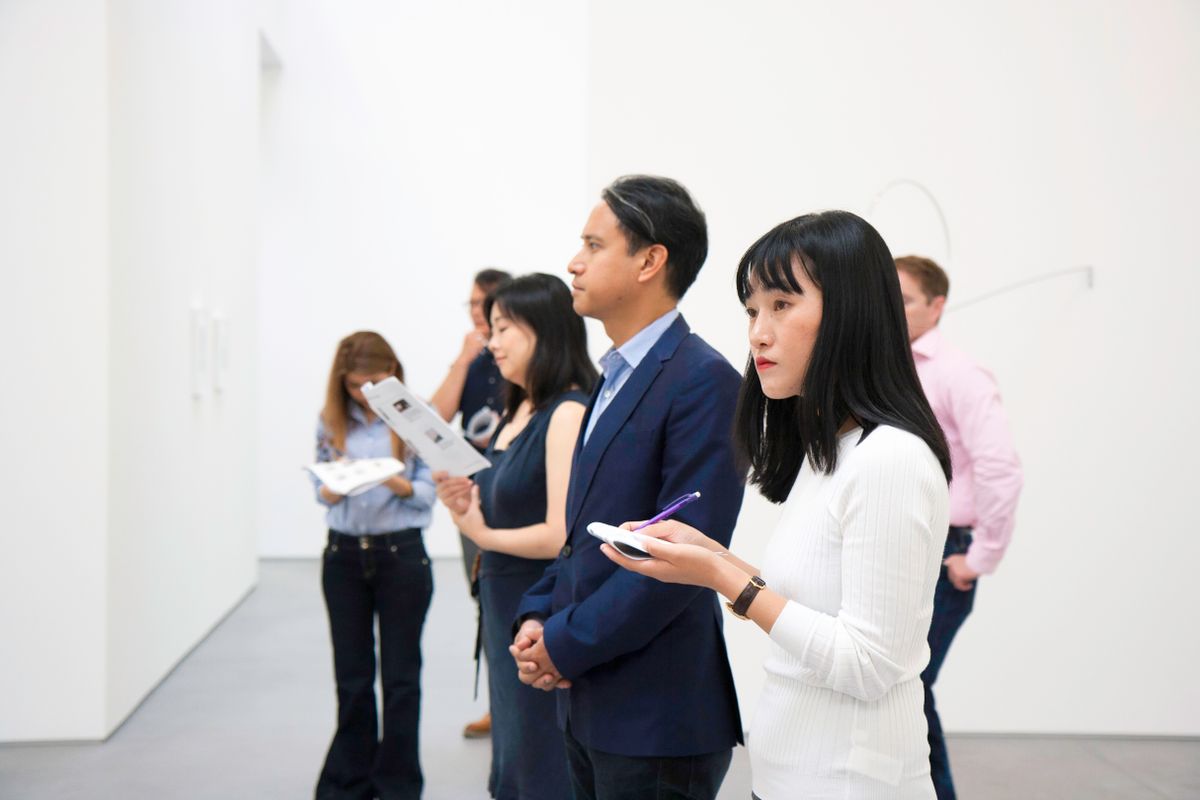
You apply, and a human process — assisted by software, decided by people — verifies who you are. You tell us how you like to spend evenings, and instead of an infinite feed you receive a small number of concrete invitations: a chef’s table on Thursday, a gallery walk on Sunday morning, a table of six people none of whom you have met and all of whom have been vouched for. You go. Phones stay in pockets, because nothing about the evening requires them. If the table was good — and the craft is in making it good — the second meeting arranges itself with one tap, inside the forty-eight hours while warmth is still warm. Over months, this compounds into the thing no feed has ever produced: a circle, in a city, made of people you actually see.
More than 10,000 people have now registered as members across our first cities, and the pattern in the data repeats what the theory predicts: the members who thrive are not the ones who use the app most. They are the ones who let it spend their evenings well and then forget it exists until the next invitation.
Where We Are Taking It
I can speak for only one company inside the category, but our roadmap is a fair sample of where the category itself is heading, because everyone serious is converging on the same conclusions from different directions.
Geographically, social discovery works city by city, never "globally". A community is a local artefact: the venues, the formats, the standards of an evening are all particular to a place. We began in Bangkok and Singapore, and on the first of September SPARK launches in New Zealand, with Auckland first. New Zealand interests me for reasons I set out at length in an essay on building a social circle there: it is a country of arrivers, where the demand for structured ways to meet people is unusually honest and unusually high. The playbook that carried us through Southeast Asia — verify, curate, book the room, measure the meeting — travels; the rooms themselves must be rebuilt from scratch in every city, and that is as it should be.
Structurally, the category’s centre of gravity moves from the screen to the room. Expect deeper partnerships between platforms like ours and the venues that host their tables; expect formats — the recurring dinner, the founders’ walk, the Sunday market crawl — to become as much a product as any feature. Expect, too, a quiet professionalisation of hosting itself, because a stranger’s first evening lives or dies on whether someone in the room knows how to fold them into it.
And culturally — this is the prediction I hold with most conviction — the language will change. "I met them on an app" already carries a faint apology. Within a few years I think the ordinary sentence will be "we met at a dinner", with the software that arranged it as unremarkable as the calendar that scheduled it. The measure of the category’s success is that it disappears from the story people tell about how they met. You can read more about how we think about that ambition on our story page; the short version is that we will consider SPARK finished when nobody feels the need to mention it.
Looking to meet interesting people in real life? Download SPARK or join our verified community.
FAQs
Is social discovery just a rebrand of dating apps? No — the economics are opposite. A dating app’s inventory is candidates and its metric is engagement; a social discovery platform’s inventory is trusted rooms and its metric is completed real-world meetings, whatever their purpose: friendship, romance, professional kinship or simply a well-spent evening. The test is where the product’s responsibility ends. If it ends at the match, it is a dating app wearing new vocabulary. If it ends at the table — venue booked, people verified, second meeting made easy — it is social discovery.
Why does verification matter so much for the future of meeting people? Because synthetic profiles have become cheap and convincing, and every unverified space is now discounted by the doubt they create. Verification restores the precondition of everything else: when each person in the room is known to be real, vouched for and accountable, people relax, invest and return. It is also the foundation of physical safety, which any platform whose product is real-world meetings must treat as a first-order obligation rather than a settings page.
Which cities is SPARK in, and where is it going next? We operate today in Bangkok and Singapore, and New Zealand is next: our operations there opened in August 2026, and the app launches on the first of September, beginning with Auckland. We expand city by city rather than country by country, because a community of this kind has to be built from real venues, real formats and real local standards — none of which can be shipped from headquarters.
Founder’s Note
Naming a category is a strange kind of confession: you only bother because the existing words failed you. When we started SPARK, every label on the shelf — dating app, events platform, social network — described some machine whose output we did not want. What we wanted was the thing I remembered from the best chapters of my own life, which were always, without exception, downstream of a room someone else had thought carefully about. A category is just a promise repeated until an industry forms around keeping it. The promise of social discovery, as I understand it, is modest and enormous at once: that a stranger in a new city, willing to show up, should reliably be able to turn evenings into people, and people into a life. Bangkok taught us the promise could be kept. Singapore taught us it could travel. Auckland, in a few weeks, gets to hold us to it again.
— Sunny Khurana, Founder & CEO, SPARK
Keep Reading
More from the Journal



Looking to meet interesting people in real life?
SPARK is a members’ community for dating, friendship and professional connection — built around curated real-world experiences in Bangkok, Singapore and, from September, New Zealand.
Or read us first — new essays on real-world connection, monthly.