
The first thing anyone tells you about professional life in New Zealand is that it runs on two degrees of separation. Not six. Two. Mention a name at a Britomart coffee counter and the person opposite you will have rowed with them, hired them, or gone to school with their sister. Auckland is a city of 1.7 million people that behaves, professionally, like a town of forty thousand.
That single fact should change how you think about networking events in Auckland entirely. In London or Singapore, a networking event is a numbers game: work the room, collect the contacts, accept that most of them evaporate. In Auckland the room is small, the memories are long, and the same faces will keep appearing across different rooms for the next twenty years. Every conversation compounds. So does every corner you cut.
I have spent the past few years building SPARK in Bangkok and Singapore, watching thousands of professionals try to convert crowded rooms into real relationships. Now that our New Zealand app has just launched — 1 September 2026, Auckland first — I have been spending serious time in this city’s professional scene, and I want to share what I have found. This is not a listing of specific dates and ticket prices; those go stale before the ink dries. It is a map of the institutions, formats and scenes that reliably produce good rooms in Auckland, and a founder’s honest view on how to use them.
Why Networking in Auckland Rewards the Patient
Before the map, the terrain. Auckland’s professional culture has two traits that shape everything else.
The first is modesty. New Zealand’s famous discomfort with self-promotion — the instinct locals call tall poppy syndrome — is real, and it operates at full strength in professional rooms. The person delivering an elevator pitch at full volume is not impressing anyone; the person asking good questions about someone else’s work is. If your networking style was formed in a louder market, Auckland will require a recalibration. The good news is that the recalibrated version is simply better networking. I have written elsewhere about why most networking events fail, and the shortest summary is that they optimise for the exchange of introductions rather than the beginning of relationships. Auckland’s culture punishes the first and quietly rewards the second.
The second trait is repetition. Because the professional community is compact, the value of any single event is modest, but the value of a circuit — the same institutions, attended consistently — is enormous. The sociologist Mark Granovetter showed half a century ago that opportunities travel disproportionately through weak ties: the acquaintances at the edge of your network, not the close colleagues at its centre. Auckland is a machine for building weak ties, provided you keep showing up long enough to become a familiar face. One appearance makes you a visitor. Eight appearances make you part of the scene.
Hold those two ideas — modesty and repetition — and every recommendation below will make more sense.
The Institutions: Chambers, Business Associations and Bilateral Councils
Every serious business city has a layer of long-established institutions whose events are unfashionable, unglamorous and quietly indispensable. In Auckland, start with the Auckland Business Chamber, one of the country’s oldest business organisations. Chamber events skew practical — briefings, business-after-hours evenings, sessions with policymakers and economists — and the crowd skews senior and local. This is precisely their value. The founders’ meetup will introduce you to people at your own stage; the chamber will introduce you to the people who own the buildings, run the firms and sit on the boards.
Alongside the chamber sit the bilateral business councils and chambers of commerce that connect New Zealand to its trading partners — American, British, German, French, Indian, Chinese and more. If you have any international dimension to your work, or you are a newcomer from one of those countries, these organisations do double duty: professional network and soft landing at once. They are especially useful for recent arrivals, because the rooms are full of people who remember being new themselves. If that is you, our companion piece on making friends after moving to New Zealand covers the personal side of the same journey, and I would genuinely read the two together — in a city this size, your professional and personal circles will overlap within a year whether you plan it or not.
Professional bodies deserve a mention in the same breath. Whatever your field — law, engineering, accounting, marketing, human resources, design — its national institute almost certainly runs an Auckland branch with a calendar of talks and socials. These events rarely photograph well. They are also where your industry’s actual decision-makers spend their evenings.
The Startup and Tech Circuit: Wynyard Quarter and Beyond
If the chambers are Auckland’s old money, the innovation precinct on the waterfront is its new energy. Wynyard Quarter, and the GridAKL innovation hub within it, anchor the city’s startup and technology community: a dense cluster of founders, developers, investors and the people who orbit them. The precinct’s public calendar of talks, demo evenings and community meetups is the closest thing Auckland has to a permanent networking venue, and the tone is refreshingly informal — jeans, flat whites, and conversations that begin with what you are building rather than where you golf.
Around that anchor runs a wider circuit. The Icehouse, one of New Zealand’s longest-established business growth hubs, has been developing owner-managers and founders for more than two decades, and its alumni network reaches into every corner of the economy. Global formats have strong local chapters too: Startup Grind’s fireside interviews with founders, and the annual national Techweek programme, which for one week each year turns the entire country into a networking event and Auckland into its largest stage. For anyone building a company, these rooms matter beyond the immediate contacts — I have made the longer argument in why founders need real-world networks, but the short version is that a founder’s network is not a marketing channel, it is a survival mechanism.
A practical note on the tech circuit: it is welcoming to non-technical people and chronically short of them. If you are a lawyer, accountant, marketer or designer who serves growing companies, you will be among the most interesting people in the room precisely because you are not another founder.
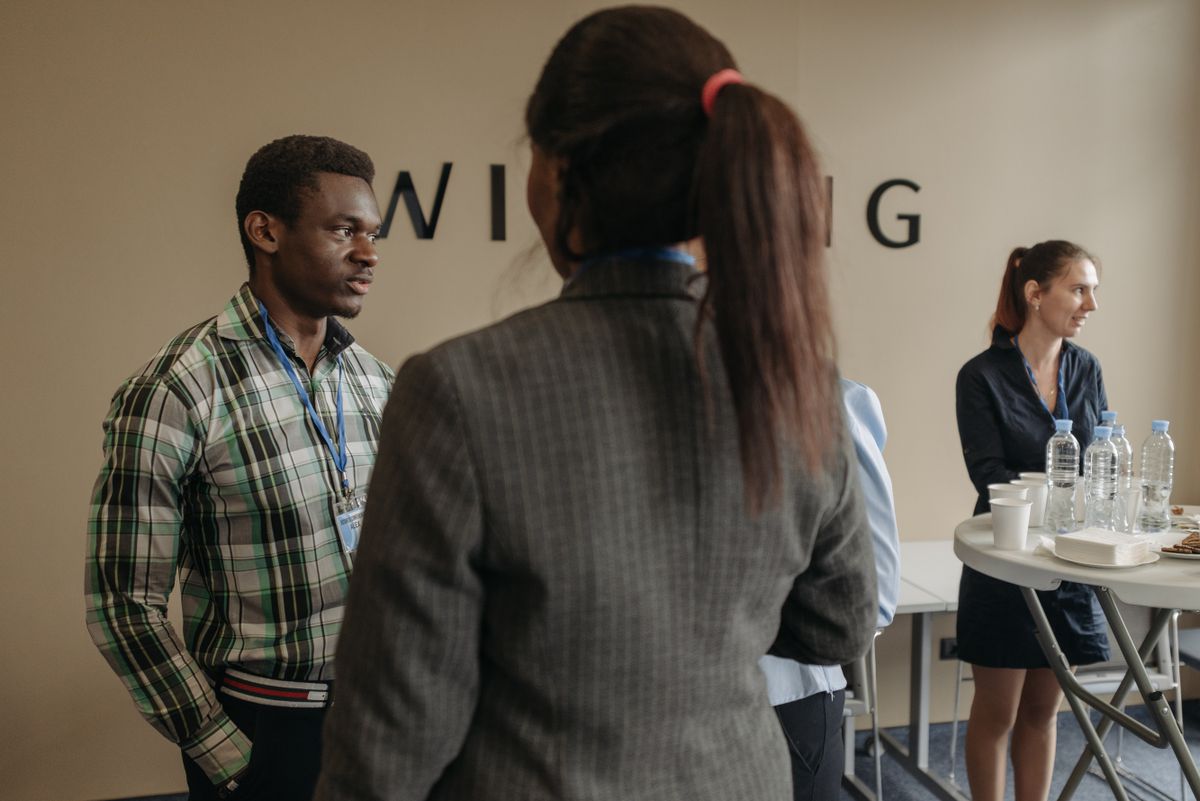
The Creative and Ideas Formats
Not all professional connection happens in explicitly professional rooms — and some of Auckland’s best networking wears no name tag at all.
Creative Mornings, the global breakfast lecture series, runs on a simple format: a free early-morning talk, coffee, and a room full of designers, writers, marketers and the creatively curious. Because the pretext is an idea rather than an industry, the conversations start warmer and range wider. PechaKucha nights work similarly, with rapid-fire presentations that give strangers an instant shared reference point. Auckland’s major cultural institutions — the Auckland Art Gallery Toi o Tāmaki, the Auckland Writers Festival each May, the public programmes at the universities — perform the same function at a grander scale: rooms full of intelligent people, gathered around something worth discussing, with the discussion spilling naturally into the foyer afterwards.
I rate these formats highly for one under-appreciated reason: they solve the opening-line problem. The hardest moment at any networking event is the cold approach. At a talk, the approach is never cold — you have both just heard the same twenty minutes, and “what did you make of that?” is always available. Psychologists would say the event has manufactured common ground; I would say it has done the small kindness of giving strangers something to point at together.
Alumni Networks and the Breakfast Economy
Two further scenes round out the map.
The first is alumni networks. The University of Auckland and AUT both run active alumni programmes, and the international universities — through their New Zealand alumni chapters — do the same. Alumni events are underrated for the same reason chambers are: the shared institution does the trust-building for you. A stranger from your university is not quite a stranger. If you studied overseas, your alumni chapter is very likely the fastest route into Auckland’s professional community, because it is full of people who have already made the exact transition you are making.
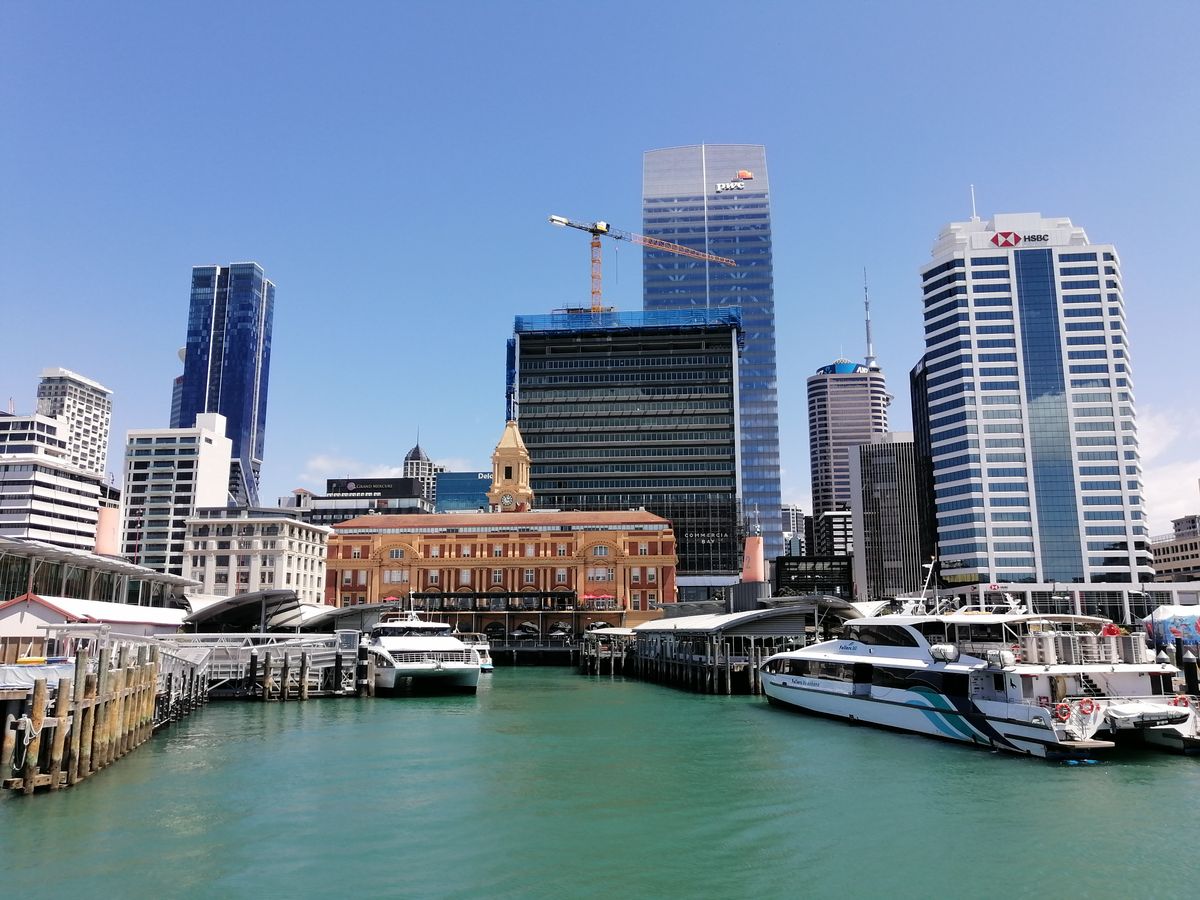
The second is what I have come to think of as Auckland’s breakfast economy. This is an early city. The default professional meeting is not drinks at six but coffee at seven-thirty, and a striking amount of the city’s real networking happens over flat whites in Britomart, Commercial Bay and the Viaduct before most offices open. Breakfast briefings, morning speaker series, run clubs that finish at a café — the pattern repeats everywhere. Newcomers who wait for evening cocktail invitations miss where the action actually is. Say yes to the 7am things. Better still, host them: a standing monthly breakfast for eight people in your industry costs you nothing but consistency, and within a year it will be an institution.
The Auckland Way: Networking Through Doing
Here is the most local insight I can offer, and the one that took me longest to see clearly: Auckland’s best networking events are frequently not networking events at all.
This is a city whose social infrastructure is built on shared activity — sailing crews, running groups, tramping clubs, surf clubs, five-a-side leagues — and its professional life follows the same grammar. The lawyer and the founder who crew the same Wednesday-evening race at a harbour yacht club do more relationship-building in one season than a year of canapé evenings could produce. The senior people you cannot reach through LinkedIn are entirely reachable at a Saturday parkrun in Cornwall Park. I wrote about this dynamic in a personal context in how to meet people in Auckland, and everything there applies doubly to professional life: side-by-side beats face-to-face, cooperation beats presentation, and repetition beats intensity.
Robert Putnam, the great scholar of social capital, drew a distinction between bonding capital — the deepening of ties within a group — and bridging capital, the connections across groups that make communities and economies dynamic. Auckland’s activity scenes are bridging machines. A sailing crew contains an engineer, a teacher, an investor and a plumber, and it makes colleagues of all four. If your networking strategy consists entirely of rooms filled with people from your own industry, you are building a narrow network in the one city where a broad one is easiest to build.
So alongside the chambers and the meetups, choose one activity with a weekly rhythm and treat it as part of your professional life, because it is. In Auckland, it always has been.
How to Actually Work This City
A map is not a strategy, so let me be prescriptive. If I were arriving in Auckland today with professional ambitions, here is exactly what I would do.
Choose a circuit of three, not a calendar of thirty. One institution (a chamber, council or professional body), one scene (Wynyard Quarter’s tech community, the creative breakfast formats — whichever fits your work), and one activity with a weekly rhythm. Attend all three consistently for six months before judging the results. In a compact city, being reliably present in three rooms beats being briefly visible in thirty.
Play the long game conversationally. Ask more than you announce. Follow up within forty-eight hours, and make the follow-up specific — an article, an introduction, an invitation — rather than the limp “great to meet you.” And when you do follow up, suggest a walk or a coffee rather than a meeting room; this city does its best talking in motion, along the waterfront, ideally before 9am.
Finally, keep a private ledger of generosity. In a two-degree city, the fastest way to build a reputation is to become known as someone who connects other people without keeping score. Every introduction you make travels, with your name attached, through a network small enough to notice. Give it six months and the room starts working for you: people you have never met arrive already warm, because someone vouched for you in a conversation you were never in.
None of this is complicated. Almost nobody does it, which is rather the point.
Where SPARK Fits In
Everything above works, and none of it requires an app. But there is an honest gap in the system, and it is the gap SPARK was built to close.
The institutions and formats in this piece put you in good rooms. What they cannot do is tell you who, among the eighty people in the room, you should actually meet — or bring together eight people who would genuinely benefit from knowing one another, rather than eighty who happened to register. That curation is the difference between an event and an introduction, and it is what we do. SPARK is not a dating app; we are building social discovery — a verified community where friendship, dating, professional connection and mentorship all run on the same principle: real people, matched around shared interests and intent, meeting at curated real-world experiences. A founders’ breakfast. A sail on the harbour. A supper club of eight strangers chosen because the conversation will be good. Across Bangkok and Singapore, more than 1,397 of our members have already met in person through 892 completed real-world meetings, and we measure ourselves on nothing else.
Auckland is where our New Zealand chapter begins — the app launched here on 1 September 2026 — and it is hard to imagine a city better suited to what we are building: professionally compact, socially generous, and organised around doing things together. Every member is verified, and membership is curated, because in a two-degree city the quality of the room is everything. If you are an Auckland professional and any of this resonates, the founding community is forming right now, and the early rooms are the best ones.
Looking to meet interesting people in real life? Download SPARK or join our verified community.
FAQs
What are the best networking events in Auckland for newcomers? Start with the institutions that expect newcomers: the Auckland Business Chamber’s business-after-hours evenings, the bilateral chambers and business councils connected to your home country, and your university’s alumni chapter. Add one open format such as Creative Mornings or a Wynyard Quarter community meetup. Attend each several times — in Auckland, familiarity is the currency.
Is Auckland’s networking scene good for people not in tech? Yes, and in some ways better. The chambers, professional institutes, alumni networks and breakfast briefings span every industry, and the tech circuit itself actively welcomes lawyers, marketers, accountants and designers who serve growing companies. Auckland’s activity-based scenes — sailing, running, tramping — mix industries more thoroughly than any conference ever will.
How is networking in Auckland different from other cities? The professional community operates on roughly two degrees of separation, so reputations travel fast and relationships compound over decades. The culture rewards modesty, curiosity and follow-through over polished self-promotion, and much of the real connecting happens at breakfast or through shared activities rather than evening drinks. Consistency at a few venues beats appearances at many.
Founder’s Note
I have stood in networking rooms on three continents, and Auckland’s taught me something the bigger cities never quite did: when the room is small, kindness is strategy. There is no anonymous crowd here to disappear into, no endless supply of fresh contacts to burn through. There are just people you will keep meeting, at the chamber and the yacht club and the school gate, for the rest of your working life. That constraint produces, at its best, a professional culture of remarkable decency — and it is exactly the soil we hoped to plant SPARK in. Come to one good room. Ask one good question. The city is small enough that it will remember.
— Sunny Khurana, Founder & CEO, SPARK
Keep Reading
More from the Journal



Looking to meet interesting people in real life?
SPARK is a members’ community for dating, friendship and professional connection — built around curated real-world experiences in Bangkok, Singapore and, from September, New Zealand.
Or read us first — new essays on real-world connection, monthly.