
There is a particular silence that settles over a couple at a restaurant table, and if you eat out often in Bangkok you will have seen it. Two people who clearly know each other well, ordering without consulting the menu, waiting for the food with the mild patience of the long-married, and saying almost nothing. Not hostile. Not unhappy, exactly. Simply out of material.
I used to read that scene as a sad one. I have come to think it is mostly a logistical failure. The couple has not run out of love. They have run out of inputs: new things happening to them, together, that give them something to have a reaction to. And a relationship that receives no new inputs will eventually run on its archive, which is a finite resource, and which is why the same four anecdotes come out at every dinner party.
This essay is about fixing the input problem, and about why Bangkok is one of the best cities on earth in which to fix it. Not because it has more restaurants than you can visit in a lifetime, though it does. Because it offers something rarer: the ability to have a genuinely unfamiliar experience on an ordinary Tuesday, without booking a flight, taking leave or spending a fortune.
What Actually Goes Stale
Start with the mechanism, because it determines everything about what a good couple’s experience looks like.
Arthur Aron’s self-expansion model, developed across decades of research on close relationships, holds that a large part of what draws us to another person is the sense that being with them expands us, that our world gets bigger in their company. Early in a relationship this happens automatically. Everything about the other person is new information; every conversation is discovery; you are, in the most literal sense, expanding, and the feeling of that expansion is what we usually label as being in love.
The difficulty is that the process is self-limiting. After a few years you know most of what there is to know. Not everything (people are deep), but enough that daily life stops delivering revelations. Aron and his colleagues found something useful here: couples who took part in novel, engaging, mildly challenging activities together reported greater relationship quality afterwards than couples who did something merely pleasant. Merely pleasant is the key phrase. A comfortable dinner is nice. It is not expansion.
That distinction is the single most practical piece of relationship science I know, and it cuts against most received wisdom about romance. The standard advice for couples in a rut is to be more romantic: a nicer restaurant, a better bottle, a weekend somewhere expensive. But luxury is a pleasantness upgrade, not a novelty one. You can spend an extraordinary amount of money to have exactly the evening you always have, in a more beautiful room.
What works is different, and slightly counter-intuitive. It involves being a little bit incompetent together. Learning something neither of you can do. Ending up somewhere neither of you has been. Being mildly out of your depth in each other’s company, which is the condition under which you get to see each other freshly, because a person doing something new is not performing a role you have already catalogued.
There is a second mechanism worth naming, from Jeffrey Hall’s research on how relationships are built and sustained: the quantity that matters is hours of shared leisure time, not time in proximity. Couples who live together accumulate enormous amounts of co-location (the same sofa, the same commute, the same evenings) and startlingly little of what Hall’s work counts. Two people can be in the same flat for four thousand hours a year and share very few of them.
The good news is that this makes the problem tractable. You do not need to feel differently. You need to do differently, and reliably, and the feelings tend to follow.
Why Bangkok Is an Unfair Advantage
Every city offers novelty in principle. Bangkok offers it at a price and a distance that make it a weekly habit rather than an annual event, and that changes what is possible for a couple living here.
Consider the sheer compression of contrast. Within an hour of most central neighbourhoods you can be on the Chao Phraya, moving at the speed of the river past Wat Arun with the city rearranged around you; or in the green quiet of Bang Krachao across the water, where the noise simply stops; or in the old shophouse lanes of Talat Noi; or standing in front of something genuinely strange at the Bangkok Art and Culture Centre. Few cities of this size let you change worlds so quickly. The variety is not a bonus. It is the raw material of self-expansion, available on a weeknight.
Then there is the cost structure, which matters more than people admit. In most great cities, novelty is expensive, so couples ration it, saving the new experience for the anniversary, the birthday, the visiting parents. Bangkok breaks that constraint. A cooking class, a market expedition, a boat, a temple morning, an unfamiliar neighbourhood and a meal in it: these are the kinds of plans you can make without a budget conversation, which means you can make them often. Frequency is the whole game. One remarkable evening a year does less for a relationship than thirty modestly new ones.
And the city has a rhythm that suits couples if you work with it rather than against it. Bangkok is at its best early and late. The hours around dawn (the parks, the markets, the river before the heat arrives) are among the loveliest and least contested in the city, and they are almost entirely ignored by couples who default to dinner. The evening belongs to the rooftops and the night markets. The middle of the day belongs to air conditioning and, if you are sensible, to museums.
The one thing the city will punish is vagueness. Bangkok’s traffic converts undecided plans into cancelled ones, so the couples who do this well are the ones who decide in advance and pick one part of town per outing. That is not a constraint on romance. It is what makes it survive contact with a Wednesday.
Six Kinds of Experience That Work
What follows is not a list of venues. It is a list of formats: categories of experience that reliably produce the effect described above, with Bangkok examples of where they live. Steal the structure and fill in your own places.
The water day. The Chao Phraya is the city’s oldest organising principle and still its most romantic. A day that starts on the river and ends on the other side of it (Wat Arun, Wat Pho, the ferries, the smaller khlongs of Thonburi where the city still lives at the waterline) has a natural shape, a beginning and an end, and it removes you from the version of Bangkok you commute through. Water does something to conversation that pavement does not.
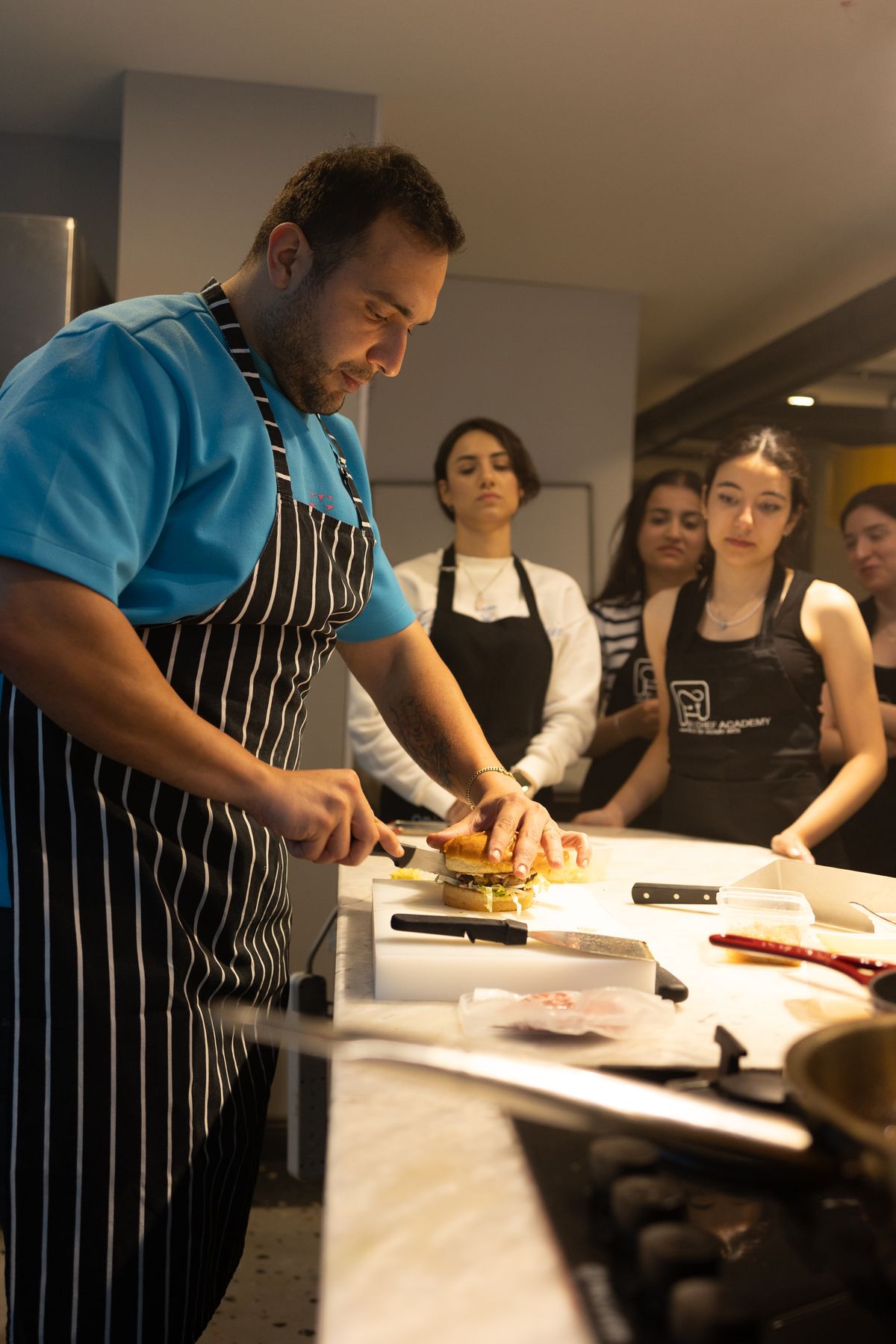
The learning thing. The highest-yield format for couples, and the most underused. A Thai cooking class, a language lesson, a pottery wheel, a dance class, a boxing session: anything where you are both beginners. The magic is not the skill. It is the enforced humility and the shared incompetence, which produces more laughter per hour than any restaurant, and which lets you watch your partner learn something, an experience most couples have not had since university.
The early morning. Bangkok before eight is a different city, and having it together feels faintly conspiratorial. Lumphini Park at dawn, with its runners and its tai chi and its extraordinary birdlife; the long green circuit at Benjakitti; the fresh markets doing their real business hours before the tourists arrive. Then breakfast somewhere neither of you chose. A morning experience also has a structural advantage over dinner: nobody is tired, nobody is checking work messages, and the day still lies open afterwards.
The culture expedition. Not the dutiful museum trudge, but the deliberate encounter with something you will disagree about. The Jim Thompson House, whose story is more peculiar than the guidebooks let on; Museum Siam; the galleries around the Bangkok Art and Culture Centre. Disagreement is the point. A couple that has an argument about a painting on the way home has had a better evening than a couple that agreed politely about the wine.
The food expedition. Distinct from going out to dinner. Yaowarat after dark, or the labyrinth of Chatuchak Weekend Market, eaten as a route rather than a destination: half a dozen small things standing up, no bill at the end, no formality to maintain. It is inherently exploratory, it is impossible to do while looking at your phone, and it converts eating from a passive pleasure into a shared project.
The night with a view. Bangkok’s skyline is one of the great ones, and the rooftops earn their reputation. But treat this as the punctuation rather than the sentence: a place to end a day that already contained something new, rather than the whole of the evening. I have written elsewhere about which of Bangkok’s rooftops are actually sociable and which are simply spectacular, and the same distinction applies to couples: choose the one where you can hear each other.
For couples who want the earlier-stage version of this (the first three dates rather than the third year), I have written a separate guide to date ideas in Bangkok, and the case for why experiences beat swiping explains the underlying physics of both.
The Rules That Make Them Work
Formats are only half of it. The couples I know who genuinely do this well follow a handful of unglamorous rules, and the rules matter more than the choices.
Alternate the planning, strictly. In almost every couple, one person plans and the other attends. This is corrosive in a quiet way: the planner comes to feel like an events manager and the attendee never gets the pleasure of surprising anyone. Take turns properly (one plans this month, the other next) and permit the planner to choose badly. A disastrous outing that you laugh about is worth more than a perfect one that only ever happens because one of you did all the work.
Make it a standing appointment, not an aspiration. “We should do more things” produces nothing. The second Saturday of the month, in the calendar, defended against work, produces twelve new experiences a year. Ritual is what turns intention into accumulation, and accumulation is what Hall’s research is actually measuring.
Choose slightly difficult over slightly expensive. If you are deciding between a lavish dinner and a class you might be bad at, take the class. The mild challenge is the active ingredient. Save the lavish dinner for the evening after.
One neighbourhood per outing. The single most common way a Bangkok plan dies is by requiring two crossings of the city. Pick an area, stack three things in it, walk between them.
Leave the phones in the bag. Not as a piety about screens, but because the entire value of a novel experience lies in reacting to it together, in real time, and a phone reliably intercepts the reaction before it reaches the other person.
And bring other people in, sometimes. Couples who only ever socialise as a closed unit tend to run down their inputs faster. A supper club, a group hike, a dinner with people you do not know well: these give you new material, and they give you the pleasure of seeing your partner be interesting to somebody else, which is an underrated form of falling for them again.

What We See Inside SPARK
I want to be careful here, because SPARK is not a dating app and I am not about to pretend that a platform can supply a relationship with meaning. What we can do is remove the logistics that stop good intentions from becoming actual evenings. I am convinced that logistics, not desire, is where most plans die.
That is why we built SPARK around shared activities and hosted evenings rather than a feed. SPARK is for friendship and shared activities, without the expectation of a date, and it works as well for a couple as for someone coming on their own. Our evenings follow the same logic as the formats above: something to do, a venue already chosen, a time already set. Removing the planning burden is not a trivial convenience. It is the difference between a couple who intends to do something new each month and a couple who actually does.
The thing that tells me this is working is not app opens. It is whether people actually meet in person, and whether they bring the person they care about, or the friends they want in the room. Nobody recommends an interface. People recommend evenings they are still talking about.
If you want the fuller version of that (the community and our hosted evenings), that is what SPARK membership is for. The app itself is free, and membership is optional.
The Archive Problem, Solved
Come back to the silent couple at the restaurant table. Nothing is wrong with them. They have simply spent a year in the same rooms, doing the same things, and the archive has been exhausted. Every couple’s archive gets exhausted; the only question is whether you are refilling it faster than you are spending it.
That is what an experience actually is, underneath the vocabulary of romance. It is a deposit. It gives you something to react to now and something to refer to later: the day the boat engine cut out, the class where you were comprehensively worse than everyone else, the morning you saw the city at six and could not believe it was the same place. These accumulate into the private language that couples who have been together a long time speak to each other, half in shorthand, and which nobody outside the relationship can follow.
You cannot buy that. You can only accrue it, one slightly unfamiliar Saturday at a time, in a city that makes unfamiliarity cheap and close at hand.
So put a date in the calendar for this month. Let your partner choose it. Go somewhere neither of you has been, be bad at something together, and pay attention to each other while it happens. Do that twelve times a year and the silence at the restaurant table becomes the comfortable kind, the sort that exists because there is nothing that needs saying, rather than because there is nothing left to say.
Looking to meet interesting people in real life? Get the SPARK app or come to one of our evenings.
FAQs
What makes a good experience for a couple who have been together for years? Novelty and a mild degree of difficulty, rather than expense. Arthur Aron’s research on self-expansion found that couples who did novel and engaging activities together reported better relationship quality than those who did something merely pleasant, so a cooking class you are both bad at outperforms an excellent dinner you have essentially had before. The best test is simple: will this give us something to talk about that we did not already know?
How often should couples plan something new together? Monthly is a realistic target for most working couples, and it is enough to change the texture of a year. Consistency matters far more than scale: twelve modest outings you actually complete will do more for a relationship than one elaborate trip, because what accumulates is shared hours and shared references rather than spending. Put it in the calendar as a standing appointment and alternate who plans it.
Is Bangkok a good city for couples, or mainly for nightlife? Bangkok’s reputation understates it considerably. The nightlife is real, but the city’s advantage for couples is the density and cheapness of novelty: the river, the parks at dawn, the markets, the museums and the classes are all close, affordable and genuinely varied. That combination makes it possible to treat new shared experiences as a weekly habit rather than a special occasion, which is exactly what long-term relationships need.
Founder’s Note
I started SPARK because of a gap I kept noticing between how easy technology had made it to find people and how hard it remained to actually spend meaningful time with them. That gap does not close when you find someone. It reappears, in a different form, three years in, when two people who love each other perfectly well look at a Saturday and default to the same restaurant because deciding was harder than repeating.
Everything we build is aimed at that moment: making the good plan the easy plan. I would like SPARK to be the reason a couple in Bangkok ends up on a boat, or in a kitchen they have never cooked in, on a Saturday they would otherwise have spent scrolling. The relationships are yours. We are just trying to make sure the evenings actually happen.
Sunny Khurana, Founder & CEO, SPARK
Keep Reading
More from the Journal


Looking to meet interesting people in real life?
SPARK helps you find people to do the things you enjoy. Get the free app, or come along to one of our hosted evenings in Auckland and Bangkok.
Or read us first — new essays on real-world connection, monthly.