A New Chapter in a Very Friendly Country
Here is the strange thing nobody warns you about before you move to New Zealand: it may be the friendliest place you will ever feel lonely.
The barista learns your name in a week. The bus driver waves you off like an old mate. A stranger on a Wellington street will cheerfully talk to you about the wind for four unbroken minutes. And then you go home to a quiet flat, look at a weekend with nothing in it, and wonder what you are doing wrong.
You are not doing anything wrong. You have simply arrived in a country where friendliness and friendship are two different currencies, and nobody handed you the exchange rate.
I think about this a lot, because I have been the newcomer more than once, and because at SPARK we spend our working lives studying how strangers become friends. The research is unambiguous about the stakes. Julianne Holt-Lunstad's meta-analyses found that strong social connection is one of the most powerful predictors of long-term health we know of, in the same conversation as smoking and exercise. Belonging is not a nice-to-have. It is infrastructure for a good life.
So this is the guide I wish someone had given me: honest about how Kiwi friendship actually works, and practical about what to do with that knowledge. It is written for the migrant, the returning expat, the person who arrived for a job or a partner or a fresh start and now needs the thing no visa can grant — people.
Friendly Doesn't Always Mean Close
Cross-cultural researchers sometimes sort countries into "peach" and "coconut" cultures. Peach cultures are soft on the outside: easy small talk, quick first names, instant warmth. Coconut cultures are hard on the outside but, once cracked, let you all the way in. New Zealand is a peach with an unusually deep stone. The outer layer is genuinely lovely — the warmth is not fake — but the distance between friendly acquaintance and actual friend is longer than almost anywhere I know.
Why? Mostly because Kiwi social circles are formed early and kept for life. Many New Zealanders are still close to their school friends, their university flatmates, the people from their first job or their Saturday sports team at fifteen. By the time they are thirty, their calendar is full of people they have known for decades. Robin Dunbar's work on the layers of friendship helps explain what you are up against: each of us maintains a small inner circle, a slightly wider ring of good friends, and an outer band of meaningful contacts, and those layers have limited seats. A settled Kiwi's layers are not closed to you out of coldness. They are simply full, and someone new has to be gradually added rather than instantly slotted in.
This is what I mean when I say Kiwi friendship is back-loaded. In front-loaded cultures — much of North America, for instance — intimacy arrives fast and deepens slowly, if at all. In New Zealand the early stages are slow, sometimes maddeningly so, and then somewhere around month six or twelve something shifts, and you discover the loyalty underneath is bedrock. Kiwis are not quick friends. They are long friends.
One more decoding note, because it trips up almost every newcomer: "we should grab a beer sometime" is not a plan. It is goodwill, sincerely meant and rarely scheduled. Understatement runs deep here. Do not read the vagueness as rejection; read it as an invitation to be the one who names a day.
Become Part of Something That Repeats
If friendship here is built on familiarity rather than introductions, then your strategy writes itself: stop collecting one-off encounters and start showing up somewhere on repeat.
Psychologists call the underlying machinery the mere-exposure effect — we grow to like what we see regularly — and its social cousin, the propinquity effect: we befriend the people we repeatedly, effortlessly encounter. Jeffrey Hall's friendship research at the University of Kansas put rough numbers on the process, finding that casual friendship takes tens of hours of shared time, and close friendship takes a couple of hundred. Nobody accumulates two hundred hours through coffee chats with strangers. You accumulate them by belonging to something with a fixed day and a returning cast.
New Zealand is unusually rich in exactly these structures. Tramping clubs that walk every weekend. Social netball, touch rugby and football leagues that run all season. Parkrun on Saturday mornings. Surf lifesaving clubs, climbing gyms, community choirs, book clubs, pottery studios. And volunteering, which Kiwis do at remarkable rates — conservation planting days, community patrols, festival crews, school fairs. Robert Putnam spent a career showing that this kind of civic joining is how social capital is actually made, and New Zealand still runs on it in a way many countries have lost.
The tactical advice is simple. Pick two recurring things — one physical, one not — and commit for a full season, not three weeks. Arrive early and leave late, because the friendships form in the margins, in the pack-down and the car park chat, not the activity itself. And resist the urge to sample endlessly. Ten visits to one club will do more for you than one visit to ten. I watched the same principle play out among expats in Asia when we were building our community there — the pattern I described in making friends in Bangkok as an expat holds in Auckland just as firmly: consistency beats charisma, every time.

Learn the Rhythm of the Kiwi Year
Here is something the guidebooks never mention: Kiwi social life is fiercely seasonal, and misreading the season is one of the fastest ways to conclude, wrongly, that nobody wants to know you.
Summer, from December to February, is when the country opens up. Barbecues multiply, beach trips materialise, daylight stretches past nine, and invitations flow because everyone is outside anyway and adding one more person to a barbecue costs nothing. But inside summer sits a trap: the Christmas shutdown. For several weeks over December and January, New Zealand more or less closes. Offices empty, cities go quiet, and everyone disappears "to the bach" — the family holiday home — with the same people they have holidayed with for thirty years. If you arrived in November, this stretch can feel like the loneliest of your life. It is not personal. The country is simply running its oldest ritual, and you have not been written into it yet.
Winter, from June to August, is the opposite problem. Socialising retreats indoors and into established circles; spontaneity drops with the temperature. But winter has its own doors: indoor sports leagues, pub quiz teams, ski trips, film festivals, and the long dinners that Kiwis host when the weather gives them an excuse. Winter is when depth happens, if you can get inside.
So plant in winter, harvest in summer. Use the cold months to embed in your recurring communities, and by the time the days lengthen you will be on the barbecue lists. Above all, do not read a silent July as a verdict on your likeability. It is just weather.
Say Yes, Especially When It's Casual
Kiwi invitations are almost aggressively low-key. "Pop round Saturday if you're about." "Few of us doing the Pinnacles walk, keen?" "Barbecue at ours, bring a plate." (That last phrase, for the uninitiated, means bring food to share — not empty crockery, a mistake every migrant makes exactly once and dines out on forever.)
It is easy to undervalue these invitations precisely because they are so casual. Do not. In a culture of understatement, the offhand invitation is the real one. It is a test balloon, floated gently so that nobody loses face if you decline. Decline two or three times and the balloons quietly stop coming — not out of spite, but because Kiwis are allergic to imposing.
So say yes. Say yes to the barbecue where you will know exactly one person. Say yes to the tramp that starts at seven on a Sunday. Say yes when you are tired, because the maths of friendship is brutal and simple: every close friend you will make here is currently an acquaintance, and the only bridge between those two states is accepted invitations. Then do the thing most newcomers forget — reciprocate within a fortnight, with a specific plan attached to a specific date. A yes followed by a counter-invitation is how an encounter becomes a rhythm.

Host: The Newcomer's Quiet Superpower
Now for the single highest-value move available to you, the one that changes everything: stop waiting for invitations and start issuing them.
Kiwi social life happens in homes. This is a genuine difference from the cities where SPARK grew up — in Bangkok and Singapore, social life pours through restaurants, rooftops and public spaces, which is why the playbook in making friends in Singapore leans so heavily on venues. In New Zealand, the deck, the kitchen bench and the backyard barbecue are the true social institutions. And here is the newcomer's hidden advantage: because established Kiwis already have full calendars and old habits, hardly anyone is creating new gatherings. The person who hosts does not join the community. The person who hosts becomes its centre.
You do not need a beautiful home or any budget to speak of. Bring-a-plate culture exists precisely so that hosting costs almost nothing. A Sunday brunch for five. A potluck dinner where everyone's dish has a story. A standing first-Friday drinks for the other newcomers at work. A walk-then-coffee circuit that repeats monthly. The format matters far less than the repetition and the fact that your name is on it.
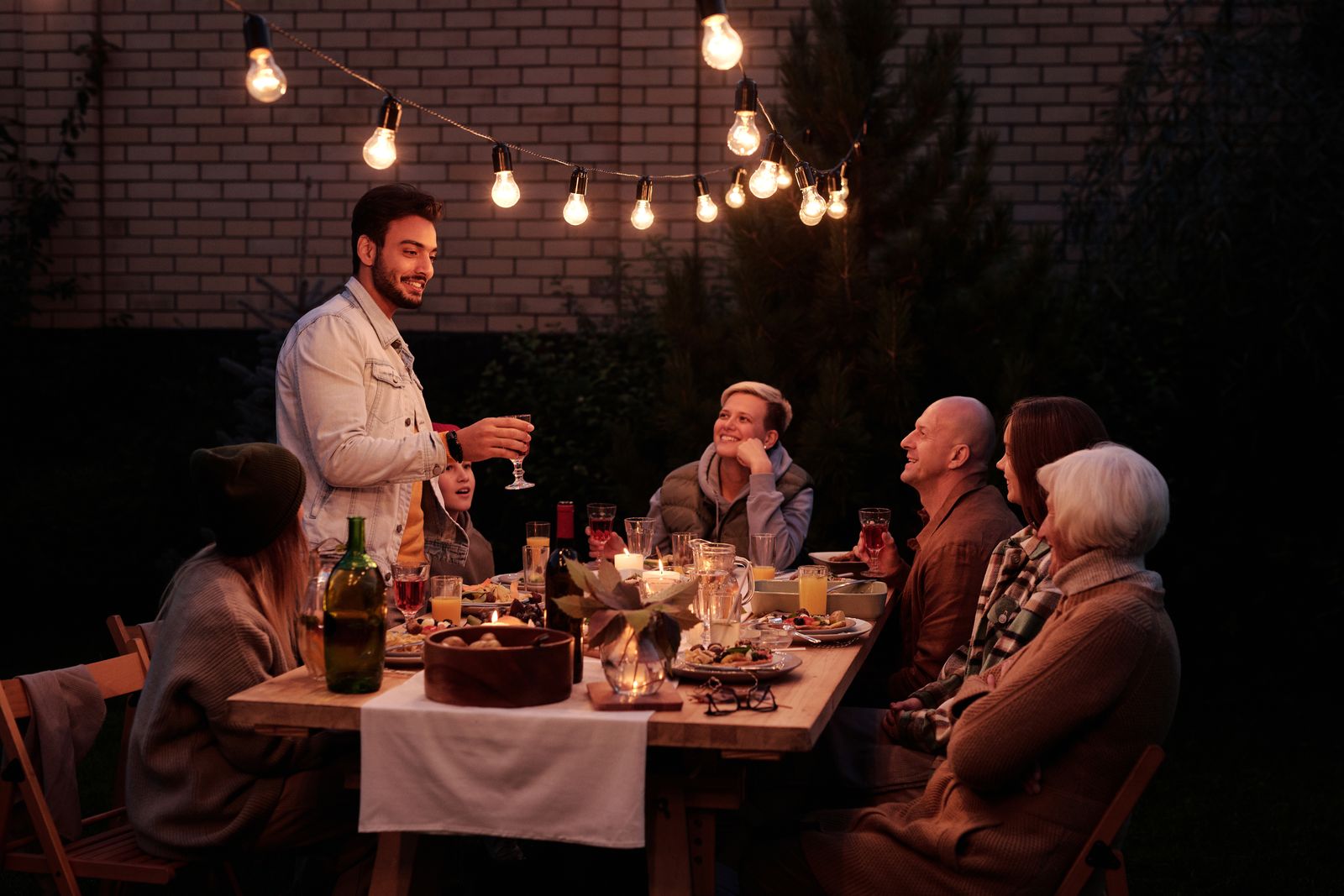
Something subtle happens when you gather people. You stop being the new arrival asking to be included and become the person who includes, which is a different social identity altogether. People remember who brought them together long after they have forgotten what was served. And hosting triggers the oldest engine in human society: reciprocity. One dinner at yours reliably becomes two or three invitations back, each carrying you further into circles you could never have knocked on directly.
If I could give a new migrant to New Zealand only one line of advice, it would be this: the invitation you are waiting for is probably the one you need to send.
Technology Should Lead to Real Life
I run a technology company, so let me be honest about technology's place in all this: it is the bridge, never the destination.
Most social platforms are built to maximise the time you spend inside them, which quietly puts them at war with your actual goal. Endless scrolling feels like social progress and delivers none of it. Matching with someone is trivially easy; actually sitting across a table from them is where the entire value lives, a gap we have written about at length in match is easy, meeting is hard. Hall's two hundred hours cannot be accumulated through a screen. Neither can the specific, irreplaceable data of real presence — how someone laughs, how they treat the waiter, whether the conversation runs on rails or wanders happily off them.
Used well, though, technology solves the newcomer's genuine problem: discovery. You do not know which tramping club is welcoming, which quiz night has a spare seat, which other people within two suburbs of you are also starting from zero. The right tool tells you which room to walk into — and then gets out of the way. That is the test I would apply to any app you install after a move: does it consistently convert screen time into table time? If not, delete it without guilt.
Why We Built SPARK — and Why We're Coming to New Zealand
SPARK exists because we believe the loneliness of the newcomer is a design problem, and design problems can be solved. We started in Bangkok and Singapore with a simple conviction, which I wrote about in why we built SPARK: the internet became astonishingly good at connecting profiles and strangely bad at connecting people. So we built the opposite of a swiping app — a verified community where real people meet through curated shared experiences: dinners, hikes, workshops, small tables with good questions. Not a dating app. A social discovery platform, spanning friendship, dating, professional connection and mentorship, with verification and safety treated as the foundation rather than a feature.
The idea travelled by word of mouth, and more than 1,397 of our members have now gone beyond the screen and met in person — which remains the only metric I truly care about.
And now, New Zealand. Our operations there begin on 1 August 2026, and the app launches on 1 September 2026, Auckland first. Everything in this essay shaped how we are building for the Kiwi context: small curated groups because trust here is earned slowly; recurring formats because familiarity is the currency; experiences designed around the seasons rather than against them. If you are newly arrived and reading this from a quiet flat, our guide to how to meet people in Auckland is a practical place to start today — and from September, we would love to save you a seat.
Looking to meet interesting people in real life? Download SPARK or join our verified community.
FAQs
How long does it really take to make close friends in New Zealand? Longer than you would like, and less than you fear. Expect three to six months of consistent showing up before acquaintances warm into friends, and around a year before you feel genuinely rooted. Jeffrey Hall's research suggests close friendship takes a couple of hundred shared hours, so the honest shortcut is frequency: two recurring commitments a week compresses the timeline dramatically.
Why do Kiwis seem so friendly but never invite me anywhere? Because friendliness is the culture's surface and long-formed circles are its structure. Most Kiwis' social calendars filled up decades ago, and their instinct not to impose means invitations arrive casually or not at all. It is saturation, not rejection. The fix is to issue invitations yourself — hosting is the fastest route into circles that rarely open by themselves.
When does SPARK launch in New Zealand? Our New Zealand operations begin on 1 August 2026, with the app launching on 1 September 2026 in Auckland first, then expanding to other cities. You can apply to join the verified community ahead of launch, and everything starts with curated real-world experiences rather than swiping.
Founder's Note
I have started again in new countries more than once, and I remember precisely how it feels: the friendly place with the quiet phone. What I know now, and wish I had known then, is that belonging is never granted. It is built — one accepted barbecue, one hosted brunch, one Tuesday you showed up again when it would have been easier not to. New Zealand will not rush to befriend you, but it will keep you, and that trade is better than it sounds. Send the invitation. The rest follows.
— Sunny Khurana, Founder & CEO, SPARK
Keep Reading
More from the Journal



Looking to meet interesting people in real life?
SPARK is a members’ community for dating, friendship and professional connection — built around curated real-world experiences in Bangkok, Singapore and, from September, New Zealand.
Or read us first — new essays on real-world connection, monthly.