The Smallest Big Ecosystem in the World
Singapore is 728 square kilometres. You can cross the entire country in the time it takes a San Francisco founder to drive from SoMa to Palo Alto. Every investor, every senior engineer, every corporate innovation lead and every founder you will ever need to meet is, at most, half an hour away — usually far less.
And yet the question I’m asked more than almost any other by founders arriving here is a version of the same puzzled sentence: where does everyone actually meet?
It’s a fair question, because Singapore’s density is deceptive. The ecosystem is compact but layered, and the layers don’t advertise themselves. There is the official layer — the government-backed campuses, the accelerators, the university centres — which is easy to find and only tells part of the story. There is the commercial layer of the CBD, where the money and the customers live. There is a members’-club layer that runs on referral. And beneath all of it there is the informal layer of dinners, runs, and standing tables where, in my experience, most of the relationships that actually matter get made.
I’ve spent the past few years building SPARK across Bangkok and Singapore, and a large part of that work has been an education in exactly this question — where trust gets built in this city, and where it merely gets performed. I’ve written before about why founders need real-world networks at all; the short version is that co-founders, first hires, first cheques and first customers are decided by trust, and trust still forms in person. This essay is the companion piece: not the why but the where. A founder’s map of Singapore’s rooms.
A warning before we start. The instinct of every new arrival is to try to be in all of these rooms at once. Resist it. The founders who build real networks here pick two or three rooms and return to them relentlessly. Keep that in mind as we walk the map.
one-north and Block71: The Gravitational Centre
Every startup city has a gravitational centre, and Singapore’s is one-north — the research and innovation district that the government began master-planning in the early 2000s, deliberately, the way other countries plan ports. Biotech at Biopolis, infocomm at Fusionopolis, and, most importantly for founders, the cluster of startup blocks that grew up around Block71.
Block71 deserves its small legend. It began as an unglamorous industrial building slated for demolition, was handed over to startups, and became — through nothing more mysterious than density — the most concentrated patch of early-stage activity in Southeast Asia. The Economist once called it the heart of Singapore’s startup ecosystem, and what made it work is worth understanding, because it’s the same thing that makes any room work: the corridors. Founders shared lifts, queued for the same coffee, overheard each other’s problems. The acquaintance layer thickened by accident, dozens of times a day.
If you are early-stage in Singapore, one-north should be on your weekly circuit even if you don’t office there. The public events run by the ecosystem players in and around the district — demo days, founder talks, investor office hours — are the closest thing Singapore has to an open front door. You will not meet your co-founder at a demo day. But you will, over months of showing up, become a recognisable face in the ecosystem’s densest corridor, and recognisability is the raw material everything else is made from.
The honest caveat: one-north is where the ecosystem works, not always where it relaxes. The conversations skew transactional because everyone is there on purpose. Treat it as one wall of your architecture, not the whole house.
The CBD: Raffles Place, Telok Ayer and the Coffee Circuit
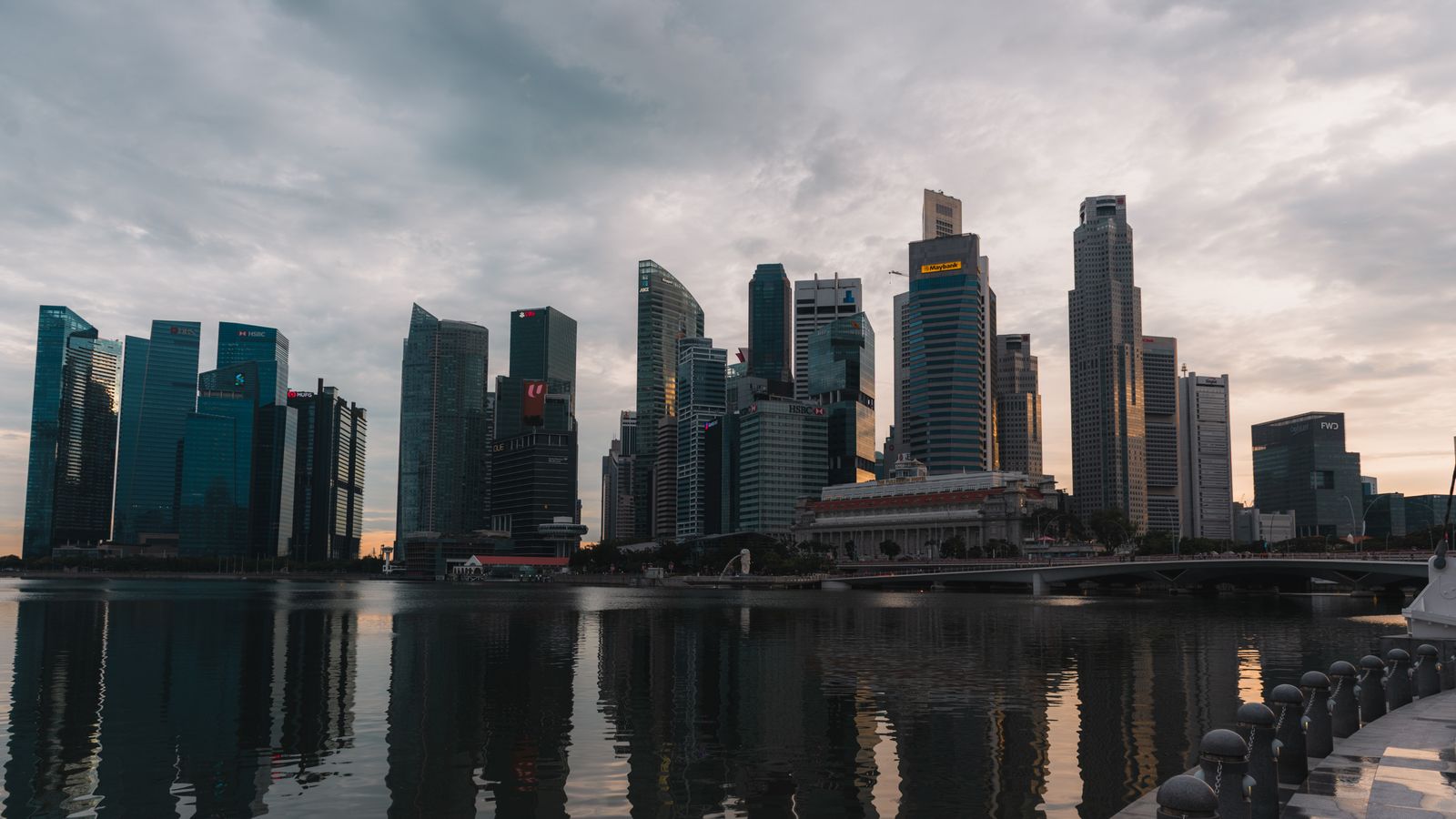
If one-north is where startups are built, the Central Business District is where they are funded and sold to. The towers around Raffles Place and Marina Bay hold the banks, the funds, the family offices and the regional headquarters — which is to say, they hold your investors and your customers.
Founders sometimes treat the CBD as enemy territory, all suits and steel. This is a mistake, and a very expensive one in a city where the corporate and startup worlds sit five minutes apart. Singapore’s particular genius is that its money and its builders share a postcode. The venture partner you’re courting, the corporate innovation lead who could become your first enterprise customer, the lawyer who has seen a hundred term sheets — they all surface at lunch, and lunch happens in a remarkably small area.
The real institution here isn’t any tower; it’s the coffee circuit. The shophouse streets on the CBD’s western edge — Telok Ayer, Amoy Street, the stretch up towards Duxton Hill and Tanjong Pagar — have become the de facto meeting rooms of the ecosystem. This is where the one-on-ones happen: the exploratory investor coffee, the quiet co-founder conversation, the angel who’d rather not be pitched across a boardroom table. If someone senior suggests meeting “around Telok Ayer”, you are being taken seriously.
My practical advice for this layer is simple: never eat lunch alone in the CBD. The propinquity effect — the well-documented tendency for relationships to form between people who are simply, repeatedly near each other — does a great deal of work in a district this compressed. One good lunch a week, compounded over a year, is fifty relationships deep in the part of town where cheques are written. When founders ask me where the angels are, I tell them the truth: many of the people now on our own investors page first took me seriously not in a pitch meeting but across a table like these, watching me talk about loneliness with my hands.

The University Rooms: Entrepreneurship Centres and Alumni Gravity
Singapore’s universities are unusually serious about entrepreneurship, and their centres are among the most underused rooms in the city — especially by founders who assume that, not being students, they aren’t welcome.
NUS runs one of the region’s most established university enterprise arms — it was NUS that incubated the original Block71 — and its public programming, overseas-college alumni network and founder community reach far beyond campus. NTU and SMU both run long-standing entrepreneurship centres of their own, with talks, incubation programmes and communities that welcome the broader ecosystem. INSEAD’s Asia campus at one-north adds a further layer: a rotating cast of MBAs who become founders, operators and investors across the region, bound by an alumni network that takes itself seriously.
Two things make university rooms disproportionately valuable. The first is that they are mixed by design — students, researchers, alumni ten years into corporate careers, professors with patents, visiting investors. Mark Granovetter’s weak-tie research tells us that new opportunity flows through acquaintances who bridge into networks unlike our own, and university rooms are bridge-rich in a way that pure founder meetups are not. Your first machine-learning hire is more likely to be found at a university talk than at a startup mixer, for the simple reason that she isn’t going to startup mixers.
The second is alumni gravity. Singapore runs on institutional affiliation more than newcomers expect. A shared university, even a shared executive programme, converts a cold introduction into a warm one. If you have any alumni network that touches Singapore — and most global universities maintain an active chapter here — activate it early. It is the cheapest trust you will ever acquire.
The Structured Formats: Global Series, Chambers and Pitch Nights
Then there is the layer most people mean when they say “networking in Singapore”: the organised events. Global formats like Startup Grind run active Singapore chapters, built around fireside conversations with founders and investors. The chambers of commerce — American, British, European, and the region’s own — run breakfasts and industry evenings where the corporate side of the city shows up in force. Embassy business councils, trade associations and the endless calendar of pitch nights and demo days round out a week that could, if you let it, consume every evening you have.
I have complicated feelings about this layer, and I’ve written about them at length in why most networking events fail. The structural problem is that most events optimise for volume of contact rather than depth of trust: a hundred people, name badges, conversations that reset every seven minutes, and a stack of contacts nobody follows up. Founders burn six months on the circuit and accumulate nothing but a drawer of lanyards.
But the structured layer is not useless — it is simply misused. Used correctly, it does two jobs well. Fireside formats like Startup Grind are genuinely good for learning how this ecosystem thinks: who’s building what, how regional capital reasons, what the honest war stories sound like. And chamber events are one of the few places where founders and senior corporate decision-makers stand in the same room, which matters enormously in a city where your first large customer is probably a bank, a telco or a multinational’s regional HQ.
The rule that redeems the whole layer is recurrence. One format, attended every time, for a year — until the organisers know you, the regulars know you, and you have graduated from attendee to fixture. That’s when events start producing relationships rather than contacts. I’ve mapped this layer in more detail in our guide to the best networking events in Singapore; the meta-lesson is that consistency beats coverage, always.
The Quiet Rooms: Private Clubs and Invitation-Only Tables
Above the public layer sits a quieter one. Singapore has long had a private members’-club culture — from the storied old-guard institutions to the newer wave of clubs built for the business and creative crowd — and in the past decade this layer has become a genuine part of how the ecosystem’s senior end meets. Family offices, exited founders, regional fund partners: a meaningful share of their meetings happen in rooms you cannot simply walk into.
I mention this layer not to glamorise it but to demystify it. Founders either ignore it entirely or overrate it wildly, and both are errors. What private clubs actually offer is not access to better people but a better format: small rooms, repeat encounters, conversations that assume discretion and therefore go deeper. The trust-per-hour is higher because the architecture is built for it.
You do not need a membership to benefit from the principle. The invitation-only dinner, the standing table of eight, the salon someone hosts in their apartment — these run on the same physics, and they exist at every level of the ecosystem. The question to ask is never “how do I get into the club?” but “who is convening small, recurring, trusted rooms — and how do I become useful to one?” In my experience, the answer to the second question is generosity: convene something yourself, even a monthly dinner for six, and within a year you’ll find the quiet layer has found you.
The Rooms Nobody Lists
And then there is the layer that no ecosystem map includes, which happens to be the one where I’ve watched the most consequential founder relationships actually form.
It looks like this: a Saturday-morning run group that loops East Coast Park and ends at breakfast. A hiking crew that does the MacRitchie trails before the heat. A padel court booked by the same eight people every Thursday. A long-table dinner in a Tiong Bahru shophouse where a fintech founder ends up next to a doctor, an architect and an angel who never calls herself an angel. Nobody is networking. Everybody is building networks.
The reason this layer outperforms is well studied. Shared activity is how humans have always assessed one another — you learn more about a potential co-founder on one badly navigated trail than in ten coffee chats, because effort, humour and grace under mild adversity cannot be faked for three hours. Repetition then does the rest; the mere-exposure effect quietly converts familiar faces into trusted ones. Structured events give you introductions. Activities give you evidence.
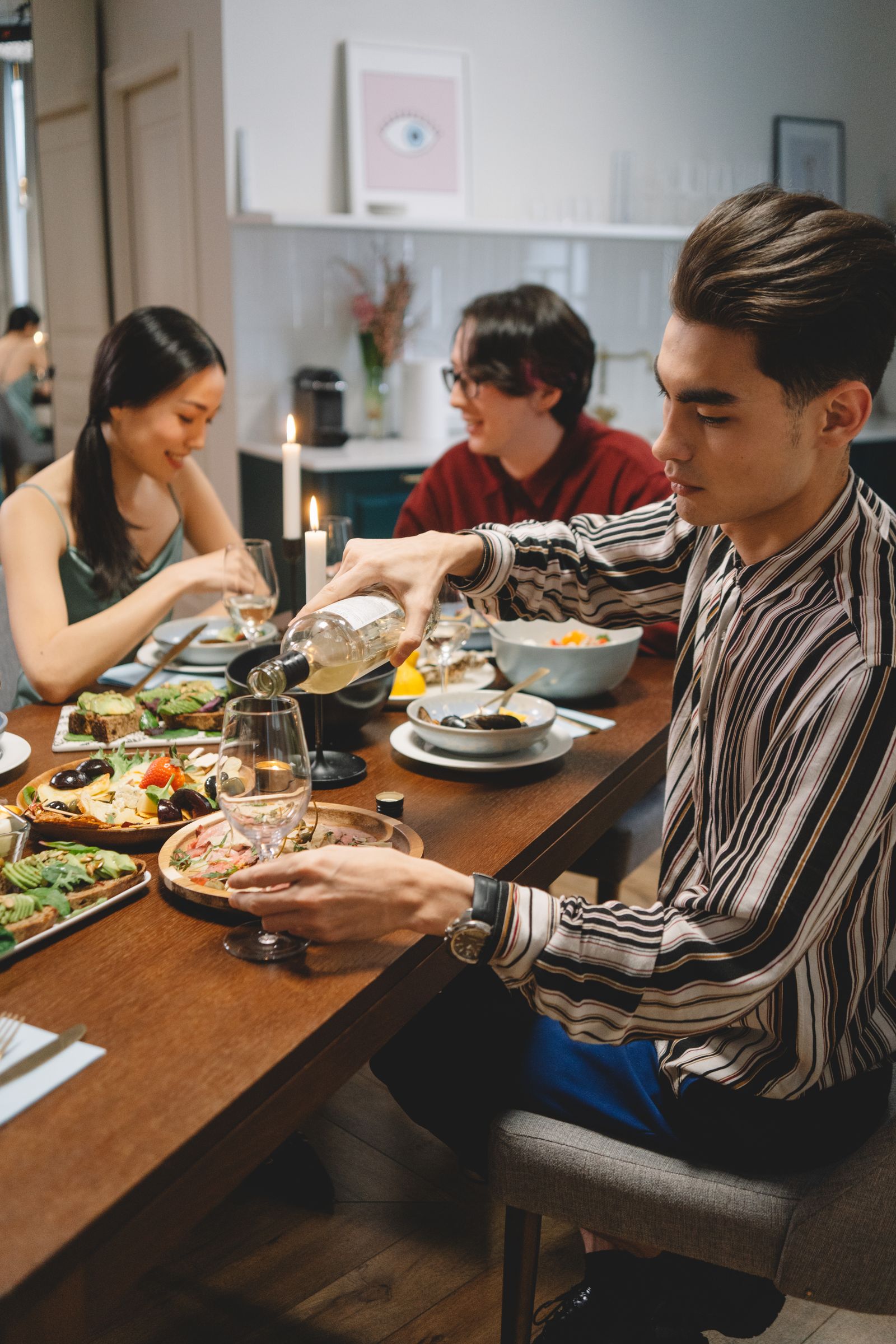
This conviction is the reason SPARK exists in the shape it does. We built a community of verified members who meet through curated real-world experiences — dinners, hikes, classes, salons — rather than through open-ended messaging, because the activity isn’t the excuse for the meeting; it’s the mechanism of the trust. I’ve made the fuller argument in why experiences beat swiping, and founders may be its clearest proof: our members have now completed 892 real-world meetings, and we long ago stopped being surprised when someone who came for friendship leaves a supper table with a business partner. Life doesn’t sort people into categories before you meet them.
How to Choose Your Rooms
So: one-north’s corridors, the CBD coffee circuit, the university centres, the structured formats, the quiet rooms, and the unlisted layer of shared activity. Six territories in a city you can cross in forty minutes. The temptation to sample everything is precisely what you must refuse.
Here is the architecture I’d give a founder starting from zero in Singapore. Choose one ecosystem room — a recurring format in or around one-north, or a single series like Startup Grind — and attend every edition for a year. Choose one bridge room — a chamber, an alumni circle, a university centre’s programming — that puts you beside people who are not founders, because that is where customers, hires and angels hide. And choose one activity room — a run group, a sport, a standing dinner, a curated experience — where trust can compound through doing rather than talking.
Three rooms. Weekly or monthly rhythm. Twelve months. Give first in all of them: make two introductions for every one you request, share the notes, recommend the brilliant person you’d rather have hired yourself. In a city this small, a reputation for generosity travels faster than any deck, and Singapore’s smallness — the thing that makes it feel claustrophobic in year one — becomes your compounding advantage by year two. The ecosystem is a village. Villages remember.
What you should not do is spend another year “networking” in the degraded sense: collecting contacts at one-off events, polishing a profile, mistaking visibility for trust. Where founders meet in Singapore turns out to have a precise answer, and it is not “everywhere”. It is: in a small number of recurring rooms, over shared time, doing real things. The map matters less than the returning.
Looking to meet interesting people in real life? Download SPARK or join our verified community.
FAQs
Where do most founders actually meet in Singapore? Across a handful of layers: the one-north and Block71 ecosystem for startup density, the Telok Ayer–Tanjong Pagar coffee circuit near the CBD for investor and customer meetings, university entrepreneurship centres and alumni networks, recurring formats like Startup Grind and the chambers of commerce, and — most productively — small recurring rooms built around shared activity, from run groups to curated dinners.
Do I need to join a private members’ club to build a network here? No. What clubs really offer is a format — small, recurring, discreet rooms — and that format can be recreated at any level: a standing dinner for six, a weekly sport, a monthly salon. Focus on becoming useful to (or convening) one small trusted room rather than chasing membership for its own sake.
How does SPARK fit into Singapore’s founder ecosystem? Every SPARK member is identity-verified, and people meet through curated experiences — long-table dinners, hikes, classes and salons — rather than open-ended chat. For founders, that means meeting operators, investors, creatives and other builders through shared activity, which builds trust far faster than a name-badge evening. You can apply to join our community.
Founder’s Note
I chose Singapore as one of SPARK’s first two cities partly for the obvious reasons — density, ambition, a government that plans ecosystems the way others plan motorways — but mostly for a quieter one: this is a city full of remarkable people standing thirty minutes apart who haven’t met yet. Every layer in this essay is one I’ve walked myself, from one-north corridors to Telok Ayer tables, and the lesson never changes. The rooms are all here. The founders who thrive are simply the ones who keep returning to theirs. If you’d like one of those rooms to be a table of ours, come and find us — ideally over dinner.
— Sunny Khurana, Founder & CEO, SPARK
Keep Reading
More from the Journal


Looking to meet interesting people in real life?
SPARK is a members’ community for dating, friendship and professional connection — built around curated real-world experiences in Bangkok, Singapore and, from September, New Zealand.
Or read us first — new essays on real-world connection, monthly.