
Ask anyone in a happy relationship how they met, and listen carefully to the shape of the answer. Almost nobody tells you about an interface. They tell you about a place. A wedding in Phuket where they were seated at the wrong table. A pottery class neither of them wanted to attend. A run club in Singapore on a morning it rained. A friend’s birthday dinner where the only free chair happened to be the right one.
The place is never incidental to the story. The place is the story.
Now compare that with the way millions of people currently attempt to meet someone: alone, at night, thumb moving across a screen, evaluating strangers at a rate of one human being every few seconds. We have built the most sophisticated introduction machinery in history, and we have pointed it at people sitting by themselves on their sofas.
I want to make a specific argument in this essay, and I want to make it carefully, because it is the argument on which SPARK is built: shared real-world experiences are not merely a pleasant alternative to dating apps. They are a structurally better way for human beings to meet — better at generating chemistry, better at revealing character, better at surviving the fragile first hour of any connection. The swipe was a brilliant answer to the wrong question. The question was never “how do we show people more options?” It was always “how do we get two people into the same room, at ease, with something to do?”
The Interview Problem
Begin with what swiping actually produces when it works. Two people match. They exchange messages for a few days — long enough to build expectations, rarely long enough to build knowledge. Eventually one of them proposes a drink. And then comes the format that the entire model funnels towards: two strangers, face to face across a small table, with nothing between them but a candle and an unspoken agenda.
We politely call this a first date. It is, functionally, an interview.
Both parties know it. Both arrive with a mental checklist, however much they would deny it, and both spend the evening performing for a panel of one. Questions are asked that neither person would ever ask a friend. Answers are given that have been polished across a dozen previous tables. The whole encounter is evaluative by design — you are not doing something together, you are assessing each other — and evaluation is precisely the condition under which real personality goes into hiding. The funniest person you know is not funny in a job interview. The warmest person you know is not warm under cross-examination.
Then there is the strange grief of the imagined person. Days or weeks of messaging construct someone — wittier, more compatible, subtly idealised — and the actual human who walks into the bar is asked to compete with that fiction. I wrote at length in Match Is Easy. Meeting Is Hard. about the gap between matching and meeting; the interview date is what waits on the far side of that gap for the minority who cross it, and it quietly kills connections that deserved a fairer trial.
None of this means the people are wrong for each other. It means the format is wrong for the people. Chemistry is shy. It does not perform on demand, under bright lights, for a stranger holding a scorecard. It emerges sideways, when attention is pointed at something else — a shared task, a shared joke, a shared plate of food that turned out to be much spicier than the menu implied.
Which is exactly what an experience provides, and an interview cannot: a third thing.
What Happens When You Add a Third Thing
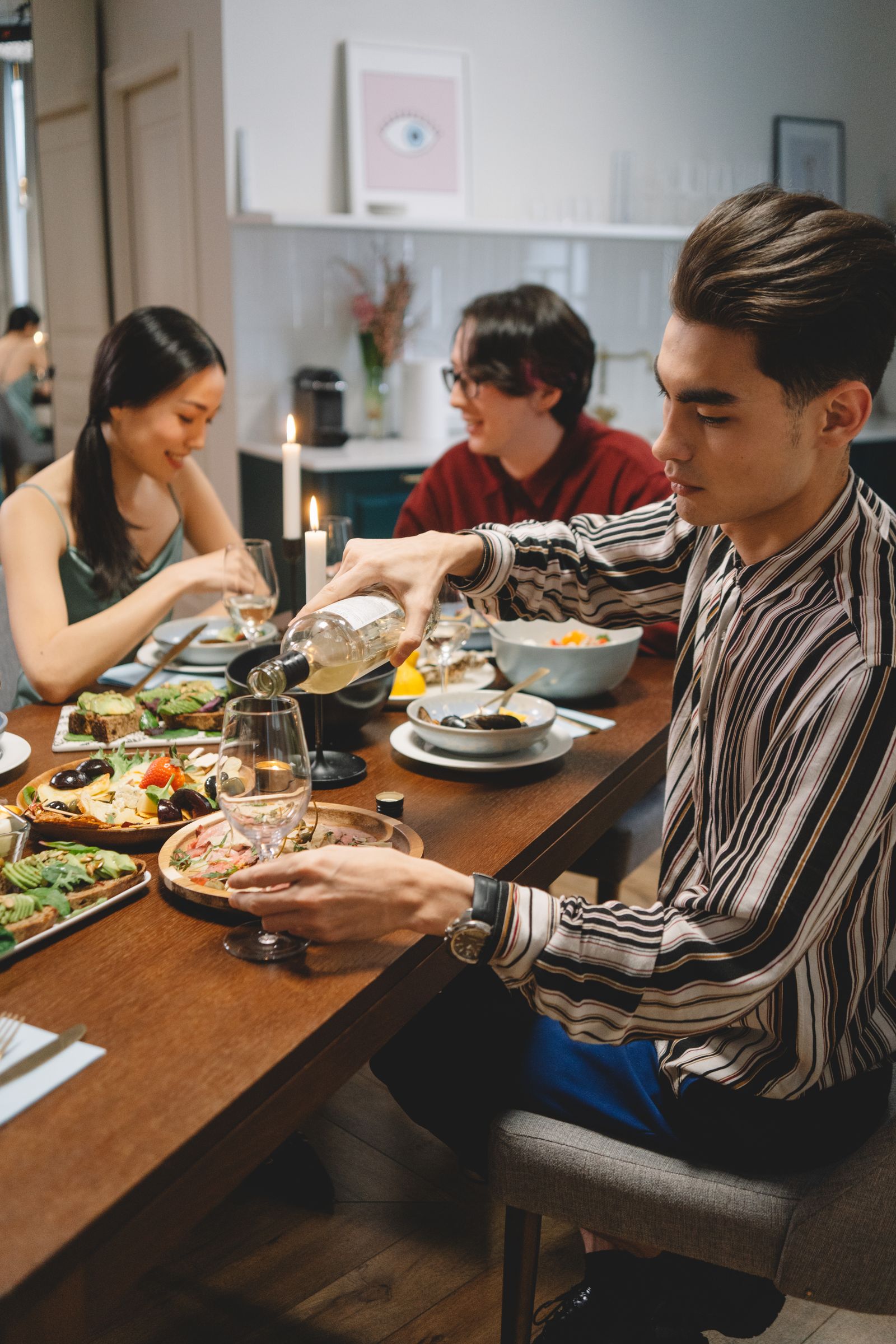
Put the same two strangers somewhere else. A Thai cooking class where the tamarind paste refuses to cooperate. A gallery evening with one genuinely baffling installation. A hike, a padel court, a supper club table of ten, a morning trail run. Everything important changes at once, and it changes for reasons psychologists have understood for decades.
First, the pressure disperses. Side-by-side beats face-to-face for early connection because it removes the interrogation geometry. You are no longer each other’s sole object of attention; you are two people paying attention to the same thing, occasionally glancing across to share a reaction. Conversation stops being an examination and becomes commentary — lighter, more honest, easier to fall into. Silence stops being failure and becomes simply a quiet stretch of the trail.
Second, character becomes visible. This may be the single strongest argument for experiences over swiping: an evening of activity reveals what no profile can even attempt to encode. How someone treats the person teaching the class. Whether they laugh at their own collapsed soufflé or sulk about it. Whether they let others speak at a shared table, how they handle losing a doubles match, whether their curiosity is genuine or performed. A dating profile is a press release. An experience is a documentary. Two hours of doing something together tells you more than two hundred carefully-typed messages, because behaviour under mild, pleasant adversity is who a person actually is.
Third — and here the research is delightful — shared experience does not just reveal connection, it manufactures the conditions for it. Arthur Aron’s long-running programme of research on closeness found that couples and strangers alike grow measurably closer through novel, engaging activities done together; his self-expansion model holds that we are drawn to people alongside whom we experience new things, because they become associated with the feeling of our own life getting larger. The mere-exposure effect tells us we warm to those we repeatedly encounter; the propinquity effect tells us that bonds form overwhelmingly between people who share physical space and routine. And Jeffrey Hall’s 2018 research at the University of Kansas found that friendship is built from accumulated hours in shared company — dozens of hours to turn an acquaintance into a casual friend, a couple of hundred to make a close one. Hours do not accumulate in a chat window. They accumulate at tables, on trails, in rooms.
Every one of these findings points the same way. Connection is not an information problem, to be solved with better profiles and cleverer algorithms. It is an experience problem, to be solved with better rooms.

Why the Swipe Is Losing Its Grip
If experiences are so obviously superior, why did swiping conquer the world? Because it solved a real problem brilliantly: discovery. A generation ago your romantic universe was your street, your office and your friends’ friends. The apps blew that ceiling off, and they deserve genuine credit for it. I am not writing a eulogy for technology here — SPARK is a technology company, and I remain an optimist about what software can do for human connection.
But a model can be historically important and still be exhausted, and you can feel the exhaustion everywhere now. Talk to daters in Bangkok or Singapore — I do, constantly, because they become our members — and the same words recur: burnt out, numb, going through the motions. The swipe has a compounding flaw that no redesign can fix, because it is not a flaw in the design. It is the design.
An app that earns revenue from attention needs you swiping, not settling. Its commercial gravity pulls towards more options, more novelty, more time in-app — and abundance itself corrodes the thing being offered. When the next possible person is always one flick away, every actual person becomes provisional. Psychologists studying choice overload have long observed that beyond a certain point, more options make us less satisfied with whatever we choose and less likely to choose at all. The swipe is that finding turned into an interface: an infinite menu that quietly teaches you never to order.
And so people are leaving, or half-leaving — keeping the apps installed but opening them with the enthusiasm of someone doing admin. The search phrase we hear again and again is telling: people are not looking for a better dating app. They are looking for alternatives to dating apps. The demand has shifted from discovery, which is now abundant, to meeting, which is scarcer than ever.
That shift is generational, and I believe it is permanent.
The Real Alternatives to Dating Apps
So what are the alternatives, practically? The honest answer is that they have been around for centuries; we simply stopped organising our social lives around them. If you are app-weary, here is what actually works, and why.
Recurring communities beat one-off events. A single party gives you the mere-exposure effect once; a weekly run club, a monthly book bar, a regular padel session gives it to you on repeat. Remember Hall’s hours: connection compounds with presence. Choose things with a rhythm — the same faces, week after week, in a low-stakes setting — and let familiarity do the slow work that no algorithm can rush.
Structured beats unstructured. “Come along, mingle” is where introverts go to stare into their drinks. A cooking class, a supper club with a seating plan, a hike with a route, a workshop with a task — structure is kindness. It gives everyone a role, a reason to talk and a graceful way to move between conversations. The best experiences are machines for generating first sentences.
Small beats big. Ten people around a dinner table produce more real connection than three hundred people in a ballroom, because depth needs airtime. A conversation needs about twenty uninterrupted minutes to get anywhere true; crowded rooms rarely grant them.
Curated beats random. The magic of a good supper club or members’ community is not exclusivity for its own sake — it is that someone has thought about who is in the room. Shared context is a head start: when everyone present has, in some sense, chosen the same evening, the odds of resonance rise dramatically.
And places matter more than we admit. The right venue does half the work of the evening — the wine bar quiet enough to talk in, the rooftop that makes strangers feel like conspirators, the market stall that gives you a shared discovery. It is why we publish guides like our favourite date ideas in Bangkok: not as listicles, but because choosing the right room is a genuine skill, and most plans die of vague logistics rather than lack of interest.
Notice, too, that none of this is only about romance. The same experiences that produce great first dates produce friendships, collaborators and mentors — the dinner where founders actually meet in Singapore runs on precisely the same physics as the supper club where two people fall for each other. A third thing, a small table, real attention. The relationship type differs; the meeting does not.

Designing for the Meeting, Not the Match
This is the thesis on which we built SPARK, and I want to be transparent about how it shapes the product, because “experiences beat swiping” is easy to say and surprisingly demanding to build.
Start with trust. The reason strangers hesitate to attend real-world experiences is not shyness; it is uncertainty about who will be in the room. Messaging a stranger costs nothing. Sitting at a table with eight of them is an act of faith. That is why SPARK is a verified community rather than an open feed — every member is a real, accountable human, which changes everything about people’s willingness to show up. I have written separately about why identity verification matters so much to us; the short version is that verification is not a safety feature bolted onto a social product. For a company whose product is real-world meetings, it is the product’s foundation.
Then, the experiences themselves. We design curated experiences around the principles above: small tables, recurring formats, structure that gives everyone a way in — supper clubs, gallery evenings, run clubs, founders’ dinners. And because the leap from “we should meet” to “we are meeting” dies most often in logistics, we built the venue layer directly into the platform: more than 3,000 partner venues across Bangkok and Singapore, so that a plan becomes a time and a table in one step rather than a week of negotiation.
The result is a different kind of growth, and it is the number I am quietly proudest of: 62% of SPARK’s growth is organic, word of mouth, members bringing the people they care about into rooms they have come to love. Nobody evangelises a swipe. People evangelise evenings. If you want to know whether a connection product is actually working, do not ask how long people spend in it. Ask whether they bring their friends.
For those who want the fuller version of this — the community, the experiences, the whole architecture of meeting well — that is what SPARK membership is: not access to more profiles, but access to better rooms.
The Evening Is the Algorithm
Let me pre-empt the obvious objection: is this just nostalgia? A retreat from technology to some imagined golden age of village dances?
No. It is a redirection of technology towards its proper target. The apps were right that discovery needed solving and right that software could solve it. They were wrong about where the process should end. Software is superb at finding, verifying, curating and coordinating — and hopeless at the thing that actually decides whether two people connect, which happens only in person, in real time, in a shared place. The correct division of labour is obvious once you see it: let the software do everything up to the door of the room, and let the room do the rest.
Swiping asks you to decide about a person from a photograph, then defend that decision across an interview table. Experiences ask something far more natural of you: show up, do something enjoyable, pay attention, and let the evening tell you the truth. One of these is how humans have formed bonds for a hundred thousand years. The other is a decade-old interface pattern that its own users describe with the vocabulary of burnout.
The photograph tells you almost nothing. The evening tells you almost everything.
That is the whole argument, really. Not that apps are evil, but that the swipe optimised the wrong moment. The future of connection belongs to whoever builds the best evenings — and then has the discipline to get out of the way.
Looking to meet interesting people in real life? Download SPARK or join our verified community.
FAQs
What are the best alternatives to dating apps? Recurring, structured, small-group experiences: run clubs, supper clubs, classes, hobby communities and curated social platforms built around meeting in person. The common thread is a shared activity that takes the pressure off conversation and lets familiarity build over repeated encounters. SPARK exists to make exactly these experiences easy to find and safe to attend.
Do shared experiences really work better than swiping for finding a partner? The research strongly suggests so. Arthur Aron’s work on closeness shows novel shared activities actively build attraction, and Jeffrey Hall’s research shows connection is a function of accumulated hours together — something a chat window cannot provide. Experiences also reveal character in ways no profile can, which leads to better choices, not just more of them.
Is SPARK an alternative to dating apps or something broader? Broader — and deliberately so. SPARK is a social discovery platform: a verified community using curated real-world experiences to create every kind of connection, romantic, platonic and professional alike. If you arrive looking for a partner, you may also leave with a co-founder and three genuine friends. We consider that a feature, not a distraction.
Founder’s Note
I sometimes think the swipe’s deepest cost is not the time it consumes but the belief it instils: that meeting someone is a numbers game, to be won with volume. Everything I have seen building SPARK argues the opposite. Connection is not a numbers game. It is a rooms game. One good table, one good trail, one good evening with your attention fully switched on is worth a thousand flicks of the thumb.
So here is my ask, and it costs you nothing but one evening. This week, trade an hour of swiping for a single real experience — a class, a club, a dinner, anything with other humans and a third thing to share. Notice how different it feels. That feeling is the entire thesis of this company.
— Sunny Khurana, Founder & CEO, SPARK
Keep Reading
More from the Journal


Looking to meet interesting people in real life?
SPARK is a members’ community for dating, friendship and professional connection — built around curated real-world experiences in Bangkok, Singapore and, from September, New Zealand.
Or read us first — new essays on real-world connection, monthly.