Experiences You'll Actually Remember
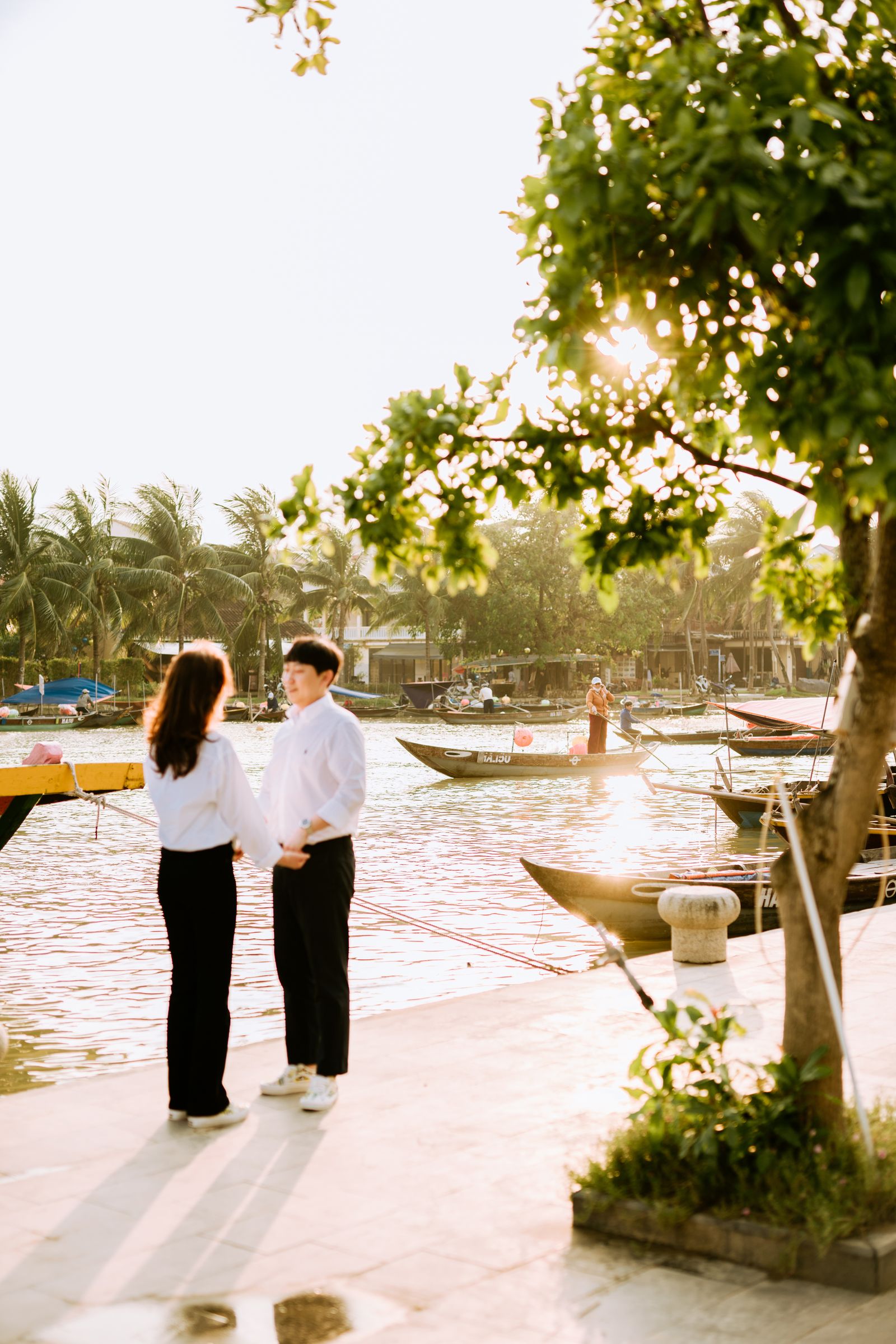
Ask anyone in a long relationship about their best early date, and I can almost guarantee what you will not hear. You will not hear about the restaurant with the impressive wine list, or the rooftop with the eye-watering bill. You will hear about the night it rained so hard they had to shelter in a noodle shop for two hours. The ferry they caught in the wrong direction. The cooking class where one of them set fire to a wok.
Memory does not reward expense. It rewards texture.
I have thought about this more than most people, partly because I run a company whose entire purpose is getting people off their phones and into real rooms together, and partly because I live in Bangkok — a city that hands you texture for free. Riverside walks at dusk. Hidden cafés down sois you would never find twice. Night markets, live jazz, gallery openings, boat rides, street food that outclasses restaurants at thirty times the price.
Bangkok is, I would argue, one of the world's great dating cities. Not because it is romantic in the postcard sense — though it can be — but because it is generous. It gives two people an endless supply of things to do, notice, taste and laugh about. And things to do together, it turns out, are the raw material of attraction.
This piece is my attempt to put down what I have learned — from my own life, and from watching hundreds of real-world meetings happen through SPARK — about what actually makes a date work in this city. Not a listicle of venues. A way of thinking about dates, stage by stage, season by season, that you can use for years.
The Best Dates Aren't Interviews
Let me start with the most common mistake, because nearly everyone makes it.
Two people match online. They exchange messages for a week. Then they agree to meet — and they default to the format that feels safest: a table, two chairs, two drinks, and nothing to do except talk.
It sounds harmless. In practice, it is the single most demanding social format ever devised. Sitting directly opposite a stranger, maintaining eye contact, with no shared activity to absorb the silences, you have accidentally recreated the conditions of a job interview. Every pause feels like failure. Every question sounds like it came from a checklist. Where are you from, how long have you been in Bangkok, what do you do. Both of you performing; neither of you present.
I have written before about why matching is easy and meeting is hard, and this is a large part of it. The interview date does not fail because the people are wrong for each other. It fails because the format suppresses exactly the qualities — playfulness, curiosity, spontaneity — that make someone attractive.
The fix is embarrassingly simple: give the date a third thing. Something to look at, walk through, make, taste or attempt. Movement dissolves pressure. When you are wandering through a wet market or losing gracefully at padel, conversation stops being an examination and becomes a by-product. You talk about the thing in front of you, and the thing in front of you leads somewhere real. Silences stop being awkward because they are filled with the world.
Side-by-side beats face-to-face. It is the oldest trick in human connection, and Bangkok is the perfect city to use it.
Choose Experiences Over Venues — Stage by Stage
"Do something rather than just drink something" is good advice, but it is incomplete. The right experience depends on the stage of the date. What works brilliantly on a third date can be far too much on a first. So here is how I think about the craft of it.
The first date: low cost, low commitment, high texture. The first meeting has one job — to find out whether you enjoy each other's company in real life. It should be easy to extend if it is going well and easy to end kindly if it is not. Coffee and a neighbourhood walk is the undefeated champion here. Pick an area with layers: Charoenkrung's old shophouses and galleries, Ari's leafy sois and cafés, the riverside around Talad Noi with its street art and temple courtyards. An hour of walking gives you a hundred small prompts, a natural end point, and — crucially — an obvious upgrade path: "There's a great noodle place around the corner, are you hungry?" If yes, the date doubles itself. If not, you part warmly at the next junction.
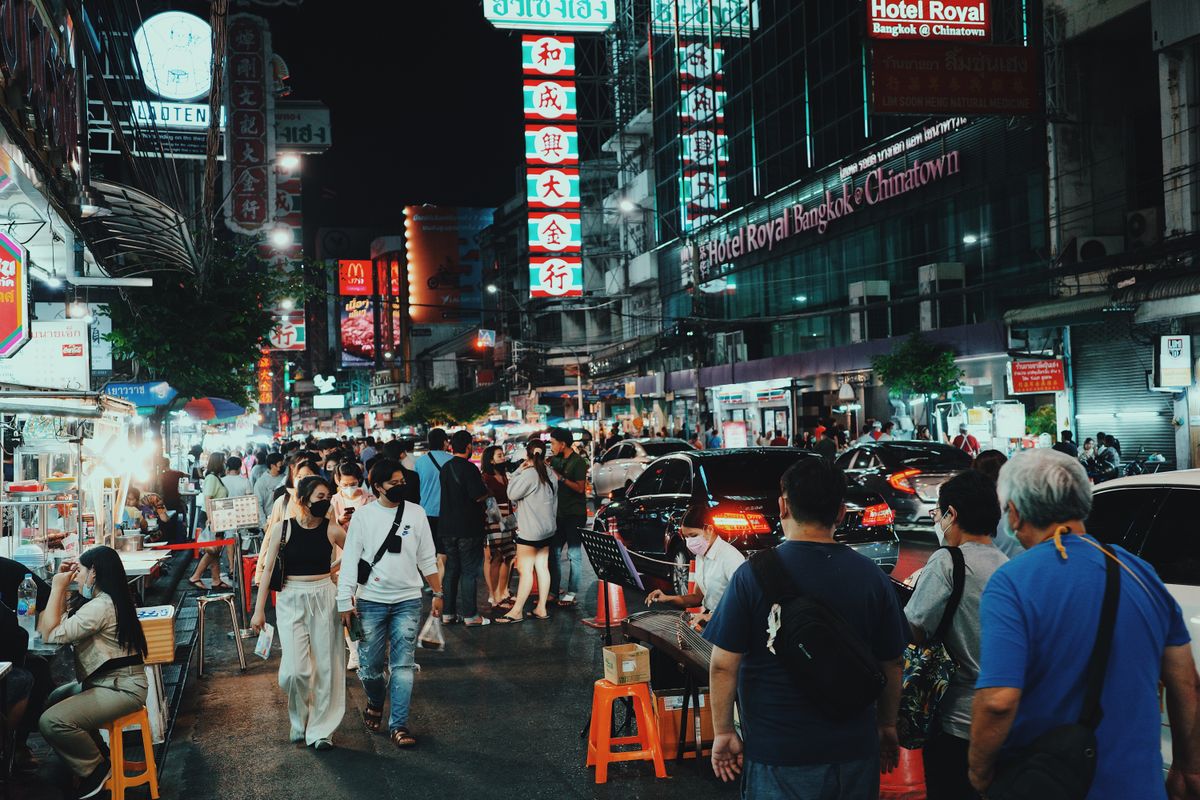
The second date: make something or watch something, together. By now you know you like talking to each other. The second date is where you learn how someone is — how they handle novelty, mild incompetence, other people. A Thai cooking class is ideal: you will both be slightly out of your depth, you will laugh, and you get to eat your mistakes. Stand-up comedy works beautifully too, because laughing at the same things is one of the fastest compatibility tests there is. An evening at a night market — Chinatown on a weeknight, when Yaowarat turns into a river of light and grilled squid smoke — gives you grazing, wandering and people-watching in one. None of these requires either of you to perform. All of them reveal.
The third date and beyond: shared mild adventure. This is where Bangkok truly shows off. Take the Chao Phraya Express Boat at sunset for pennies and watch the temples turn gold. Rent bicycles in Bang Krachao, the improbable green lung across the river, and cycle elevated paths through jungle and coconut groves. Book a padel court — the sport is everywhere in Bangkok now, and being slightly rubbish at something together is a gift. Catch live jazz in a room small enough that the trumpet player can see you. Take the train to Ayutthaya for a day among ruins. Each of these produces what I think of as a story asset: a shared memory with a beginning, middle and end that becomes part of the private language of a new couple.
Notice what is missing from this list: anywhere you go primarily to be seen, and anywhere the main activity is ordering. Venues are backdrops. Experiences are plots. People fall for plots.
And if you are new to the city and short on ideas or company, that is a solvable problem too — I have written a fuller guide to meeting new people in Bangkok that pairs well with this one.
Bangkok's Romantic Advantage — and How to Use Its Seasons
Few cities on earth combine culture, food, nightlife and spontaneity the way Bangkok does. London has the culture but not the street life at midnight. Singapore has the polish but rations the chaos. Bangkok has all of it, at every price point, in every direction, essentially around the clock.
But the city's real advantage for dating is something subtler: it rewards curiosity more than spending. In many capitals, a "special" date means an expensive one, because the memorable experiences are gatekept by price. In Bangkok, the fifty-baht ferry is more romantic than the five-thousand-baht tasting menu. The best mango sticky rice in the city costs less than a London flat white. Curiosity is the currency here, and both of you can be rich in it.
To use the city well, though, you need to respect its calendar. Bangkok has three seasons, and each one is a different dating city.
The cool season, roughly November to February, is the city's golden hour. Evenings drop into the pleasant twenties, the air softens, and everything outdoors becomes possible: long riverside walks, rooftop sunsets you can actually linger through, open-air cinema, park picnics at Benjakitti as the towers light up. This is the season to plan the ambitious outdoor dates — the Bang Krachao cycle, the day trip, the long wander. If you have been putting off asking someone out, cool season is the city telling you to get on with it.
The hot season, March to May, demands craft. From midday to late afternoon the city is a furnace, so the skill is sequencing: start indoors and cool — a gallery at the Bangkok Art and Culture Centre, a museum, an ice-cream crawl, one of the city's gloriously over-air-conditioned cafés — then emerge at dusk when the temperature relents. Songkran, in April, is its own opportunity: the world's biggest water fight is arguably the world's biggest icebreaker, and it is very hard to remain nervous around someone while you are both soaked to the skin and laughing.
The rainy season, June to October, frightens newcomers and delights the initiated. The rain mostly arrives in dramatic late-afternoon bursts rather than all-day drizzle, and a downpour is a gift to a good date: it forces improvisation. Duck into the nearest café and let the weather extend the conversation. Plan rain-proof plots — cooking classes, jazz bars, covered markets, the long lazy afternoon in a bookshop café — and treat any dry spell as a bonus. Some of the best dates I have ever heard about were rescheduled by the sky and better for it.
A city with three seasons is really three cities. Learn all of them and you will never run out of first-date ideas again.
Shared Experiences Build Attraction — the Science Bit
None of this is just my taste talking. The psychology of attraction has been pointing the same way for half a century.
The best-known finding is Dutton and Aron's 1974 "shaky bridge" study, in which men who met a woman on a high, swaying suspension bridge were markedly more likely to pursue her afterwards than men who met her on a stable one. The arousal of the experience — the racing pulse, the heightened attention — became entangled with the person they shared it with. Psychologists call it misattribution of arousal. Daters should call it a strategy. A date with a little adrenaline in it — the wobble of a longtail boat, the noise of Yaowarat at full tilt, match point on a padel court — borrows intensity that quiet rooms cannot generate.
Arthur Aron's later work on the self-expansion model points the same direction: people are drawn to relationships that enlarge them — new skills, new perspectives, new experiences — and couples who do novel, engaging things together report feeling closer than couples who default to the pleasant and familiar. Novelty is not a nice-to-have in early dating. It is the mechanism.
And the humble mere-exposure effect — our tendency to grow fonder of people simply through repeated, low-pressure contact — quietly argues for the walking date, the market date, the class date: formats that make a second and third meeting feel natural rather than negotiated.
We see this play out constantly at SPARK. Across the 892 completed real-world meetings our community has now clocked up, the pattern is unmistakable: the meetings people rave about afterwards are almost never the ones with the most glamorous venue. They are the ones with the most plot. The memories you create matter more than the money you spend — that is not a greeting-card sentiment, it is the closest thing dating has to a law of physics.
Stop Trying to Impress
Which brings me to the mindset shift underneath all of this.
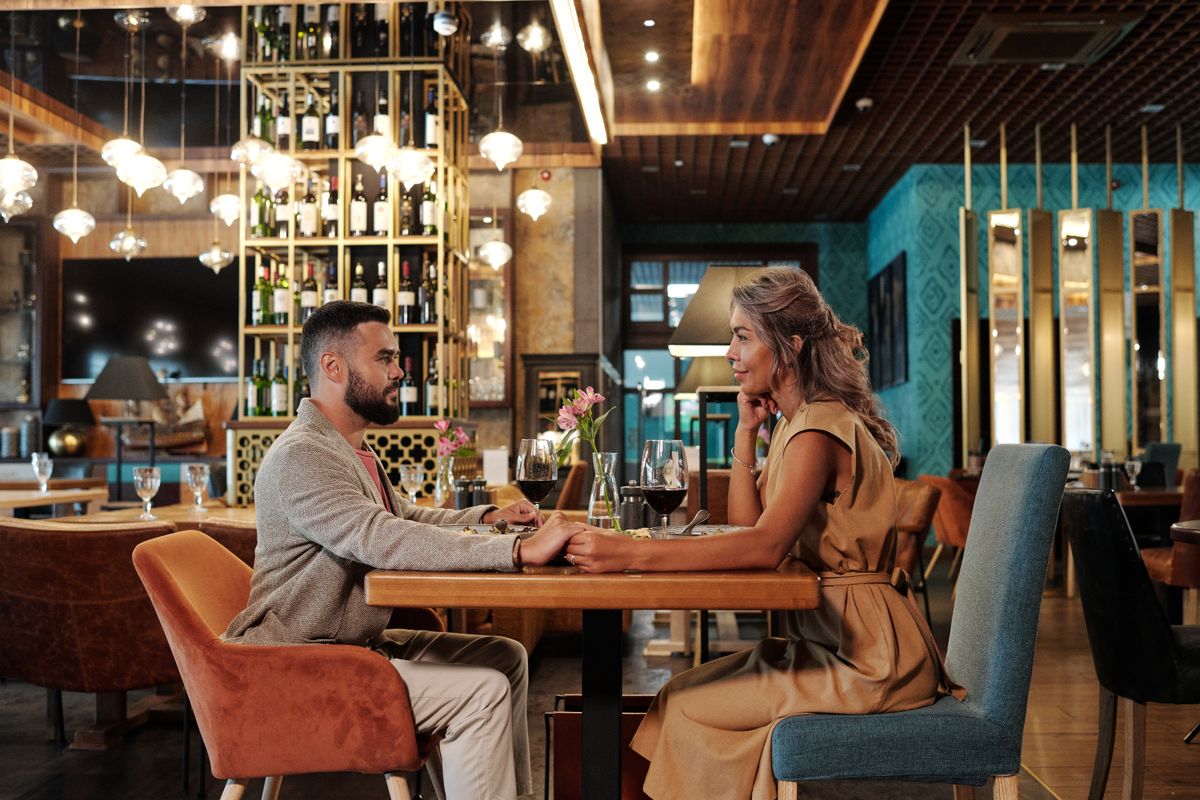
Most bad dates are not caused by a lack of effort. They are caused by the wrong kind of effort — effort aimed at impressing rather than connecting. The showpiece restaurant, the rehearsed anecdotes, the subtle CV recitation. Impressing is a performance, and performances create audiences, and audiences evaluate. You do not want to be evaluated. You want to be joined.
Thoughtfulness beats luxury, almost every time. "I remembered you said you loved old cinemas, so I found one" will outperform any tasting menu ever printed. A sunset crossing on the Chao Phraya, a plastic stool in Chinatown sharing oyster omelettes, a hole-in-the-wall café you genuinely love — these say I have taste and I pay attention, which is far more attractive than I have money.
There is a practical bonus, too. When a date costs little, you can date generously — more often, more experimentally, with less pressure riding on any single evening. The person who plans one lavish dinner a month is out-romanced by the person who plans four curious afternoons. Especially in Bangkok, where the curious afternoon is the city's signature dish.
So retire the question "where should I take them?" and replace it with a better one: "what could we discover together?" The first question produces reservations. The second produces relationships.
Why We Built SPARK This Way
Everything above explains a design decision people sometimes ask me about: why SPARK is built around experiences rather than chat.
SPARK is not a dating app, and I am precise about that. We are building something we call social discovery — a verified community where people meet in real life through curated shared experiences, whether they are looking for romance, friendship, professional connection or mentorship. The dating side of it simply applies the logic of this essay: if shared experiences are how humans actually bond, then the product should start there, not end there.
So instead of optimising for messages sent, we organise real experiences across the city — supper clubs, padel sessions, gallery evenings, cooking classes — with more than 3,000 partner venues across Bangkok and Singapore giving our members places worth meeting in. Every member is verified, because walking into a room of strangers should feel exciting, not risky; you can read exactly how we handle that on our safety page. And because so many of our members are new to the city, the same experiences that spark romance also quietly solve the harder problem of making friends in Bangkok as an expat.
In other words: we took everything in this article and turned it into infrastructure. The third thing, on tap.
Looking to meet interesting people in real life? Download SPARK or join our verified community.
FAQs
What is the best first date idea in Bangkok? Coffee and a walk through a neighbourhood with layers — Charoenkrung, Ari or Talad Noi are ideal. It is low-pressure, easy to extend if it is going well, and the streetscape gives you endless natural conversation. Save dinners and showpiece venues for later dates, once the connection is established.
What are good rainy-season date ideas in Bangkok? Plan plots that do not depend on the sky: a Thai cooking class, live jazz in a small room, covered markets, galleries and long café afternoons. Bangkok's rain usually arrives in short, dramatic bursts, so treat a downpour as a plot twist — sheltering somewhere unplanned often becomes the best part of the story.
Do expensive dates work better in Bangkok? Generally, no. Bangkok is a city where a fifty-baht ferry at sunset routinely beats a five-star dinner for memorability, and research on shared experiences suggests novelty and engagement drive closeness far more than spending. Thoughtfulness and curiosity signal much more than money does.
Founder's Note
The best dates begin with curiosity, not perfection.
Every piece of advice in this article reduces to one principle: your job on a date is not to impress another person, it is to build an environment where two people can enjoy being themselves at the same time. Bangkok makes that easier than almost any city I know — the ferries, the markets, the rain, the jazz, the whole generous sprawl of it.
Pick the third thing. Let the city do its work. Everything else follows.
— Sunny Khurana, Founder & CEO, SPARK
Keep Reading
More from the Journal


Looking to meet interesting people in real life?
SPARK is a members’ community for dating, friendship and professional connection — built around curated real-world experiences in Bangkok, Singapore and, from September, New Zealand.
Or read us first — new essays on real-world connection, monthly.