The Question That Decides Your Social Life
Every Thursday, somewhere in Singapore, a few hundred thousand people ask each other the same question: what are you doing this weekend?
And every Thursday, a remarkable number of us answer it badly. Not because Singapore lacks options — no city of its size offers more per square kilometre — but because we treat the weekend as a scheduling problem rather than what it actually is: the single largest block of discretionary time we have for the people in our lives. Fifty-two weekends a year. A hundred and four days. More waking hours than most of us spend with our closest friends across an entire decade of dinners.
I think about weekends a great deal, because I run a company whose entire purpose is getting people off their phones and into each other’s company, and the weekend is where that battle is won or lost. What I’ve noticed, watching thousands of members plan (and fail to plan) their Saturdays, is this: the people with the richest social lives in Singapore are almost never the ones with the most exotic plans. They’re the ones with standing plans. The Saturday-morning walking group. The monthly hawker crawl with the same four friends. The last-Sunday-of-the-month ferry to Pulau Ubin.
So this is not a list of forty-seven things happening this weekend, most of which will have expired by the time you read it. Singapore has no shortage of listings sites. This is something more useful: an evergreen playbook, organised by the kind of weekend you want, built entirely from places that have anchored this city for decades and will still be there when your grandchildren ask the same Thursday question.
One suggestion before we start, and it changes everything: don’t read this alone. Read it as a menu to send to someone. The weekend is a duet, not a solo.
Why Standing Rituals Beat Spontaneous Plans
Let me make the argument properly, because it underpins every section that follows.
The spontaneous weekend — wake up Saturday, see how you feel, message a few people, watch the plan dissolve by noon — feels free, but it quietly starves your relationships. Coordination is the tax on adult friendship, and spontaneity maximises it. Every plan must be negotiated from scratch, every diary aligned afresh, and the path of least resistance is always the sofa.
The standing ritual abolishes the tax. When your Saturday run at East Coast Park happens every Saturday, nobody has to organise it. When your dim sum table convenes on the first Sunday of the month, attendance requires no messages at all. The plan defaults to happening rather than defaulting to not happening, and that reversal is worth more than any amount of enthusiasm.
The research here is unambiguous. Jeffrey Hall’s 2018 work at the University of Kansas estimated that a casual friendship takes around fifty hours of shared time, and a close one two hundred or more. Nobody finds two hundred spare hours; you accumulate them the way you accumulate compound interest, through small regular deposits. Add the mere-exposure effect — we grow to like the people we repeatedly, casually encounter — and the conclusion writes itself: the weekend ritual is not one social strategy among many. It is the strategy. I’ve made the fuller case in making friends in Singapore, but for now, carry one filter through everything below: could this become a ritual, and who would I share it with?
Now — the menu. Five kinds of weekend, all of them repeatable, all of them better with company.
The Outdoors Weekend
Singapore hides its wildness well, which is precisely what makes the outdoors weekend feel like a small conspiracy among those who know.
Start with the classics of the interior. The MacRitchie Reservoir loop is the city’s great walking ritual — around eleven kilometres of rainforest boardwalk and trail, monkeys included, with the TreeTop Walk suspended above the canopy for those willing to earn it. Go early, before the heat commits itself, and finish the way regulars do: sweaty, triumphant and arguing about breakfast. Bukit Timah Nature Reserve offers the steeper, shorter pilgrimage to Singapore’s highest point, and the Southern Ridges — that elegant ten-kilometre thread from Mount Faber through the Henderson Waves bridge towards Kent Ridge — gives you treetop walkways and skyline views with almost no navigational effort at all.
Then there is the Botanic Gardens, Singapore’s only UNESCO World Heritage Site and, to my mind, its most democratic outdoor room. A hundred and sixty years old, free to enter, open from before dawn — it hosts tai chi groups, running clubs, picnicking families and slow readers under the rain trees, all without friction. If ever a place was designed for a standing weekend ritual, it is this one.
And for the full expedition: Pulau Ubin. The ten-minute bumboat from Changi Point Ferry Terminal is the cheapest time machine in Southeast Asia, delivering you to the last surviving kampong landscape of old Singapore — dirt tracks, rented bicycles, the wetlands of Chek Jawa at low tide. Ubin is what a Saturday felt like in 1965. It is almost impossible to visit with someone and not come back closer; islands do that.
The social design note for all of it: outdoors plans are the easiest rituals to start because the invitation is so light. “Walk MacRitchie with me Saturday morning?” asks nothing of anyone’s wallet and everything of their better nature. Effort shared is friendship fast-forwarded.
The Culture Weekend
Some weekends the body wants to move; some weekends the mind does. Singapore’s cultural core is compact enough to build an entire recurring practice around.
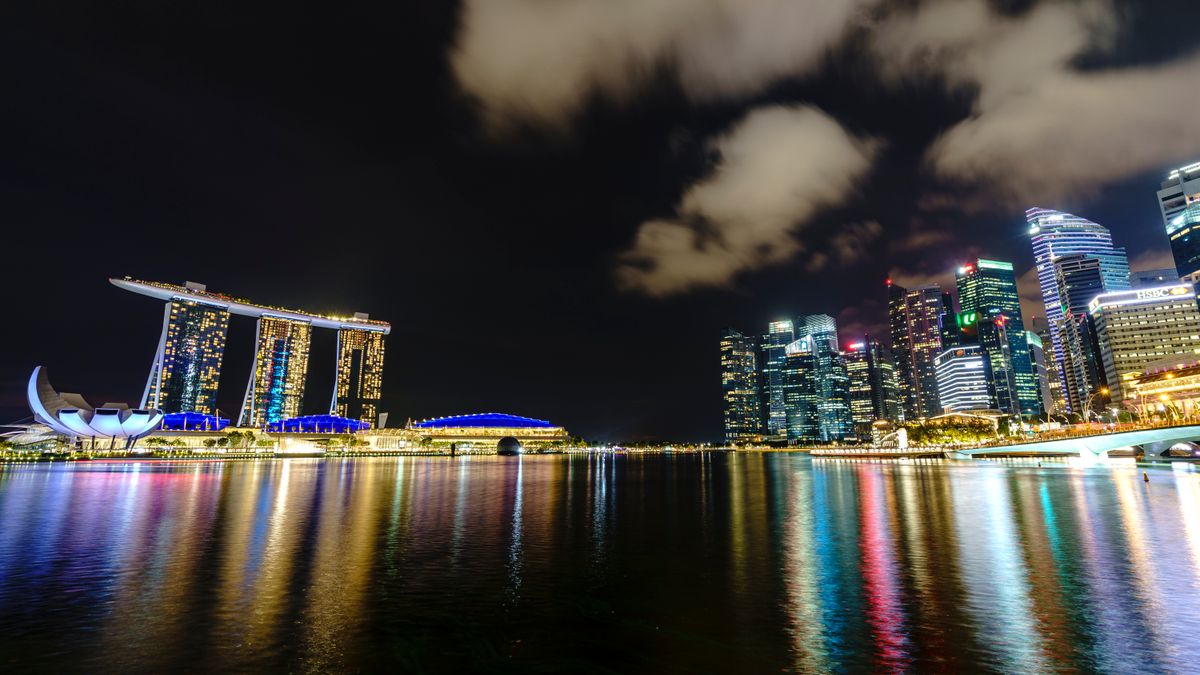
The anchor is the Civic District. The National Gallery — the largest collection of Southeast Asian modern art in the world, housed magnificently in the former Supreme Court and City Hall — rewards the tenth visit more than the first, which is exactly the quality you want in a ritual. A few minutes away, the National Museum of Singapore and the Asian Civilisations Museum along the river complete a museum belt you could rotate through monthly for years without exhausting.
But culture in Singapore is not confined to buildings with columns. It lives in the historic quarters, and the best cultural weekend is often just a slow, deliberate walk through one of them. Kampong Glam, with the golden dome of the Sultan Mosque rising over Arab Street and the perfumed clutter of Haji Lane, packs textile shops, Malay heritage and third-wave coffee into a few walkable blocks. Little India on a Sunday is the most sensorially alive neighbourhood in the country — garlands, spice, gold, and the beautiful chaos of Tekka Centre. Chinatown layers temples over shophouses over generations of food, from the Buddha Tooth Relic Temple to the sprawling Sri Mariamman, the city’s oldest Hindu temple, planted with perfect Singaporean logic in the middle of Chinatown.
Here’s the trick that turns cultural consumption into connection: add a question. Museums and heritage walks are famously easy first plans — I recommend them constantly in best date ideas in Singapore for exactly this reason — because the art does the conversational heavy lifting. Walk a gallery with someone and you learn how they see. Agree, before you enter, that each of you must find one thing worth defending, and the coffee afterwards will run long.
A culture ritual worth stealing: one quarter per month, same companions, rotating who chooses. Twelve months, twelve worlds, zero planning fatigue.
The Food Crawl Weekend
If Singapore has a love language, it is queueing for food with people you like, and the food crawl is the weekend format the city was born for.
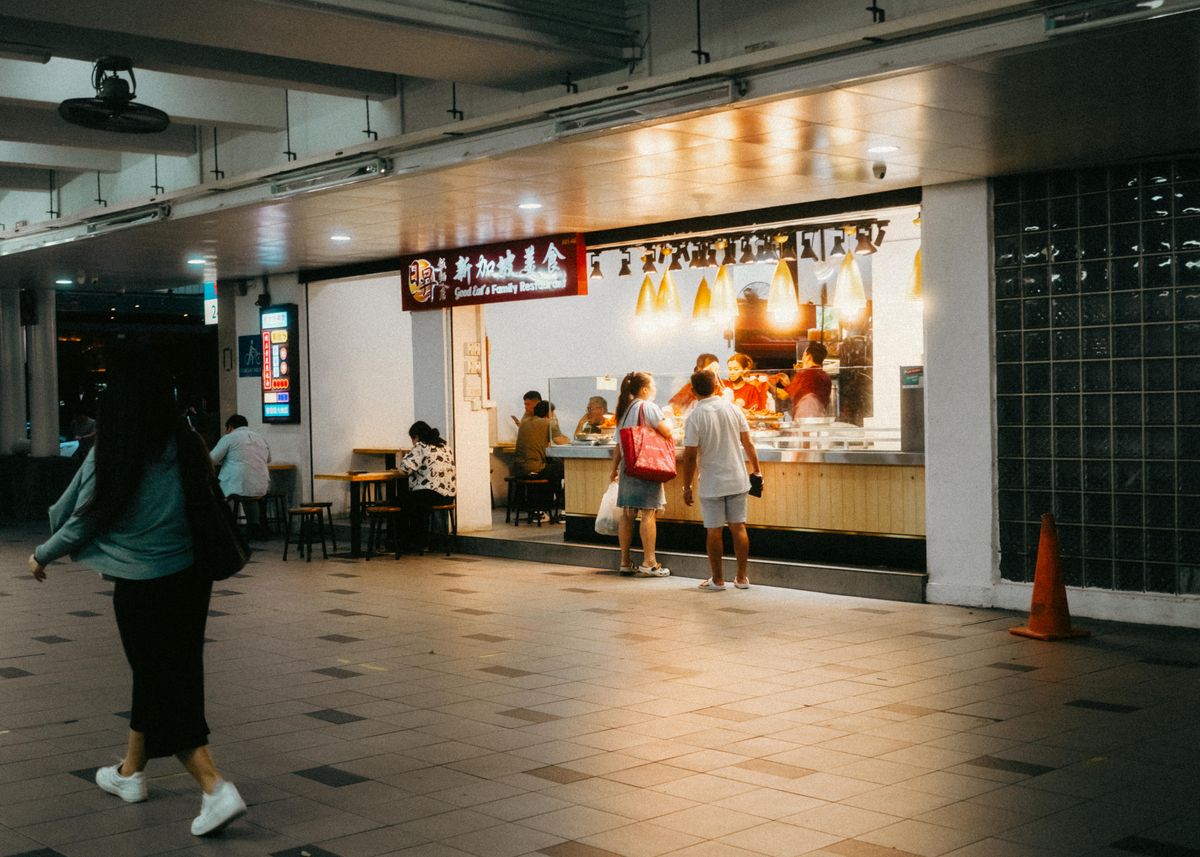
The hawker centre is the natural starting point, and the great names need little introduction: Maxwell Food Centre beside Chinatown, Old Airport Road Food Centre for those who take these matters seriously, Tiong Bahru Market with its upstairs constellation of stalls, and Lau Pa Sat holding court in its Victorian ironwork among the towers. Hawker culture is UNESCO-recognised now, which merely made official what every Singaporean already knew — that these communal tables are the country’s true parliament. The crawl format is simple and sociable by design: three or four people, one dish per stall, everything shared, everyone’s claims about the superior char kway teow subjected to immediate peer review.
For a slower register, there is Dempsey Hill — the former colonial barracks turned into one of the city’s most pleasant eating grounds, all black-and-white buildings and rain trees and long lunches that decline to end. Dempsey is where the food weekend exhales. And out east, the Katong and Joo Chiat corridor delivers the Peranakan chapter: pastel shophouses, laksa rivalries of genuine theological intensity, and enough kueh to justify the walk between servings.
The reason food crawls make such superb social rituals is structural. A shared table removes every awkwardness that a standing-around gathering creates: you have somewhere to look, something to do, and a built-in topic with infinite depth. It’s why so many of the gatherings we design at SPARK end up around food — when we looked at our first 892 completed real-world meetings, the pattern was impossible to miss: tables work. Strangers become companions over shared dishes at a speed nothing else matches, except possibly sweat.
Steal this ritual whole: a monthly hawker centre rotation, one centre per month, standing date, standing crew. It may be the highest-return social institution you ever found for under fifteen dollars.
The Coastal Weekend
Singaporeans sometimes forget they live on an island — until a coastal weekend reminds them, and everything softens.
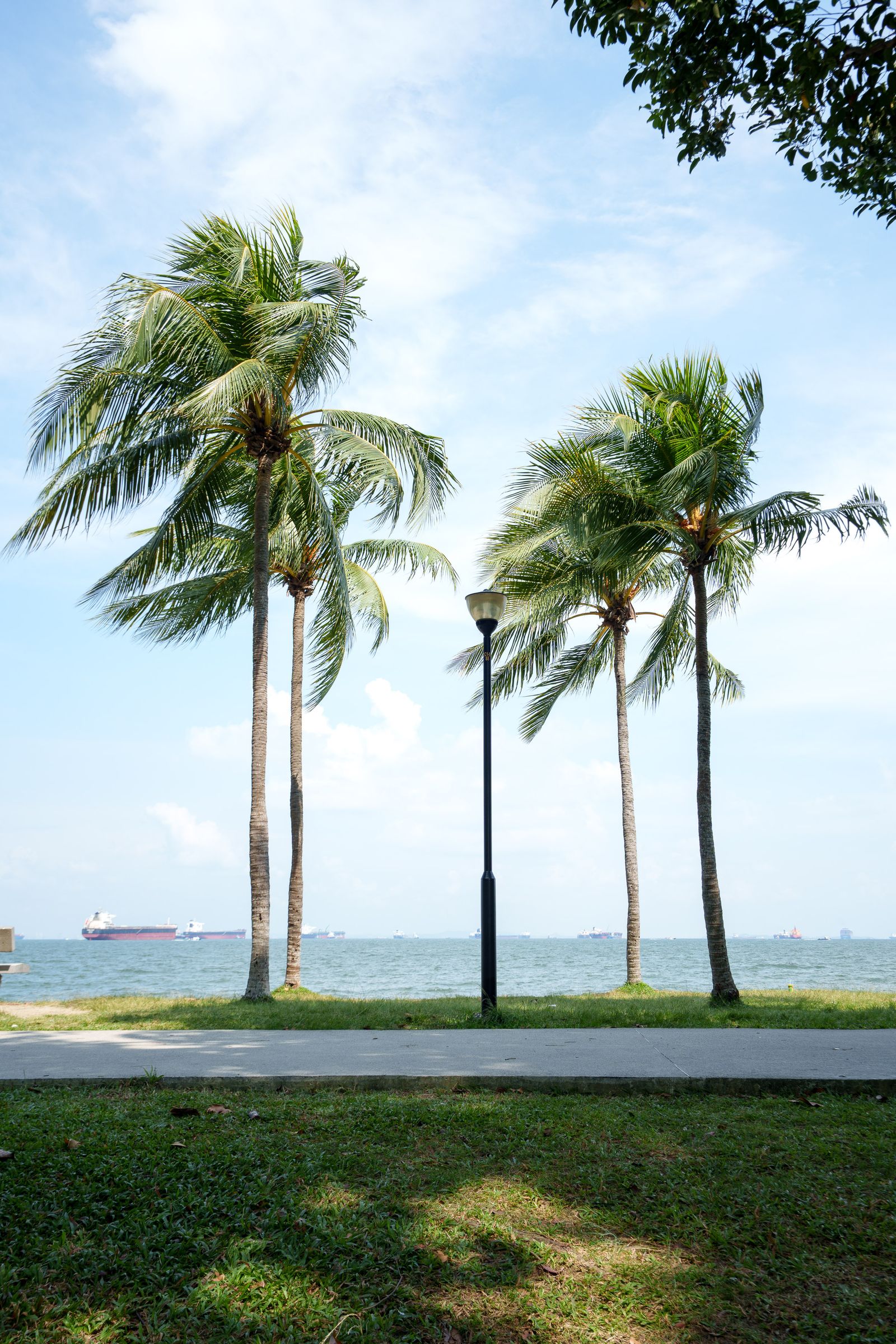
East Coast Park is the institution here, and it earns the title. Fifteen kilometres of seafront parkland where, on any weekend, half the country seems to be cycling, skating, barbecuing, flying kites or simply lying under the casuarinas watching the ships queue on the horizon. The classic ritual — cycle a stretch, swim badly, eat extravagantly at the hawker stalls near the lagoon — has been running for generations and shows no signs of fatigue. East Coast is where Singapore goes to be unproductive together, which is the entire point.
Changi, at the island’s eastern tip, offers the quieter register: Changi Beach with its old-Singapore languor, Changi Village and its famous nasi lemak, the Changi Point boardwalk at sunset. Changi is coastal Singapore at half-speed, and some Sundays that is precisely the dose required.
Sentosa plays the extrovert — Palawan and Siloso beaches, the cable car, the manufactured cheer of it all — and works best embraced without irony, in a group, with no agenda beyond the afternoon. And for the true escape, take the ferry from Marina South Pier to St John’s and Lazarus Islands, where a lagoon of genuinely improbable beauty waits forty-five minutes from the CBD, blissfully underdeveloped. Bring everything; there is nearly nothing there. That is the gift.
Coastal weekends carry a particular social property: they are unstructured by nature, and unstructured time is where acquaintances become friends. A dinner has an agenda and an ending. A beach afternoon has neither, and the conversations that surface in hour three are the ones that matter. If your friendships feel stuck at the pleasant-but-shallow layer, the sea is the solvent.
The Neighbourhood Wander
The most underrated weekend in Singapore costs nothing and starts at your own front door: the slow, aimless, deeply rewarding neighbourhood wander.
Tiong Bahru is the canonical version — Singapore’s oldest housing estate, all Streamline Moderne curves and walk-up charm, with its market at the centre and independent bookshops and bakeries threaded through the low white blocks. It is a neighbourhood built at walking pace, and it repays exactly that. Joo Chiat rewards the same treatment with more colour, literally: the ornamental shophouse facades along Koon Seng Road are the most photographed streetscape in the east for good reason. Holland Village has played the easy-going weekend village for decades; Everton Park hides its cafés inside HDB blocks like a secret worth keeping.
The wander matters for a reason beyond aesthetics. Sociologists talk about third places — the settings that are neither home nor work where community quietly assembles — and the neighbourhood wander is how you find yours. Become a weekend regular at one coffee shop, one market stall, one park bench circuit, and within a month the neighbourhood starts nodding back. Robert Putnam spent a career showing what societies lose when third places thin out; a Saturday spent finding and feeding yours is a small act of civic repair that happens to be delightful.
The wander is also the perfect low-stakes plan for a newer connection — someone from work, a friend-of-a-friend, someone you met once and liked. “Come wander Tiong Bahru with me, I’ll show you the bakery” is an invitation nobody finds intense. Where you find those newer connections in the first place is its own subject, and I’ve mapped the city’s best rooms for it in the best places to meet new people in Singapore.
How to Turn a Weekend Into a Ritual
A short, practical interlude, because the difference between reading this playbook and living it comes down to mechanics.
First, name it and calendar it. “We should do this more often” is where plans go to die; “first Saturday of every month, 9am, Botanic Gardens gate” is where they go to live. Rituals need coordinates.
Second, keep the core small and the door open. Two or three committed people sustain a ritual; a rotating cast of guests keeps it alive. The best standing plans I know have a spine and a welcome.
Third, make it survivable. The ritual that requires perfect weather, ninety dollars and a ninety-minute journey will not see February. MacRitchie plus kopi survives anything.
Fourth — and this is the one people miss — let the ritual do the emotional work. You do not need to be brilliant company every Saturday. The genius of the standing plan is that it keeps relationships alive through your busy months and flat moods, accumulating those Hall hours in the background while you simply show up.
Where SPARK Fits Into Your Weekend
Everything above assumes one thing: that you have the people. The friend to send this menu to, the crew for the hawker rotation, the someone for the Lazarus ferry. For a lot of people in Singapore — new arrivals especially, but plenty of long-timers too — that assumption is exactly what’s missing, and no listicle on the internet acknowledges it.
That gap is why SPARK exists. We’re not a dating app; we’re building social discovery — a verified community where curated real-world experiences do the introducing, whether you’re after friends, a crew, collaborators or something romantic. Many of our gatherings happen in precisely the places this playbook describes, drawn from a network of more than 3,000 partner venues across Singapore and Bangkok: the shared table, the walk, the crawl, the coast. Members arrive as strangers, and the format — small, designed, unhurried — does the rest. The weekends take care of themselves after that, because our favourite thing to watch is an experience turning into exactly the kind of standing ritual this article has been arguing for.
So if you read this playbook and felt the menu was appealing but the table was empty, start there. The plans are easy. The people are the point.
Looking to meet interesting people in real life? Download SPARK or join our verified community.
FAQs
What can I do in Singapore this weekend for free? More than almost any city at this price point: the Botanic Gardens, the MacRitchie and Southern Ridges trails, East Coast Park, and slow wanders through Kampong Glam, Little India, Chinatown or Tiong Bahru all cost nothing. Several national museums offer free general admission for Singaporeans and PRs. The honest constraint on a Singapore weekend is rarely money — it’s company and commitment.
What’s the best weekend plan for meeting new people? Choose formats with built-in repetition and shared activity: a weekly walk or run, a monthly hawker crawl, a recurring museum rotation. One-off outings entertain; recurring ones compound into friendship. If you’re starting without a crew at all, curated small-group experiences solve the cold-start problem faster than anything else I’ve seen.
Is Pulau Ubin worth a whole day? Emphatically yes, and it barely needs one — the bumboat from Changi Point takes about ten minutes, bicycles are rented on arrival, and Chek Jawa at low tide is one of Singapore’s genuine natural treasures. Go early, go with someone, and treat the day as unhurried by design. It is the closest thing Singapore has to time travel.
Founder’s Note
I used to think a good weekend was a full one. I now think a good weekend is a shared one, and the fullest calendars I’ve ever seen belonged to some of the loneliest people I’ve ever met.
Singapore will hand you an extraordinary stage every Saturday of your life: rainforest at dawn, galleries at noon, hawker tables at dusk, an island ferry whenever you want one. But a stage is not a play. The play is the people — the standing crew, the monthly table, the friend who knows that first-Saturday means Botanic Gardens without being asked.
So pick one weekend from this playbook. Then pick one person. Then make it a ritual, and guard it like the valuable thing it is. Fifty-two weekends a year is either a great deal of time or almost none at all, depending entirely on who’s beside you.
See you out there.
— Sunny Khurana, Founder & CEO, SPARK
Keep Reading
More from the Journal


Looking to meet interesting people in real life?
SPARK is a members’ community for dating, friendship and professional connection — built around curated real-world experiences in Bangkok, Singapore and, from September, New Zealand.
Or read us first — new essays on real-world connection, monthly.