A City of Ten Million Strangers and a Thousand Name Tags
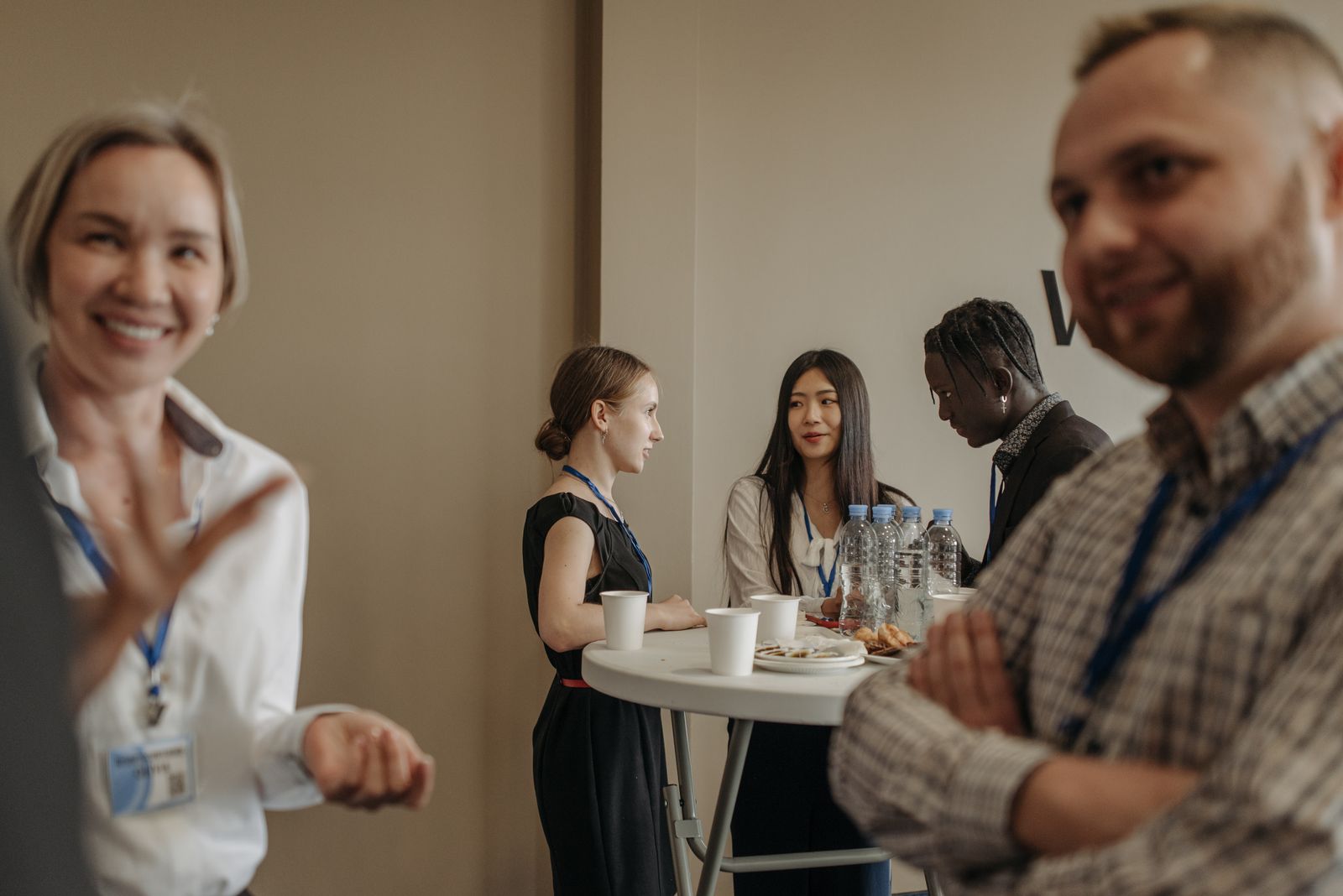
Bangkok has no shortage of rooms to walk into. On any given week you could join a chamber of commerce sundowner in Sathorn, a startup meetup above a coworking space on Sukhumvit, a fintech panel in a hotel ballroom, a creative breakfast in Ari and a “founders and friends” drinks night somewhere up a tower in Thonglor. The city’s networking calendar is enormous, energetic and permanently switched on — which makes it all the stranger that so many professionals here tell me the same thing: they attend everything and belong to nothing.
I hear it from Thai professionals returning from studies abroad, from expats two years into a posting, from founders who can fill a phone with contacts but not a table with allies. The events are plentiful. The relationships are scarce. And the gap between those two facts is not a Bangkok problem so much as a design problem — I’ve written a whole essay on why most networking events fail, and nearly every failure mode described there is on nightly display in this city.
So this is not a listing of specific mixers that will be stale by the time you read it. Bangkok’s event circuit reinvents itself faster than any directory can track. Instead, this is a guide to the kinds of rooms that reliably exist here, what each one is actually good for, and how to behave inside them so that an evening spent networking in Bangkok becomes something rarer: the first chapter of a relationship.
Bangkok Runs on Relationships — Which Changes Everything
Before choosing events, it helps to understand the water you’re swimming in. Business in Thailand has always been relationship-first. Deals follow trust, trust follows familiarity, and familiarity follows time spent together — usually over food, rarely over a contract. The Western habit of leading with the transaction and backfilling the relationship later sits awkwardly here. People want to know who you are before they care what you do.
This is not a quaint cultural footnote; it is the operating system. And it means the standard networking playbook — arrive, pitch, card, leave — performs even worse in Bangkok than it does elsewhere. The professionals who thrive here are the ones who show up repeatedly, give before they ask, and let the professional dimension of a relationship emerge from a personal one rather than the other way round.
The research agrees with the culture. Robin Dunbar’s work on the layers of friendship shows that the ties which actually carry weight — the people who make introductions, share opportunities, tell you the truth — sit in small inner circles built through repeated contact. Jeffrey Hall’s 2018 research at the University of Kansas put hours on it: moving someone from acquaintance to friend takes dozens of hours together. No single event, however glittering the skyline behind it, can do that. Which means the real question is never “which event should I attend?” but “which rooms will I return to often enough for familiarity to do its slow, compounding work?”
There is a second Bangkok-specific truth worth naming: this is a city of arrivals and departures. Expat postings end, digital nomads migrate with the seasons, and even locals cycle between Bangkok and abroad. Churn is the tax on every network built here. The professionals with durable networks in this city are the ones who invest disproportionately in people who are staying — and in communities strong enough to survive any individual leaving.
The Rooms That Reliably Exist: Chambers, Councils and Institutions
Every city has an institutional layer of networking, and Bangkok’s is unusually good. The foreign chambers of commerce — British, American, Australian, German, French, Japanese and a dozen more — run steady calendars of briefings, sundowners and joint-chamber evenings that have operated for decades. The embassy-linked business councils do similar work. University alumni associations, both Thai and international, convene regularly. These institutions are the marathon runners of the city’s professional life: unglamorous, consistent, and quietly where a great deal of real business begins.
Their strength is precisely what makes a first visit underwhelming. You will walk into a room of people who mostly already know each other, and you will feel like the new student at midterm. Go back anyway. Institutions reward tenure. Psychologists call it the mere-exposure effect — we grow to like and trust the people we repeatedly encounter — and chambers are mere-exposure machines. By your fourth event you are a familiar face; by your tenth you are part of the fabric. In a relationship-first city, that transition is worth more than fifty one-off appearances across fifty different mixers.
The same logic applies to Bangkok’s recurring global formats — the local editions of international series like Creative Mornings or Startup Grind, and the long-running industry meetups that gather the tech, design, hospitality and finance communities. Their value is not any single session. It is that they meet again next month, with enough overlap in the room for relationships to accrete.
A simple rule captures all of this: in Bangkok, pick two or three recurring rooms and attend them relentlessly, rather than sampling twenty rooms once. Consistency is the entire strategy.
Rooftops Are for First Impressions, Not Relationships
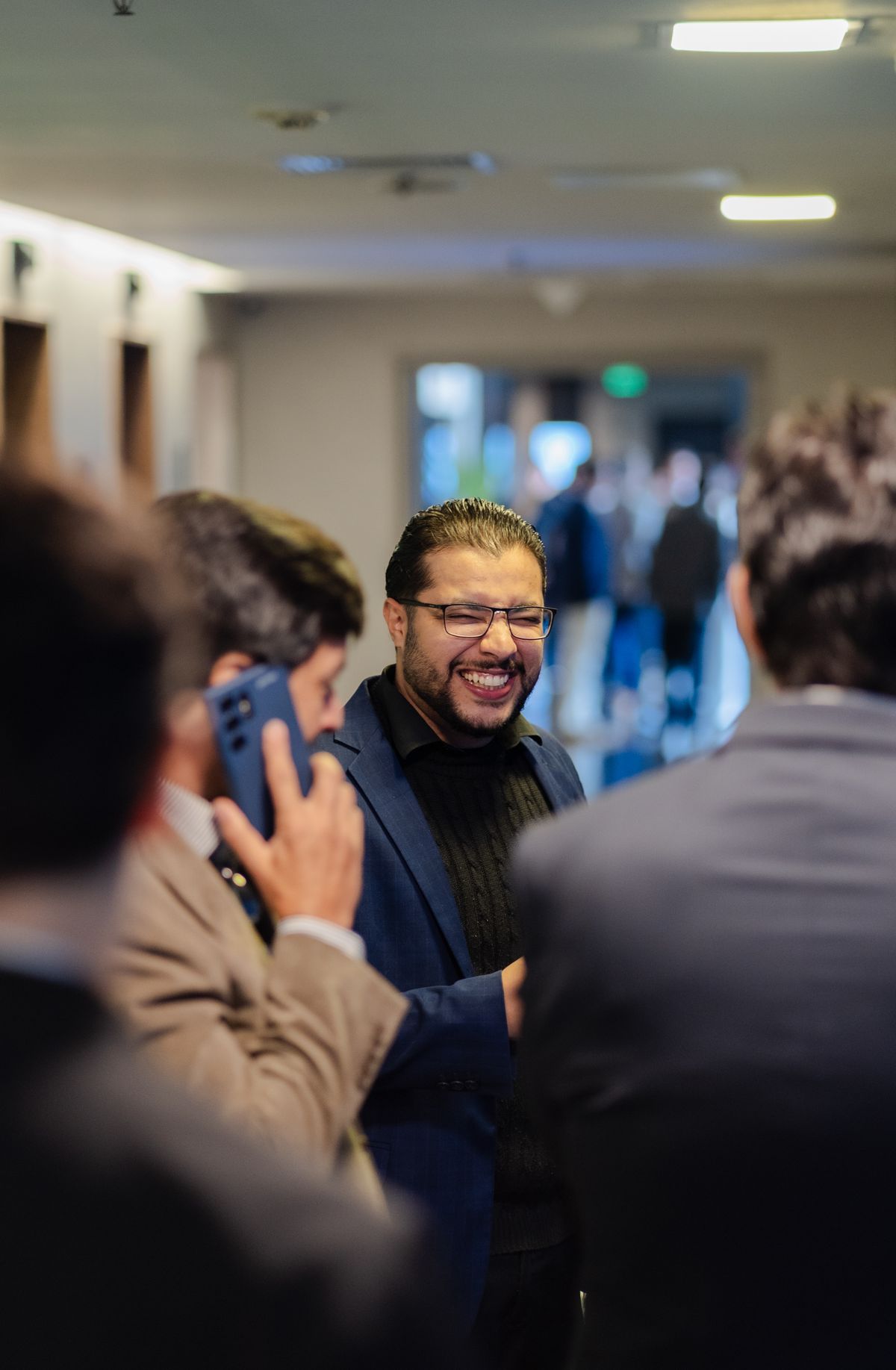
Bangkok’s signature networking venue is, of course, the rooftop. The city does elevated drinks better than almost anywhere on earth — Vertigo at the Banyan Tree, Octave above Thonglor, Tichuca glowing over Sukhumvit — and a striking share of the city’s mixers, launch parties and chamber sundowners end up somewhere with a view.
Enjoy them. But be honest about what a rooftop mixer is: a first-impression engine. The physics of a hundred people, loud music and a queue at the bar guarantee that every conversation is short, shallow and conducted while both parties scan the crowd. Treat these evenings as scouting, not building. Your objective is not ten conversations; it is to find the one or two people with whom the conversation had actual life in it — and then to get that conversation off the rooftop and into somewhere quieter within a fortnight.
That reframe changes how you spend the evening. You stop optimising for coverage and start optimising for signal. You leave earlier. You take fewer cards and make more notes. And you stop feeling that low-grade despair that comes from performing enthusiasm at strangers for three hours — because the rooftop is no longer being asked to do a job it was never designed for.
The event, in other words, is the overture. In a city where the business culture already expects relationships to be built over shared meals and repeated meetings, the follow-up is not an admin task after the networking. The follow-up is the networking.
Small Tables Are Bangkok’s Best-Kept Networking Secret
Here is the pattern I have watched repeat itself for years, on both sides of the Gulf of Thailand: the professionals with the strongest networks built them at small tables, not big parties.
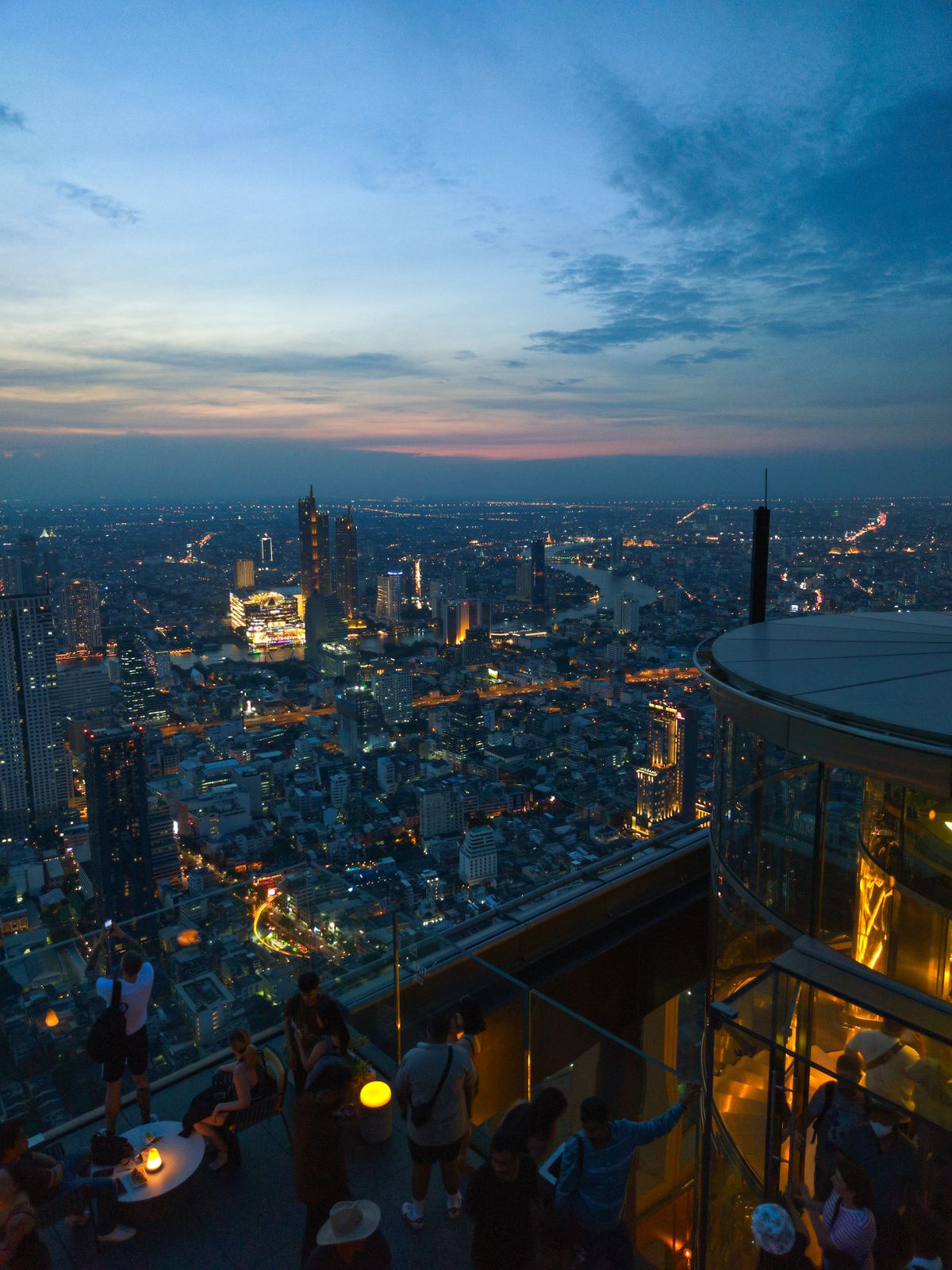
A dinner of eight in a Charoenkrung shophouse restaurant. A breakfast of six before the heat arrives. A long Sunday lunch that was nominally about nothing. Put a handful of thoughtfully chosen people around a table for two hours and you get what no ballroom can produce: whole conversations. By the time the mangoes and sticky rice arrive, you know how someone thinks, what they’re building, what they’re worried about, what makes them laugh. Trust is built on that kind of disclosure, and disclosure needs safety, and safety needs smallness.
Bangkok is almost unfairly well suited to this format. The food culture is built for sharing; the price of an extraordinary meal is a fraction of Singapore’s or London’s; and the city’s dining rooms, from street-level som tam institutions to quiet chef’s counters, give a small gathering a texture that no hotel function room ever will. The raw material for world-class small-format networking is everywhere. What the city has historically lacked is curation — someone to decide which eight people should be at the table together.
That gap is precisely what we built SPARK’s experiences to fill. Our starting unit is not the event but the table: verified members, matched into small curated gatherings — dinners, breakfasts, activities — designed so that the right strangers end up in genuine conversation. We now work with 3,000+ partner venues across Bangkok and Singapore, and the lesson from every one of those tables has been the same: the smaller and better-composed the setting, the more likely people are to meet again without us. I compared notes on this at length in our guide to the best networking events in Singapore, and the conclusion travels perfectly: depth beats scale, everywhere, every time.
The Best Networking in Bangkok Doesn’t Call Itself Networking
Ask people with genuinely rich networks in this city where their most valuable relationships began, and you will hear surprisingly few mentions of anything with “networking” in the title. You will hear about a run club that loops Benjakitti Park at seven in the morning. A Muay Thai gym in Ekkamai. A cooking class, a language exchange, a padel court, a cycling group that leaves before dawn to beat the traffic, a regular table at a jazz bar. Shared activity is the great unadvertised networking circuit of Bangkok.
The reason is structural. When two people meet at a formal networking event, the frame is transactional from the first handshake — what do you do, what do you need — and every instinct sharpens into evaluation. When two people meet mid-run or mid-recipe, the frame is the activity, and whoever they are professionally surfaces later as a discovery rather than an opening bid. Relationships that begin as discoveries carry a warmth that transactions rarely acquire. Sociologists have a name for the underlying force — the propinquity effect: we bond with the people we repeatedly and casually encounter. Activities manufacture that casual repetition. Conference halls manufacture queues.
This is what we mean by social discovery, the category SPARK exists to build — not dating, not “professional networking”, but verified people meeting in real life around experiences worth having, and letting friendship, collaboration, mentorship and the occasional romance arrive in whatever order life prefers. If you want the fuller map of the city through that lens, we’ve written a companion guide on how to meet new people in Bangkok; you’ll notice how few of the best answers involve a lanyard.
For newcomers, this route matters doubly. Bangkok can be a disorienting city to land in, and the fastest way through that phase is not more mixers but more repetition with the same faces — something I explored in making friends in Bangkok as an expat. The advice converges from every direction: choose recurring rooms, and let time do the heavy lifting.
A Working System for Networking in Bangkok
Let me compress all of this into something you could actually run for the next twelve months.
Choose your recurring rooms. One institution — a chamber, council or alumni association relevant to your world — attended every month without fail. One interest-based community — a sport, a class, a club — attended weekly if you can. That is your baseline of mere exposure, and it already puts you ahead of most of the city.
Use big events as scouting. Go to the rooftop mixers and the panels when the topic genuinely interests you, but with a modest objective: one or two people whose conversation had life in it. Seniority is not the filter; aliveness is.
Move fast to the small table. Within a week or two, convert the good conversations into something smaller — a coffee in Sathorn, lunch near their office, a seat at a dinner you’re assembling. In Bangkok the invitation to share a meal is not merely polite; it is the culturally fluent way of saying the relationship matters.
Follow up like a human. Reference the actual conversation. Offer something small and concrete — an introduction, an article, an answer to the problem they mentioned. “We should stay in touch” is where relationships go to die. And then, the step almost everyone skips: reach out again a month later, and the month after. Hall’s friendship-hours research is worth taking literally — accumulated time is the only currency that converts acquaintances into allies.
Be generous ahead of need. The most connected people in Bangkok are invariably described the same way: generous first, connected second. Make introductions expecting nothing on any single one. In a relationship-first culture, a reputation for generosity is the single most valuable asset a professional can hold — and it compounds like one, slowly and then suddenly.
None of this is complicated. It is merely unusual, because the events industry profits from attendance, not from what happens afterwards. The compounding belongs entirely to you.
Where SPARK Fits In
I’ll be direct about our place in all of this, because SPARK was built in Bangkok out of exactly the frustrations this essay describes.
We are not a networking platform, and we are emphatically not a dating app. SPARK is a social discovery community: every member is verified, and the product is not a feed or a swipe but a seat — at a curated dinner, a small gathering, an experience composed so that interesting, vetted people end up in real conversation. The professional thread is woven through everything, but it is never the whole cloth; the same table that produces a business partnership produces friendships, mentors and occasionally more, and we believe that blend is precisely why it works. More than 1,397 of our members have now met in person, and the pattern in their feedback never varies: real conversation, in a small room, with people someone thought carefully about — that is where trust begins.
If Bangkok has taught me anything, it is that this city rewards exactly that kind of patience. The relationships here are extraordinary. They are simply not available at arm’s length, four minutes at a time, over the noise of a crowded rooftop.
Looking to meet interesting people in real life? Download SPARK or join our verified community.
FAQs
What are the best networking events in Bangkok for building real relationships? Prioritise recurring, small-format rooms: chamber of commerce and business council calendars, long-running industry meetups and global formats like Creative Mornings or Startup Grind, and curated small gatherings such as dinners of six to ten. Large rooftop mixers are useful for scouting, but relationships are built through repetition in smaller settings. Pick two or three communities and attend them consistently for a year.
How is networking in Bangkok different from other cities? Thai business culture is relationship-first: people want to know who you are before they engage with what you do, and trust is typically built over shared meals and repeated meetings rather than quick pitches. Bangkok’s high expat turnover also means networks decay faster, so consistency and community matter more here than almost anywhere. Lead with generosity, follow up over food, and invest in people and institutions that are staying.
Where can I network in Bangkok if I hate networking events? Choose shared activities instead: morning run clubs around Benjakitti or Lumpini, Muay Thai and climbing gyms, cooking classes, language exchanges and sports leagues all build relationships without the transactional frame. The professional value emerges naturally once the human connection exists. Curated communities like SPARK exist precisely for this — verified people meeting around experiences rather than name tags.
Founder’s Note
Bangkok is where SPARK was born, and it remains the city that taught me the lesson underneath this whole essay: nothing important here happens at arm’s length. Every partnership, every hire, every piece of luck that shaped this company arrived through a long conversation, usually over a meal, usually with no agenda — and not one of them began with a business card on a rooftop.
That is not a criticism of the rooftops. It is an argument about sequence. The relationship comes first and the business follows, never the other way round, and Bangkok — generous, food-obsessed, patient with those who show up repeatedly — might be the best city in the world at proving it.
Go to fewer events. Sit at more tables. The city will meet you halfway.
— Sunny Khurana, Founder & CEO, SPARK
Keep Reading
More from the Journal


Looking to meet interesting people in real life?
SPARK is a members’ community for dating, friendship and professional connection — built around curated real-world experiences in Bangkok, Singapore and, from September, New Zealand.
Or read us first — new essays on real-world connection, monthly.