
There is a particular kind of loneliness that only exists in remarkable cities.
Singapore is, by almost any measure, one of the most connected places on Earth. You can cross the island in forty minutes, eat food from thirty countries in a single hawker centre, and attend a different professional mixer every night of the week if you have the stamina for it. Your phone contains hundreds of contacts. Your LinkedIn is thriving. Your calendar is full.
And yet.
I have lost count of the number of people who have told me some version of the same sentence: I know so many people here, but I don't really have anyone. It comes from expats who arrived eighteen months ago and are still eating dinner alone. It comes, more quietly, from Singaporeans who watched their school friends scatter into marriages, mortgages and eighty-hour work weeks, and realised one Tuesday evening that nobody had called in months.
Knowing lots of people is not the same as having a community. Singapore teaches this lesson faster than almost anywhere I know. The good news — and this whole essay is really about the good news — is that friendship here is not a matter of luck or charisma. It is a matter of structure. Once you understand why the city works the way it does, you can build a real circle deliberately, the way you would build anything else that matters.
Why Friendship Feels Different Here
Let's start with an honest diagnosis, because most advice about making friends skips it and goes straight to "just put yourself out there", which is roughly as useful as telling someone with a broken leg to just walk it off.
Singapore has two distinct friendship problems, and they belong to two different groups of people.
If you grew up here, your problem is that the city's social architecture was largely finished by the time you turned twenty-five. Singaporean friendships tend to form in a handful of intense, shared crucibles — school, junior college, National Service, university hall — and those bonds are genuinely deep precisely because they were forged over thousands of unhurried hours. But the same system that builds those circles also seals them. By your thirties, everyone you know is triangulating between career, family and an ageing parent or two, and the unstructured time that once made friendship effortless has simply vanished. Nobody decided to stop making friends. The inputs just quietly disappeared.
If you moved here, your problem is the opposite: you are starting from zero in a city where a meaningful share of your potential friends are on two-to-four-year contracts. Expat Singapore is a carousel. You invest six months in someone and then watch them get posted to Sydney. After the second or third goodbye, many people start unconsciously protecting themselves — friendly with everyone, close to no one. Meanwhile the sealed local circles I just described can feel, from the outside, like buildings with no visible door.
Underneath both problems sits the same arithmetic. Jeffrey Hall's 2018 research at the University of Kansas found that casual friendship takes somewhere in the region of fifty hours of shared time, real friendship closer to ninety, and close friendship upwards of two hundred hours. Two hundred hours. In a city where the working week routinely swallows fifty or sixty of them, that time does not happen by accident. Robin Dunbar's work on the layers of friendship points the same way: the inner circles of our lives are small, and they are maintained by frequency, not sentiment. A friend you never see migrates outward through the layers whether you intend it or not.
So the feeling that friendship is harder in Singapore is not a personal failing and it is not in your head. It is structural. Which is oddly liberating — because structural problems have structural solutions.
Choose Communities Over Events
Here is the single biggest mistake I watch people make, in Singapore more than anywhere: they try to solve a repetition problem with volume.
They attend everything. Networking nights, rooftop mixers, gallery openings, conference after-parties. They collect fifty pleasant seven-minute conversations a month and wonder why none of them turn into anything. The answer is that a one-off event gives you exactly one exposure to each person, and one exposure is almost never enough. Psychologists call the underlying mechanism the mere-exposure effect: we grow to like and trust people simply through repeated contact. Its cousin, the propinquity effect, explains why your closest university friends were usually the people who lived on your corridor. Friendship is not primarily made of chemistry. It is made of recurrence.
The practical implication is almost embarrassingly simple: stop optimising for events and start optimising for communities — the same faces, in the same place, at a regular rhythm.
Singapore is unusually rich in these if you know where to look. Running crews that meet every Tuesday at the Marina Bay loop or East Coast Park. Climbing gyms, which might be the single most sociable athletic environment ever invented, because half of every session is spent standing around watching other people fail at the same problem you just failed at. Weekly football, netball and touch rugby leagues. Book clubs. Toastmasters chapters. Church and temple communities. Volunteer organisations, where you meet people pre-filtered for generosity. Founder breakfasts and industry circles — and if professional connection is your entry point, we've written a separate guide to the networking events in Singapore actually worth your evening, because most are not.
The selection criteria matter more than the category. Ask three questions of any community before you commit. Does it meet at least fortnightly? Do the same people actually return? And is there time built in around the activity itself — coffee after the run, dinner after the class — where conversation can breathe? A yes to all three is worth more than a dozen glamorous one-offs.
Then commit for a quarter. Not two sessions — twelve. The first few weeks you will feel like an outsider, because you are. Around week five or six, something shifts: people start expecting you. You have moved, in Dunbar's terms, from stranger to familiar face, and familiar faces are the raw material of friendship. If you're mapping out where to begin, our guide to the best places to meet new people in Singapore goes venue by venue.
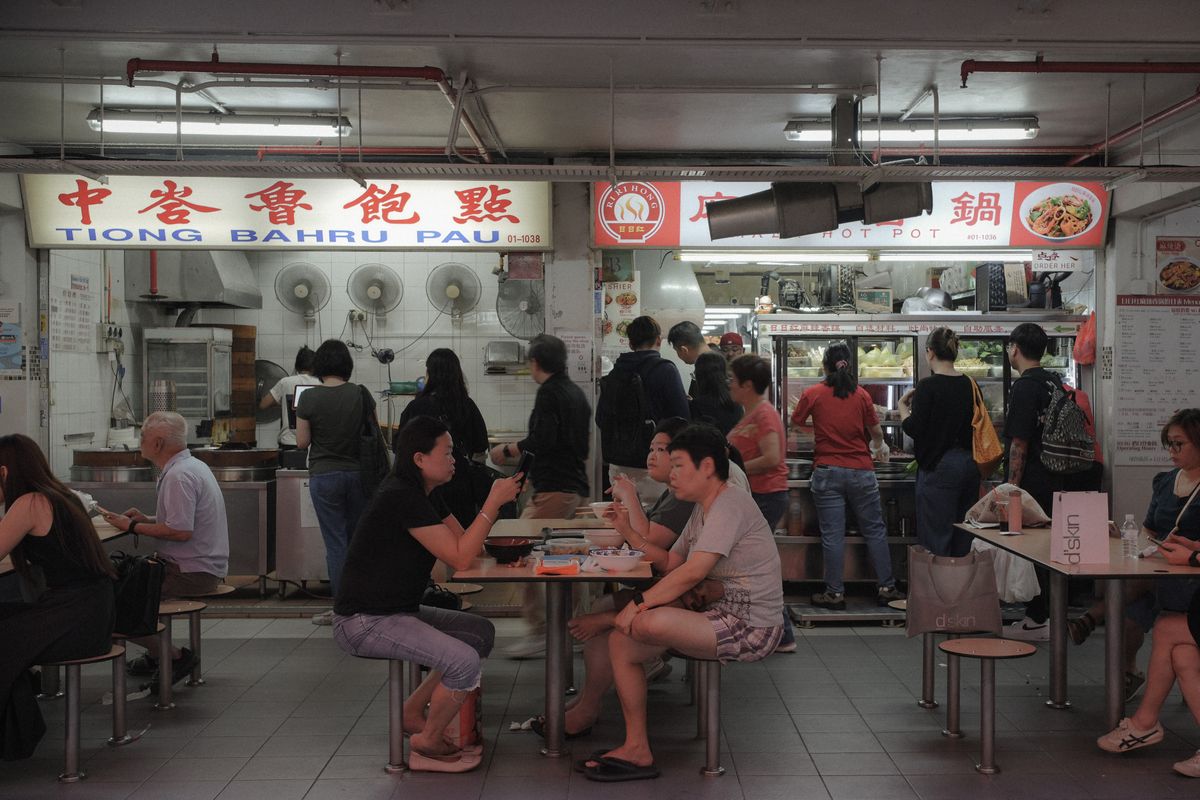
Shared Experiences Build Better Friendships
There is a reason the friendships of your twenties formed on road trips and in kitchens rather than across café tables, and it is worth understanding, because Singapore's default social format — the catch-up meal — works against you.
Face-to-face conversation with a near-stranger is a performance. Both of you are managing eye contact, filling silences, auditioning. It is why so many first coffees feel like interviews and go nowhere. Side-by-side activity removes almost all of that pressure. When you are cooking, hiking, climbing, painting or losing badly at a table quiz, the activity absorbs the silences, supplies the conversation topics and gives you a shared micro-history — the wrong turn on the trail, the sauce that split — which is the actual currency of early friendship. Nobody bonds over exchanging CVs. People bond over things that happened to them together.
Singapore is quietly brilliant for this. Walk the MacRitchie treetop trail with someone and you will learn more about them in two hours than in five dinners. Do a hawker crawl through Old Airport Road or Maxwell where the entire format is passing plates and arguing about which char kway teow is superior. Take a pottery or Peranakan cooking class. Kayak at Kallang. Join a Sunday cycling loop out to Changi. The specific activity barely matters. What matters is that it is genuinely shared — done together, not merely attended in parallel.
This principle sits at the heart of how we design everything at SPARK. Our experiences are built around doing rather than mingling, in small curated groups, because a decade of watching people try to connect has taught us that the fastest route between two strangers is never a conversation opener. It is a shared task.
One more note, mostly for the expats reading this: shared experience is also the most reliable door into local circles. A Singaporean who would never respond to "we should grab coffee sometime" — a phrase everyone correctly understands to mean nothing — will happily see you every Saturday at the same climbing wall. You do not talk your way into a sealed circle. You show up your way in.
Become the Organiser
Now for the highest-return move available to anyone building a social life in this city, and the one people resist the most.
Stop waiting for invitations. Issue them.
Here is what I have observed across thousands of meetings in our community: in any city, and especially in one as time-poor as Singapore, almost everyone is waiting for someone else to organise something. The desire for connection is enormous and almost entirely latent. Robert Putnam spent a career documenting the decline of the people and institutions that used to do this convening for us — the clubs, the congregations, the bowling leagues. The infrastructure of gathering has thinned everywhere. Which means the person who simply decides to become infrastructure acquires a kind of quiet social gravity that no amount of charm can match.
The organiser's advantages compound. You choose the people, so every gathering is one you actually want to attend. You become the connector — the node through which others meet — which Putnam would call social capital and I would call being the person everyone is glad to see. And you convert acquaintances into friends at double speed, because inviting someone is itself a declaration: I thought of you. Half the battle of early friendship is simply evidencing that you care, and a WhatsApp invitation does it in one line.
Start smaller than you think you need to. A standing brunch, first Saturday of the month, same kopitiam, four people. A monthly founders' dinner where the only rule is no pitching. A Sunday walking group. The format matters far less than the recurrence — remember, you are building repeated exposure, not staging occasions. Keep it cheap, keep it regular, and hold it even when only two people turn up, because the two who turned up are the point.
And expect a strange discovery: people are absurdly grateful. Nobody remembers who attended things. Everyone remembers who brought them together.
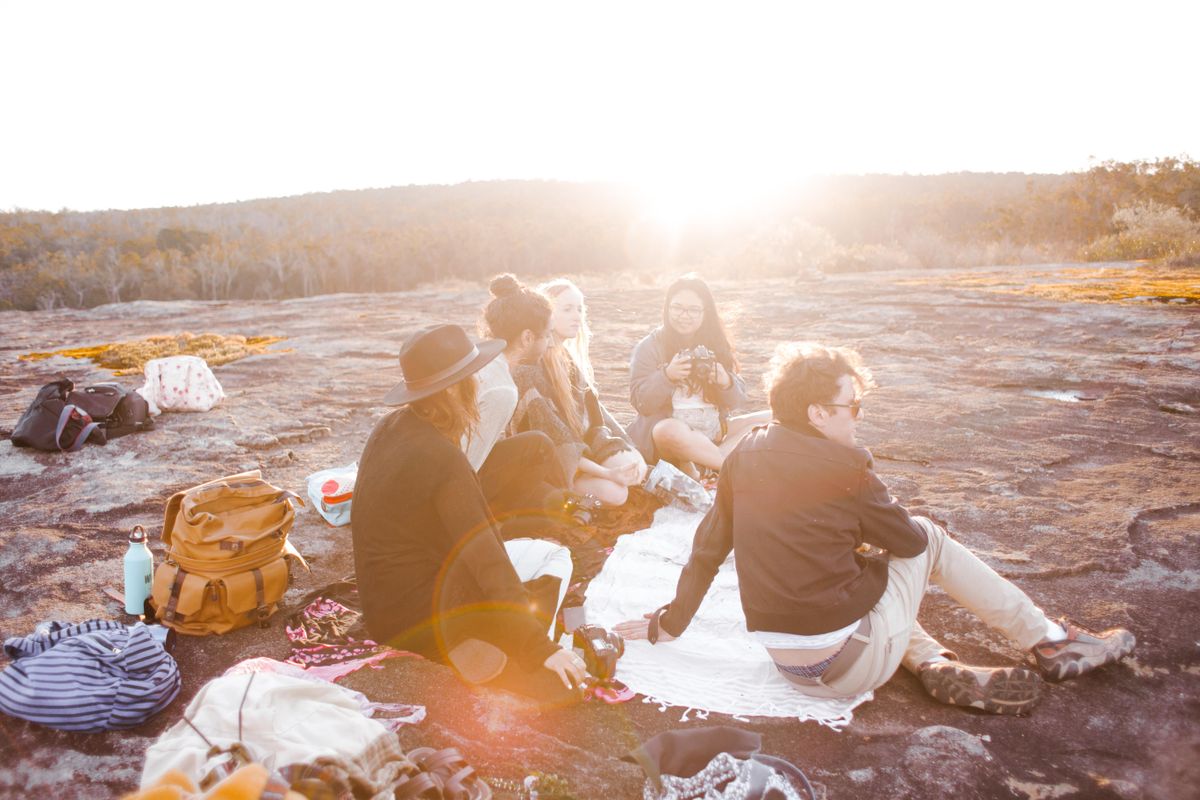
Friendship Is Built Between Meetings
Everything I have described so far gets you into rooms with the same good people, repeatedly. It is necessary. It is not sufficient. Because friendship is not actually built at the gatherings — it is built in the connective tissue between them, and this is the stage where most promising connections in Singapore quietly die.
You know the pattern. A genuinely great conversation at the run club. Mutual enthusiasm. "We should do this again." And then nothing, forever, not because either person stopped caring but because both were busy and each assumed the other would write first. Multiply that by every promising person you have met in the last two years and you begin to see the size of the leak.
So plug it with a method. Mine is deliberately unromantic.
Within forty-eight hours of meeting someone interesting, send one specific message — not "great to meet you", but a link to the book you discussed, the article you mentioned, the follow-up to the joke. Specificity proves the conversation registered. Then, within two weeks, propose one concrete thing with a date attached: laksa at the place you argued about, a walk at the Botanic Gardens on Saturday morning. Concrete beats vague every single time, because vague requires the other person to do the planning, and nobody in this city has spare planning capacity.
Then layer in the two moves that separate acquaintance from friend. First, introductions: when you meet someone, ask yourself who else you know that they should know, and connect them. It is generous, it costs nothing, and it makes you the hub of an expanding web rather than a spoke in someone else's. Second, small maintenance: the two-line message when you see something that reminds you of them, the good-luck text before their pitch, the how-did-it-go after. Hall's two hundred hours are not accumulated in grand gestures. They are accumulated in fragments, over months, by whoever bothers to keep showing up.
None of this is manipulation. It is simply taking friendship as seriously as we have all been taught to take our careers. We plan our work meticulously and leave our closest relationships to chance, then wonder why one flourishes and the other thins. Intention is not the enemy of authenticity. In an overscheduled city, intention is what authenticity looks like.
Why We Built SPARK
I will be brief here, because this essay is a method, not an advertisement — but the method is exactly why SPARK exists.
Everything above requires one scarce ingredient: a reliable supply of good, verified, genuinely open people to build with. That is the piece the existing tools fail to deliver. Swipe apps optimise for the match and abandon you at the part that matters — the match was always easy; the meeting is what's hard. Event platforms hand you crowds of strangers you will see exactly once. We built SPARK to do the opposite: a verified community where the entire product is curated shared experiences in the real world — friendship, professional connection, mentorship and, yes, sometimes romance, but never reduced to it. We are not a dating app. We are building social discovery: getting people off their phones and into each other's lives. The full story of why is on the Journal, and the thinking behind our verification process is laid out on our safety page.
What convinces me we are onto something is not the download numbers. It is that 892 real-world meetings have now actually happened through SPARK — dinners, hikes, workshops, small tables of strangers becoming something else — and that most of our growth arrives by word of mouth, which for a product about trust is the only referendum that counts.
The method in this essay works with or without us. But if you want the cold-start solved — the vetted room, the recurring table, the people already committed to showing up — that is precisely what we spend our days building, in Singapore and in Bangkok before it, and soon beyond.
Looking to meet interesting people in real life? Download SPARK or join our verified community.
FAQs
How long does it realistically take to build a social circle in Singapore? Give it two to three seasons, not weeks. Research on friendship formation suggests close friendship takes upwards of two hundred shared hours, which at a weekly rhythm means real bonds start solidifying around the six-month mark. The pace quickens dramatically once you join recurring communities rather than one-off events, because the same hours compound instead of scattering.
I'm Singaporean, not an expat — does this advice still apply? Entirely, though your starting move differs. Locals usually need to reopen a life that quietly sealed itself, so begin by becoming an organiser: revive dormant friendships with a standing monthly gathering, then add one new recurring community to bring fresh faces in. Expats, starting from zero, should join communities first and organise second.
Is it harder to make friends in Singapore than in other cities? Harder than its size suggests, for structural reasons — long working hours, a transient expat population and local circles formed early in life. But the same density that creates the problem also solves it: nowhere else can you reach a dozen recurring communities within a forty-minute journey. The difficulty is real, and so is the fix.
Founder's Note
I have built SPARK across some of the most extraordinary cities in Asia, and every one of them has taught me the same thing: a city becomes home the moment the faces become familiar. Not the skyline, not the food, not the postcode — the people who notice when you don't turn up.
Singapore rewards intention more than any city I know. It is efficient, dense and full of remarkable people who are all quietly waiting for someone to go first. Be the one who goes first. Join the thing. Host the brunch. Send the follow-up. Six months from now, a version of this city exists in which Tuesday nights mean the run crew, Saturdays mean your table, and the phrase "I know so many people here, but I don't really have anyone" belongs to somebody else's story.
When you find your community, everything changes. I hope this essay shortens your road to it — and if our table can help, you know where to find us.
— Sunny Khurana, Founder & CEO, SPARK
Keep Reading
More from the Journal


Looking to meet interesting people in real life?
SPARK is a members’ community for dating, friendship and professional connection — built around curated real-world experiences in Bangkok, Singapore and, from September, New Zealand.
Or read us first — new essays on real-world connection, monthly.