
Singapore is one of the easiest cities in the world in which to encounter people, and one of the hardest in which to actually meet them.
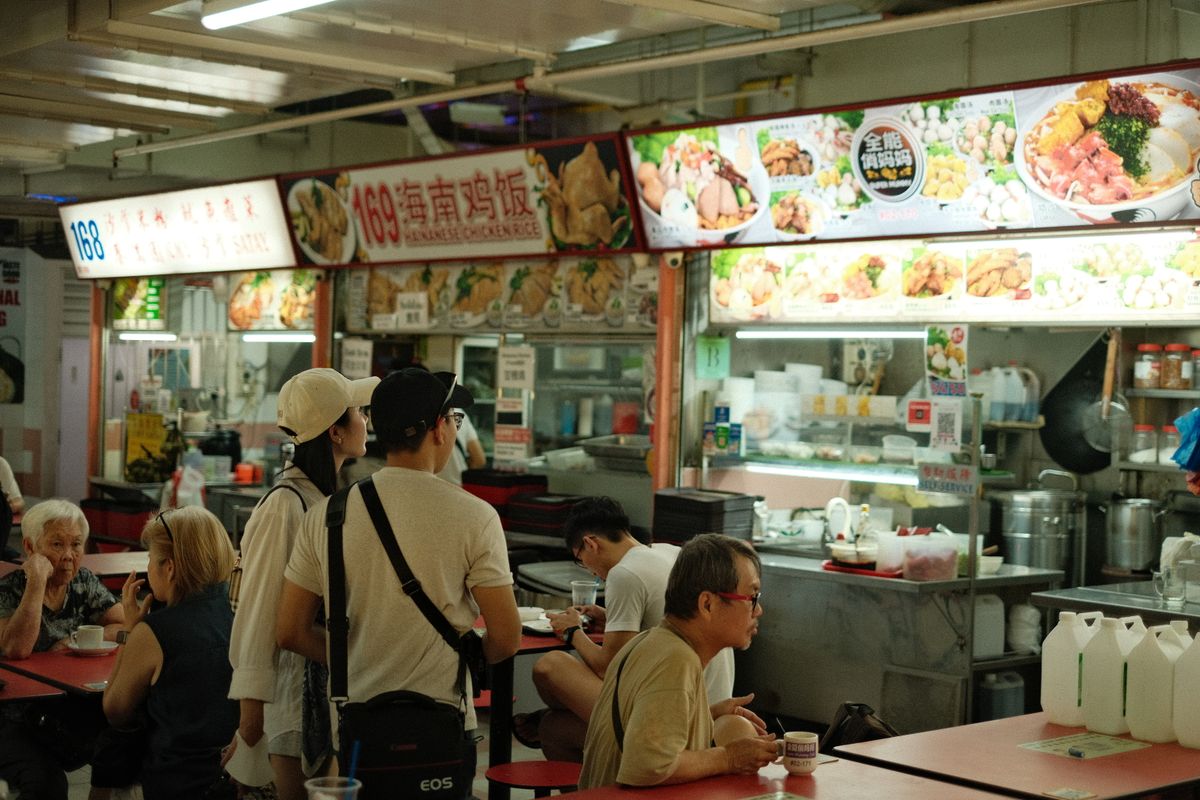
Think about that distinction. On any given evening you might share a lift with a venture capitalist, queue at a hawker centre beside a documentary filmmaker, and sit in a Pilates class next to someone who might, in another life, have become one of your closest friends. Nearly six million people on 730 square kilometres. Encounters everywhere. Connection, somehow, nowhere.
I hear the same sentence from SPARK members in Singapore more than any other: "I meet people all the time. I just never see them again."
That sentence is the whole problem, and also the clue to the solution. Meeting people is not your challenge. Meeting the right people — and building the repetition that turns a pleasant stranger into a real presence in your life — is. That part is not luck. It is a set of learnable mindsets, habits and small systems, and this essay lays them out honestly.
A note on what this piece is and isn't. For the specific venues, scenes and neighbourhoods where connection happens, I've written the best places to meet new people in Singapore; for deepening new acquaintances into genuine friendship over months, there's making friends in Singapore. This article is the layer underneath both: the how. How to think, how to behave, and how to build a repeatable practice of meeting people — wherever you happen to do it.
Why Meeting People in Singapore Feels Harder Than It Should
Let's begin with an honest diagnosis, because most advice on this subject skips it.
The first reason is structural. Singapore is a city of extraordinary professional intensity: demanding careers, dense calendars, and a default answer to "are you free?" that is a screenshot of a diary three weeks deep. When time is scarce, unstructured social time is the first thing sacrificed — it has no deadline, no stakeholder, no consequence for cancellation. Except the slow, compounding consequence of a thinner life.
The second reason is social architecture. Many Singaporeans move through adulthood inside circles formed at school, national service and university — warm, loyal, and largely closed. Newcomers, meanwhile, arrive into a city where a meaningful share of the people they befriend will leave within a few years. Locals can feel there's no room for new people; expats can feel there's no point investing in them. Both instincts are understandable. Both are wrong, and both are self-fulfilling.
The third reason is the one nobody likes to admit: we have outsourced our social lives to screens, and the screens are not holding up their end of the bargain. Apps promise connection and deliver contact — an endless stream of profiles, likes and half-hearted chats that rarely survive contact with a calendar. I've written elsewhere about why the match is easy but the meeting is hard; the short version is that digital introductions are frictionless precisely because they are weightless, and weightless things drift apart.
The stakes are not trivial. Julianne Holt-Lunstad's meta-analyses on social connection have shown that the quality of our relationships is one of the strongest predictors of long-term health we know of — comparable to risk factors we actually organise our lives around, like smoking and inactivity. We schedule dental check-ups and gym sessions. Almost nobody schedules connection. In a city as optimised as Singapore, that omission shows.
So the honest starting point is this: if your social life feels stalled, it is almost certainly not because something is wrong with you. It's because you're running on defaults — and the defaults of a busy, transient, efficiency-minded city quietly produce isolation. The rest of this essay is about replacing them with intention.
One mindset shift before we get practical, because it underwrites everything else. Psychologists studying first conversations have documented what they call the liking gap: after meeting someone new, we consistently underestimate how much the other person liked us. The awkwardness you replay on the way home is largely invisible to the person you met, who is busy replaying their own. Almost everyone in this city is more open to new connection than they appear — a remarkable number of the composed-looking people at the run club or the networking night would say yes to a coffee if anyone actually asked. Act on that assumption and you will be right far more often than you expect.
Choose Communities Over Events
Here is the single most important strategic decision you will make, and most people get it backwards.
The default approach is event-hopping: a networking night this week, a wine tasting the next, a beach club gathering after that. Each delivers a burst of introductions, a stack of Instagram follows, and — if you're honest — almost nothing that survives the following fortnight. Then the cycle repeats, each time from zero.
The problem is arithmetic. Jeffrey Hall's 2018 research at the University of Kansas put rough numbers on something we all intuit: friendship is a function of accumulated hours — roughly fifty hours of shared time to move from acquaintance to casual friend, ninety to become a real friend, over two hundred for close friendship. A one-off event gives you perhaps ninety minutes with any one person. You are trying to fill a bathtub with a teaspoon, and emptying it between attempts.
Communities change the arithmetic. A recurring group — a running club that meets every Tuesday, a founder circle that gathers monthly, a volunteering team, a ceramics course, a climbing gym crew — delivers the same faces, week after week, with no need to engineer each encounter from scratch. The hours accumulate on their own. You stop performing introductions and start simply being around people, which is where friendship actually forms.
So the practical move is this: choose one or two recurring communities and commit to them for a minimum of eight weeks. Not one week, deciding it was "fine but not really my crowd", and moving on — eight weeks, long enough for familiarity to do its quiet work. Pick them by activity you'd enjoy even if no friendships came of it, because that sincerity is what makes you relaxed enough to be likeable.
Singapore is unusually rich in these structures if you look past the event-industrial complex: enormous and genuinely welcoming running and cycling scenes, sport leagues, dragon boating, choirs, board-game groups, faith communities, professional guilds. Even the city's famously transactional networking scene contains real communities if you choose carefully; I've mapped the ones worth your evenings in our guide to the best networking events in Singapore.
Events still have a place. They are excellent tributaries — places to discover the people and communities you'll later commit to. Just stop mistaking the tributary for the river.
Shared Experiences Create Better Conversations
Now to the skill layer — because once you're in the room, what you do there matters.
Here is a small, liberating truth: the best conversationalists in Singapore are rarely the wittiest people. They are the people who arrange to be doing something while they talk.
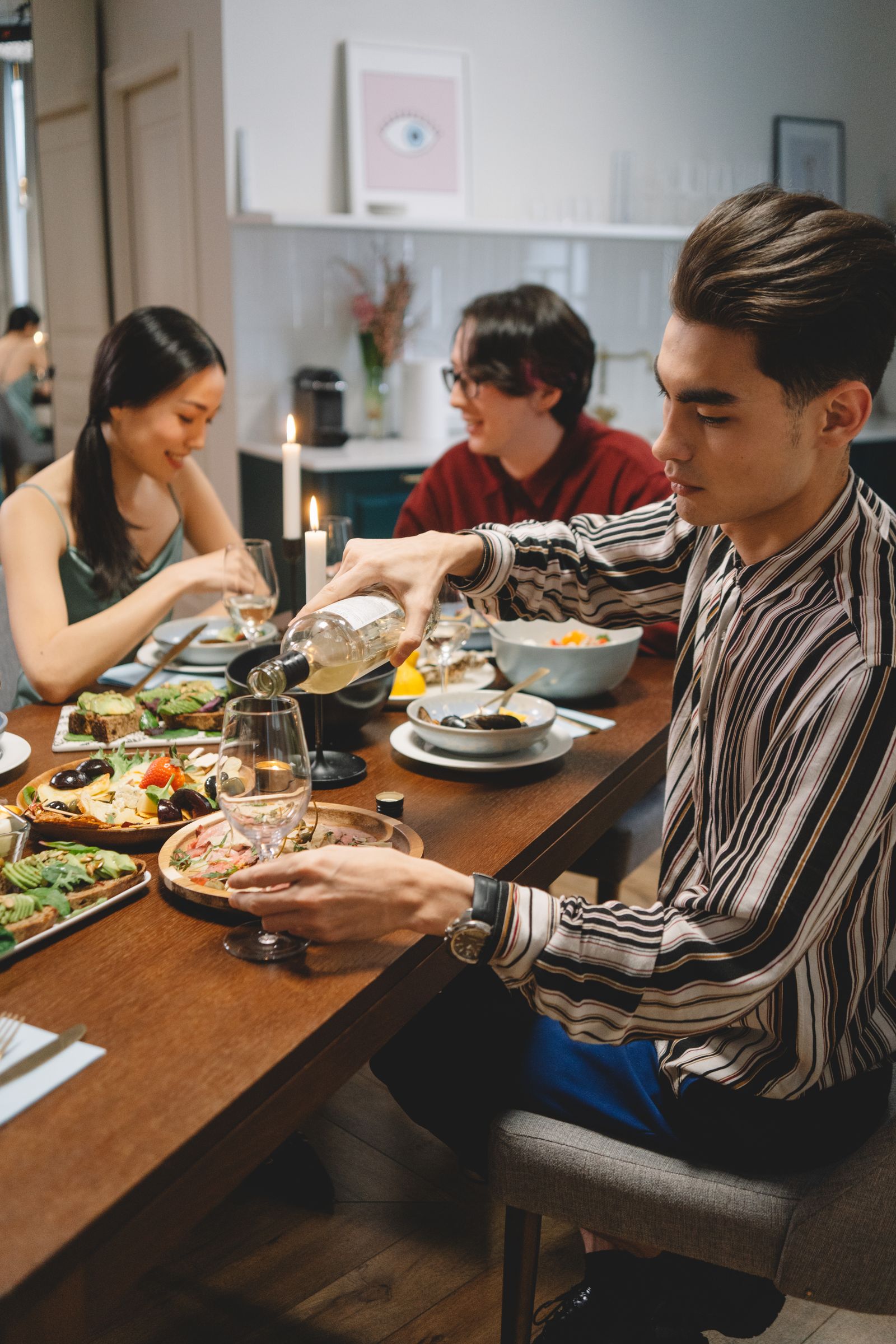
There's a reason. Face-to-face conversation with a stranger — drinks in hand, ninety seconds to prove you're interesting — is one of the most cognitively demanding social formats there is. Every silence is exposed; every question feels like an interview. Side-by-side activity dissolves all of that. Cooking laksa at a workshop, scrambling up the trail at MacRitchie, wandering a gallery, shouting over live music at a jazz bar — the activity supplies the rhythm, the material and the merciful pauses. Conversation stops being a performance and becomes a by-product.
Shared experience does something else, too: it manufactures memory. A person you talked to at a party is a name you'll forget. A person you got rained on with during a hike is a story. Relationships are built out of stories, and you can only accumulate stories by doing things. This is why every SPARK experience is built around an activity rather than a venue — we learnt early that "drinks" produces contacts, whilst "doing something slightly novel together" produces friendships.
A few conversational habits worth deliberately practising, because they compound:
Ask questions that only this person could answer. "What do you do?" produces a job title. "What's keeping you in Singapore?" or "what did you almost do instead?" produces a human being. Specific curiosity is the cheapest charisma there is.
Remember one detail and use it. The single most connection-building sentence in the English language is some version of "how did the marathon go?" — proof that you listened last time. Frighteningly few people do this. If you struggle to remember, write it down afterwards. That isn't cynical; it's care, organised.
And give people something true about yourself before you expect it back. Vulnerability calibrated to the moment — an honest "I've been here a year and I'm still working out my people" — gives the other person permission to drop their own performance. Someone has to go first. Let it be you.
Become a Regular
If communities are the strategy and shared experience is the skill, being a regular is the habit that quietly does more work than either.
Psychology has a name for the underlying mechanism: the mere-exposure effect. We grow to like people, places and things simply through repeated encounter. Its cousin, the propinquity effect, is one of the oldest findings in social psychology — we disproportionately befriend the people we bump into most often. Nobody wants to believe friendship is this mechanical, but the evidence is stubborn: proximity plus repetition, more than compatibility scores or shared star signs, is what produces bonds.
You can put this to work with almost embarrassing ease. Choose one café and go at the same time each Saturday, rather than sampling a new one weekly. Book the same Tuesday-evening class, not whichever slot fits that week. Within a month you'll be recognised; within two, greeted; within three, you'll be in conversations you never had to start. The barista, the instructor and the other regulars become what sociologists call weak ties — and weak ties are the doorway through which almost every new strong tie eventually walks.
Singapore rewards regularity more than most cities, precisely because so much of it is transient. Where people are perpetually arriving and leaving, the person who reliably shows up becomes a fixed point — and fixed points attract. Some of the most socially rich people I know here are not the most extroverted; they are simply the most consistent. Familiarity is how strangers earn trust, and trust is the soil friendship grows in. You cannot rush it with charm. You can only show up, again, until your presence itself becomes the argument.
Build a Small System for Second Meetings
Here is where nearly everyone fails, and where a tiny amount of system beats any amount of charisma.
The mortality rate of new connections is astonishing. You meet someone genuinely great, you both say "we should do this again", you both mean it — and then Singapore happens. Work travel, a product launch, a quarter closes, and by the time either of you resurfaces the moment has cooled into awkwardness. Multiply that by every promising person you've met this year and you'll see the real leak in your social life. It was never the meeting. It was always the follow-up.
So build a system. Mine is almost insultingly simple, and I commend it to you exactly as I practise it.
First, the forty-eight-hour rule. If you meet someone you'd like to see again, send a message within two days, whilst the memory is still warm. Not "great to meet you!" — that's a full stop pretending to be a comma. Send a specific invitation: "You mentioned you've never done the Southern Ridges walk — I'm going Saturday morning, come." Specificity signals sincerity. Vague enthusiasm signals nothing at all.
Second, keep a list. A note on your phone with the names of new people you want to see again, and one detail about each. Once a week — Sunday evenings, ten minutes, coffee in hand — glance at it and send one or two invitations. This sounds clinical until you consider the alternative: memory and mood, precisely the method that has been failing you.
Third, become someone who hosts. Nothing elaborate — a table of six at a hawker centre, a hike with a group chat, drinks at your place with the instruction "bring someone I don't know". Hosting flips the entire dynamic: instead of hoping to be included, you become the point of inclusion. Robin Dunbar's work on friendship layers describes how we each maintain concentric circles of connection — roughly five intimate ties, fifteen close ones, fifty friends — and people move inward through those layers only through repeated, escalating shared time. Hosting is how you personally control that escalation rather than leaving it to chance.
None of this is manipulation. It is simply refusing to let entropy make your social decisions for you. The warmest, most naturally connected people you know almost all do some version of this — they've just never had to name it.

Say Yes More Often (and Learn to Ask)
The final habit is the simplest, and it does the most compounding work: for one season of your life, make yes your default.
The invitation to join colleagues for supper. The neighbour's gathering you'd normally dodge. The friend-of-a-friend's birthday where you'll know exactly one person. Our instinct is to weigh each invitation on its merits — will this specific evening be worth the effort? — and by that measure, tired on a Thursday, the sofa wins every time. But that's the wrong accounting. You are not evaluating an evening; you are investing in surface area. Every yes exposes you to rooms, people and possibilities no algorithm could have predicted, and the returns arrive months later, from directions you never saw coming. Almost every significant relationship in my life traces back to a yes that looked entirely skippable at the time.
The mirror-image skill matters just as much: learn to extend invitations, not merely accept them. This is where the liking gap earns its keep a second time — we wildly overestimate the sting of asking. In reality, an invitation is a compliment. "I'm trying the new place on Amoy Street on Thursday — join me?" costs ten seconds of exposure and tells someone they were noticed and chosen. The worst realistic outcome is a warm decline; the best is a friendship. An absurdly good trade — and yet whole cities full of lonely people sit on either side of it, each waiting for the other to go first.
Say yes. Ask first. Do both badly at the beginning if you must. The reps are the point.
Why We Built SPARK
Everything above works. It is also, I'll freely admit, work — and it comes with two stubborn frictions that no amount of personal effort fully solves: knowing which rooms are worth walking into, and knowing that the people inside them are real, verified and there for the same reasons you are.
That is the gap SPARK exists to close. We're not a dating app — I've told the full story in why we built SPARK — we're building something we call social discovery: a verified community of interesting people, connected through curated real-world experiences across friendships, dating, professional life and mentorship. Every member is verified, because trust is the precondition for everything in this essay, and safety is not a feature you bolt on afterwards. Every experience is designed around the principles above — recurring formats, shared activity, small groups, structured so the follow-up happens naturally rather than dying in a group chat.
And it's working in exactly the way this essay would predict. Our members have now completed 892 real-world meetings — not matches, not chats, actual humans at actual tables — supported by more than 3,000 partner venues across Bangkok and Singapore. The technology's whole job is to get you into the room and then get out of your way.
But whether you ever download anything of ours or not, the method in this essay is yours. It requires no app. It requires a decision.
Looking to meet interesting people in real life? Download SPARK or join our verified community.
FAQs
How long does it realistically take to build a social circle in Singapore? Expect meaningful traction in about three months, not three weeks. Jeffrey Hall's research suggests casual friendship takes around fifty hours of shared time, so two recurring commitments a week, held for a season, is the honest minimum. The people who struggle are almost always sprinting — attending everything for a month, then giving up.
I'm an introvert. Does this advice still apply? Arguably it applies better. Every habit here — joining recurring communities, becoming a regular, activity-based socialising, systematic follow-up — replaces high-pressure performance with low-pressure repetition, which is precisely where introverts excel. You don't need to work a room; you need to keep showing up to one.
Is it harder for expats than locals to meet people here? The obstacles differ, but the method doesn't. Expats face transience; locals face saturated circles from school and national service. Both are solved the same way — recurring communities, consistent presence and deliberate follow-up — and mixed communities where the two overlap tend to be the richest rooms in the city.
Founder's Note
Every meaningful relationship in your life began the same way: someone decided to show up, and then kept deciding.
Nothing in this essay is clever. It's a mindset — people are more open to you than they look; a strategy — communities over events; a skill — do things together, ask real questions; and a system — follow up before the warmth fades. What makes it rare is not difficulty. It's that almost nobody does it on purpose.
We built SPARK on a simple conviction: technology should make that first decision easier — the room, the people, the reason — and then quietly step aside whilst real life takes over. The rest has always belonged to you.
Show up. Then keep showing up.
— Sunny Khurana, Founder & CEO, SPARK
Keep Reading
More from the Journal


Looking to meet interesting people in real life?
SPARK is a members’ community for dating, friendship and professional connection — built around curated real-world experiences in Bangkok, Singapore and, from September, New Zealand.
Or read us first — new essays on real-world connection, monthly.