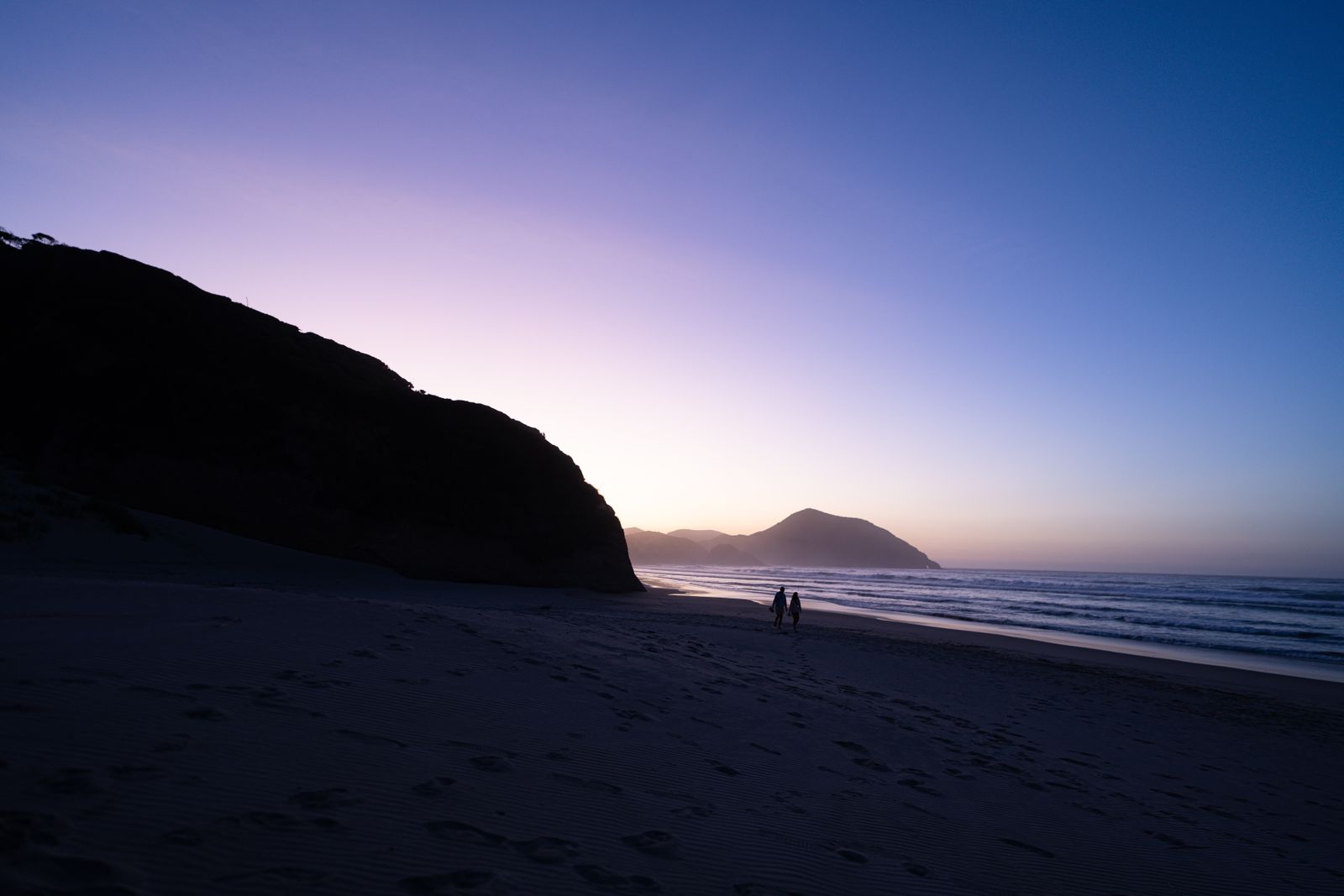
There is a particular moment that almost everyone who moves to Auckland experiences, usually somewhere between month three and month six. You have a job you like, a flat with a sliver of a view if you lean out of the window, a favourite coffee order, and a phone full of pleasant acquaintances. And then one Sunday afternoon the sun is out over the Hauraki Gulf, the whole city seems to be at the beach or on the water, and you realise you have absolutely no one to call.
Auckland is consistently ranked among the most liveable cities in the world, and it deserves the reputation. It is also, for many newcomers, one of the harder places to convert friendliness into friendship. Those two things sound contradictory. They are not. Understanding why is the key to everything else in this piece.
I have spent the past few years building SPARK in Bangkok and Singapore, watching thousands of people wrestle with the same problem in very different cities. Now we are bringing what we have learned to New Zealand, with Auckland first. So this is partly a practical guide, partly a founder's field notes, and partly a love letter to a city that rewards the people who learn how it actually works.
Why Auckland Feels Different: The Warmth-Versus-Availability Paradox
Here is the thing nobody tells you before you arrive. Aucklanders are genuinely warm. The person at the dairy will chat to you. The stranger at the bus stop will comment on the weather with real feeling, because in Auckland the weather is a legitimate topic of conversation four times a day. Colleagues will say "we should have you round for a barbecue" and mean it sincerely in the moment.
And then the barbecue never happens.
This is what I call the warmth-versus-availability paradox, and Auckland has one of the most pronounced cases of it I have encountered anywhere. The friendliness is real. The availability is not. Most Aucklanders built their core social circles decades ago, through school, university, sport and neighbourhood, and those circles are still intact. Their weekends are already spoken for: the bach up north, the kids' rugby, the sister-in-law's birthday, the standing Friday with the same five friends they have had since they were seventeen. Nobody is excluding you. There is simply very little slack in the system.
Newcomers often misread this as coldness, and it is worth being precise about why that reading is wrong. In a city like Bangkok, the expat social scene is built around churn — people arrive and leave constantly, so everyone is perpetually recruiting new friends. Auckland is the opposite. It is a city of long tenure and deep roots, which is precisely what makes it such a good place to live and such a slow place to land.
The research helps explain the scale of the challenge. Jeffrey Hall's 2018 work at the University of Kansas found that it takes roughly fifty hours of shared time to move someone from acquaintance to casual friend, around ninety hours to become a real friend, and more than two hundred hours to reach close friendship. Two hundred hours. In a city where most people's calendars are already full, those hours do not appear by accident. They have to be engineered.
That is not a depressing conclusion. It is a liberating one, because it means the problem is structural, not personal. You are not failing at friendship. You are simply trying to enter a market with very low liquidity, and there are proven ways to do it.
Become a Familiar Face
The single most effective strategy in Auckland is also the least glamorous: repetition.
Psychologists call it the mere-exposure effect — we grow to like people and places simply through repeated encounters. Its close cousin, the propinquity effect, says that the strongest predictor of who becomes your friend is not shared values or compatible personalities but sheer physical proximity, again and again. Friendship, in other words, is less like lightning and more like erosion. It works on whatever it touches most often.
So choose your places deliberately, and then return to them relentlessly. The same café on Ponsonby Road or in Kingsland every Saturday morning, not a different one each week. The same gym class, at the same time, with the same instructor. The same parkrun — Cornwall Park and Western Springs both have wonderfully loyal regulars — every Saturday at eight. The same five-a-side league, the same climbing gym, the same Tuesday night touch rugby.
The first three visits, nothing happens. On the fourth, the barista remembers your order. By the eighth, the person who always runs at your pace makes a joke about the hill. By the twelfth, someone asks if you are coming to the post-run coffee. This is how Auckland opens. Not through grand gestures, but through the slow accumulation of small recognitions, until one day you are no longer a newcomer at the table — you are simply part of the furniture, in the best possible sense.
I wrote elsewhere that getting a match is easy but actually meeting is hard, and the same logic applies offline. A single introduction, however promising, rarely survives without a structure that brings you back into the same room. Routine is that structure. Pick three anchors — one for the body, one for the mind, one for pure pleasure — and hold them for six months before you judge the results.
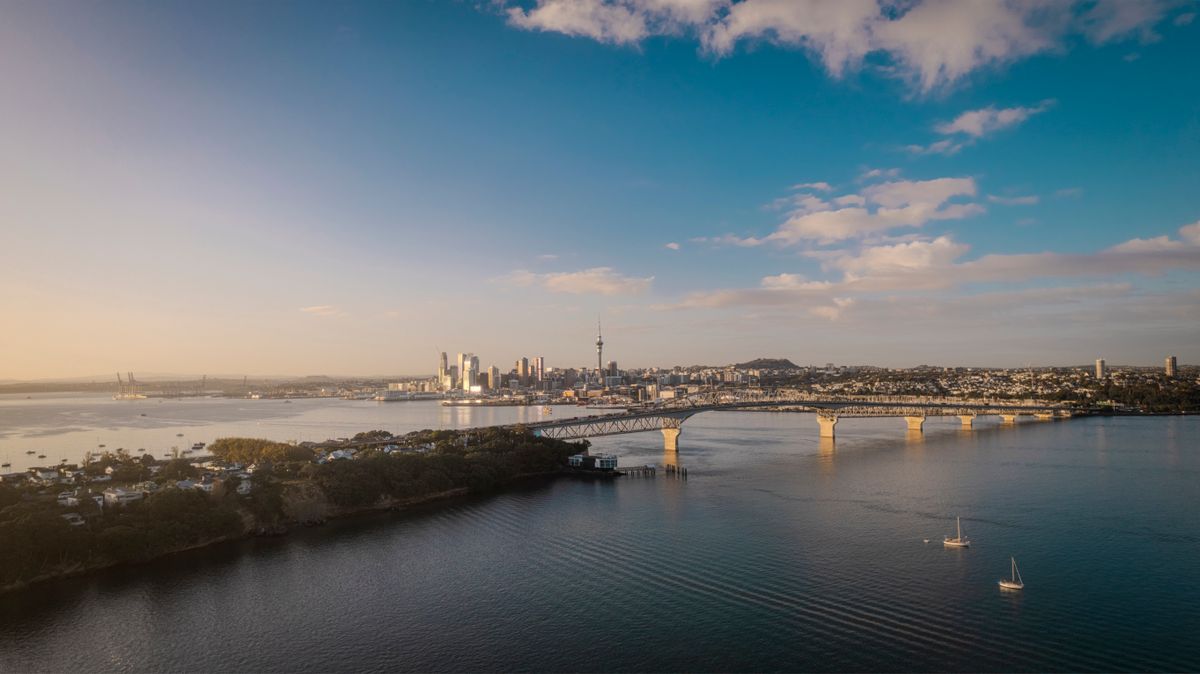
A City Built Around Activities: Outdoor Scenes as Social Infrastructure
Every city has social infrastructure — the shared spaces and institutions where strangers become familiar. In London it is the pub. In Singapore it is the food court and the networking circuit. In Auckland, the social infrastructure is largely outdoors, and this is the city's quiet superpower.
Think about what Auckland actually offers. It is the City of Sails, with more boats per capita than almost anywhere on earth, and crews are perpetually short-handed — turn up at a yacht club on a Wednesday rum race evening and say you are willing to learn, and there is a decent chance you will be on the water within a fortnight. The west coast has surf lifesaving clubs at Piha and Muriwai that are as much community as sport. There are tramping clubs that have been walking the Waitākere and Hunua ranges together for generations, cycling bunches that roll out from the waterfront every weekend morning, sea-swimming groups at Takapuna and Mission Bay who plunge in year-round and then stand around steaming and talking for longer than they swam.
None of these exist to help you make friends. That is exactly why they work.
The magic of activity-based connection is that it removes the performance from socialising. When you meet someone at a networking drinks, you are both auditioning. When you meet someone hauling on the same rope in a stiff breeze, or comparing blisters at the end of a tramp, the relationship starts from cooperation rather than presentation. You learn who someone actually is — patient or hasty, generous or brittle — long before you learn what they do for a living. Sociologists who study social capital, Robert Putnam foremost among them, have long argued that it is precisely these kinds of associations, built around doing rather than talking, that knit communities together.
There is also a practical point about weather and seasons. Auckland's climate is mild enough that the outdoor scenes run all year, which matters enormously for Hall's hours. A summer-only social strategy gives you four good months; a sailing club, a running group and a winter netball league give you fifty-two weeks of accumulating time with the same faces.
And if the outdoors is genuinely not your thing, the same principle holds indoors. Auckland has thriving founder and tech communities around Wynyard Quarter and GridAKL, book clubs, board-game nights on Karangahape Road, community theatre, volunteer conservation days planting natives on Motutapu. The activity is the pretext. The repetition is the mechanism. Choose the pretext you can love for its own sake, because you will need to keep showing up on the weeks when no friendship seems to be forming at all.
Nature Creates Better Conversations
There is a reason so many of the best conversations of your life have happened in cars, on walks, or standing at a sink drying dishes: side-by-side beats face-to-face.
Direct eye contact is surprisingly demanding. It raises the stakes of every pause and turns silence into something that must be managed. Walking together dissolves all of that. The eyes have somewhere to rest, the silences are filled by the track or the tide, and conversation falls into the rhythm of footsteps. Movement makes disclosure feel safe.
Auckland might be the best-equipped city in the world for this kind of talking. The ferry to Waiheke Island gives you forty minutes of enforced, gorgeous idleness each way — I have watched more genuine conversation happen on that deck than at most dinner parties. The summit track up Rangitoto turns a first meeting into a small shared achievement with a volcanic crater at the top. The Coast to Coast Walkway carries you and a companion across the entire isthmus, from the Waitematā to the Manukau, in an afternoon. Cornwall Park, the Domain, the coastal path from Mission Bay to St Heliers, the black-sand drama of the west coast beaches — every one of them is a conversation waiting for participants.
My practical advice is simple: make walking your default second meeting. The first time you meet someone — at a run club, through work, at one of our experiences — the setting is usually chosen for you. But when you follow up, resist the reflex to suggest drinks. Suggest Rangitoto. Suggest the Waiheke ferry and a loop of Oneroa. A walk is easier to say yes to than a dinner, cheaper than a restaurant, and it produces roughly triple the honesty per hour.
This matters more than it might seem, because the follow-up is where most would-be friendships in Auckland quietly die. Julianne Holt-Lunstad's meta-analyses have shown that strong social connection is one of the most powerful predictors of long-term health we know of — comparable in effect to the most established lifestyle risk factors. The stakes of getting past the "we should catch up" stage are not trivial. They are, quite literally, vital.

Don't Limit Yourself to One Circle
A pattern I see constantly among newcomers, in Auckland as much as anywhere: they find one social foothold — usually the workplace — and stop there.
It is understandable. Work provides effortless propinquity, and colleagues in Auckland are generally lovely. But a social life built entirely on one workplace is fragile. Change jobs and it resets. It is also narrow in a way that quietly impoverishes you, because colleagues are, by definition, people filtered to be like you.
Auckland deserves better than that from you, because Auckland is one of the most diverse cities on the planet. Around four in ten Aucklanders were born overseas. Within twenty minutes you can move between Pasifika communities in the south, the Indian and Chinese food streets of Sandringham and Dominion Road, Māori cultural life that predates the city itself, and a startup scene drawing people from everywhere. Robin Dunbar's research on friendship suggests our social worlds are layered — a handful of intimates, a circle of good friends, a wider ring of meaningful acquaintances — and each layer does different work in a life. A rich outer ring of people unlike you feeds everything inward.
So run a deliberately mixed portfolio. One circle from work. One from sport or the outdoors. One from something creative or intellectual. One that is intergenerational — volunteering is unmatched for this, and Auckland's conservation, surf lifesaving and community organisations run on volunteers. The people who thrive here long-term are almost never the ones with the single tight clique. They are the ones woven into four or five loose communities, any one of which can carry them through a season when the others go quiet.
If you are earlier in the journey — still deciding whether New Zealand is home — much of this applies nationally, and we have written a fuller companion piece on making friends after moving to New Zealand.
Why We Built SPARK — and Why Auckland Is Next
Everything above you can do without us. I mean that. The strategies in this piece predate every app ever built, and they will outlast them all.
But there is one step where technology genuinely helps, and it is the first one: finding the right people to start the fifty hours with. That is the problem SPARK exists to solve. We are not a dating app. We are building something we call social discovery — a verified community of real people, matched around shared interests, brought together at curated real-world experiences: a sail, a supper club, a hike, a founders' breakfast. Friendship, dating, professional connection, mentorship — the format is the same, because the underlying human need is the same. The app's job is to get you off the app. I have told the longer story of why we built SPARK elsewhere, but the short version is that we measure success not in matches or messages but in meetings: so far, more than 1,397 of our members have met in person across 892 completed real-world meetings, and every one of those numbers means more to me than any engagement metric ever could.
Auckland is the city we chose to begin our New Zealand chapter, and after reading this far you can probably guess why. A city whose social life runs on shared activity, whose geography practically begs people to do things together, and whose one structural flaw is that newcomers struggle to find the door — that is exactly the city SPARK was built for. Our New Zealand operations begin on 1 August 2026, and the app launches in New Zealand on 1 September 2026, Auckland first. Every member is verified, because trust is the precondition for strangers meeting in the real world — you can read exactly how we approach safety and verification here — and membership is curated so that the community stays the kind of room you actually want to walk into.
If you are in Auckland and any of this resonates, we would love you to be part of the founding community.
Looking to meet interesting people in real life? Download SPARK or join our verified community.
FAQs
Is Auckland a hard place to make friends? Harder than its friendliness suggests, but not for the reasons people fear. Aucklanders are warm, yet most have long-established circles and full calendars, so casual encounters rarely convert on their own. The newcomers who succeed are the ones who commit to repeated, regular activities — clubs, sport, volunteering — rather than one-off social events.
What are the best activities for meeting people in Auckland? Anything outdoors with a weekly rhythm: sailing crews at the yacht clubs, parkrun at Cornwall Park or Western Springs, tramping clubs, sea-swimming groups, surf lifesaving at Piha or Muriwai, and cycling bunches. Indoors, the founder community around Wynyard Quarter, book clubs and volunteer conservation days all work on the same principle. Choose one or two and attend consistently for months, not weeks.
How long does it realistically take to build a social circle in Auckland? Research by Jeffrey Hall suggests roughly fifty hours of shared time to make a casual friend and two hundred or more for a close one, so expect six to twelve months of consistent showing up. Most people feel the shift somewhere around month four, when familiar faces start inviting them to things unprompted. The timeline shortens dramatically if you join existing communities rather than waiting for one-to-one friendships to form.
Founder's Note
Every meaningful relationship in your life began the same way: someone made time for someone else. Not attention — time. An afternoon, a walk, a seat saved at a table. Auckland taught me, on my very first visit, that a city can be full of goodwill and still leave people lonely, simply because nobody's diary has room for a stranger. Our job — mine, SPARK's, and honestly yours too — is to make that room. Technology should do the smallest possible thing: the introduction. The ferry ride, the summit track, the two hundred hours — those belong to you. I'll see you in Auckland.
— Sunny Khurana, Founder & CEO, SPARK
Keep Reading
More from the Journal


Looking to meet interesting people in real life?
SPARK is a members’ community for dating, friendship and professional connection — built around curated real-world experiences in Bangkok, Singapore and, from September, New Zealand.
Or read us first — new essays on real-world connection, monthly.