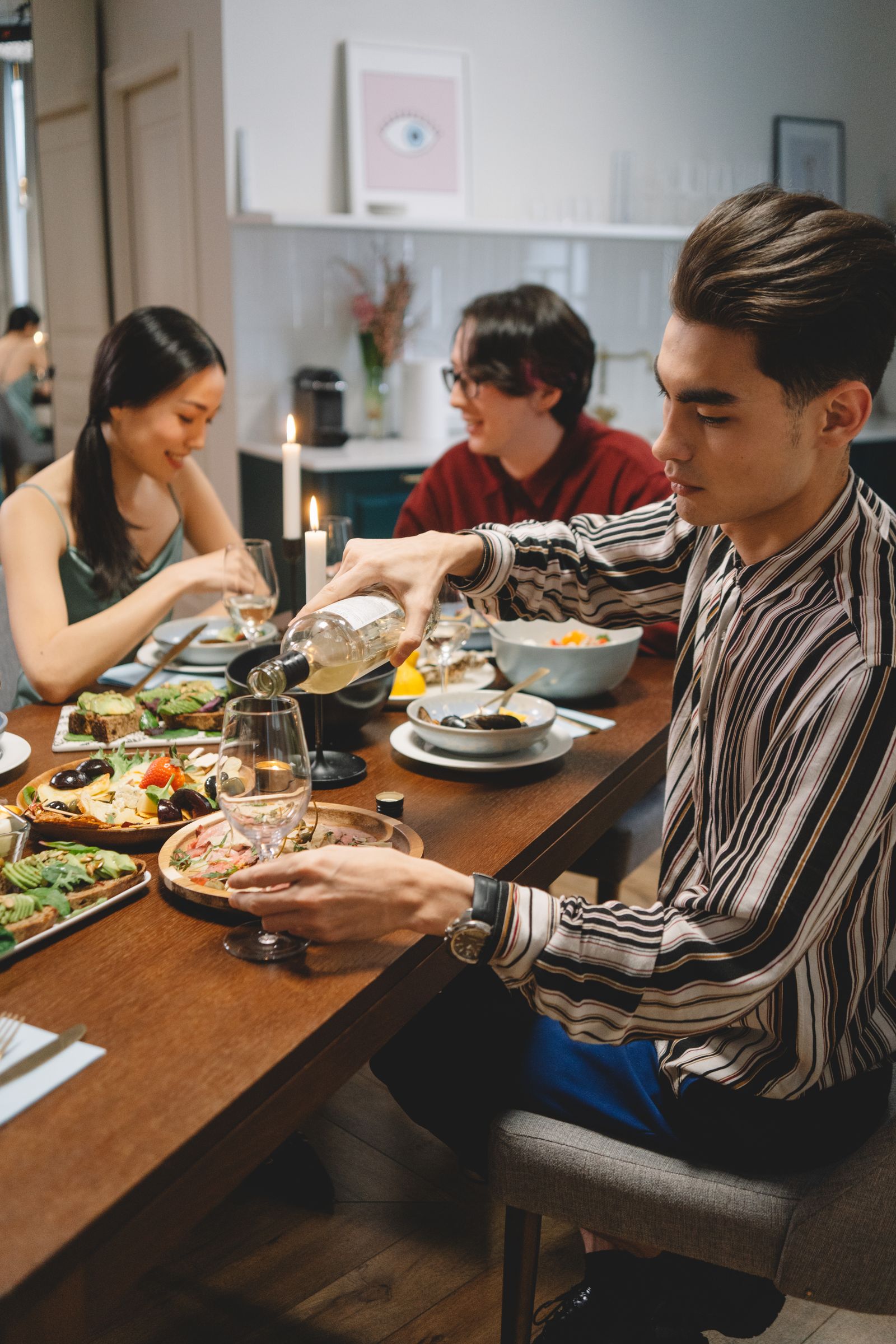
We have stopped calling SPARK a dating app. Not quietly, not as a rebrand slipped out over a weekend, but deliberately and in public, because the words a company uses for itself shape what people do inside it, and "dating app" had become a description of everything we were trying to help our members escape.
Let me say the surprising part first: this was not a strategic retreat from a difficult market. It was a concession to what our members had been telling us all along, with their behaviour rather than their feedback forms. People came to SPARK saying they wanted to date. Then we watched what they actually did. They lingered at the dinners. They came back for the third and fourth evening with no particular agenda. They formed friendships, found business partners and built the casual acquaintanceships that make a city feel like home. The pattern repeated too often to be noise. What people wanted was something slower and more organic: connection that grows without the pressure of a defined outcome, the way it used to grow before software got involved. So we changed the company to match the behaviour, and this essay is the explanation we owe everyone who has ever asked what SPARK actually is.
What the Word Was Costing Us
To understand why we walked away from the category, you have to take seriously what the word "dating" does to an evening.
A date is an interview. However charming the setting, both people arrive knowing the meeting exists to answer a question (is this my person?), and that question sits at the table like a third guest. Every silence becomes evidence. Every mild incompatibility becomes a verdict. The evening is not allowed to simply be an evening; it is an audition for a role neither person has properly defined, and both leave exhausted in a way that has nothing to do with how pleasant the company was. I have written before about why first dates go quiet, and the short answer is this ambient pressure: interviews are draining even when you pass them.
The dating app, as a category, industrialised that interview. It taught a generation to evaluate strangers before meeting them, to treat every conversation as a screening call, and to regard any encounter that did not lead somewhere romantic as a failure: wasted time, swipe again. The frame is binary by design: success or failure, spark or no spark, next. And the deepest cost of the binary is what it discards. Under the dating frame, an evening that produces a new friend is a failed date. A dinner that produces a future co-founder is a failed date. The frame writes off, as failure, most of what a good social life is actually made of.
We built our early product inside that frame because it was the frame that existed. But the longer we ran real-world experiences, the more obvious the mismatch became. The evenings our members rated highest, returned to most often, and told their friends about were the ones with the least outcome pressure attached. The moment a meeting was allowed to be organic (a table of interesting people with no script), it got better by every measure we track. We were a dating company whose product worked best whenever it stopped being about dating. At some point, honesty requires you to update the label.
The Case for Organic
There is a respectable body of research behind what we observed, and it is worth laying out, because the shift from dating to social networking is an alignment with how human connection has always actually worked.
Start with how relationships form. Jeffrey Hall's research on friendship suggests that moving from stranger to casual friend takes on the order of fifty hours of shared time, and to close friendship far longer. Nothing meaningful between two people is decided in a single evaluated evening; it accrues, slowly, across repeated unhurried contact. The propinquity and mere-exposure effects describe the mechanism: we come to like and trust the people we encounter repeatedly and incidentally. This is why the strongest bonds in most people's lives formed at school, in first jobs, in neighbourhoods, places where meeting again was the default and nobody was keeping score. It is also why those bonds can only really begin in person. Repetition through a screen produces familiarity with an avatar; repetition across a table produces a relationship.
Now consider what a life actually needs. Robin Dunbar's work on the layered structure of human relationships describes a full social world: a handful of intimates, a circle of close friends, an outer ring of meaningful acquaintances, with every layer doing real work. And Julianne Holt-Lunstad's meta-analyses established that the strength of our social connections, across all of those layers, is one of the most powerful predictors of health and longevity we know of, comparable to the risk factors we actually organise our lives around. Her findings are about the whole fabric of connection, not any single romantic thread within it.
Put those together and the strangeness of the dating app becomes visible. It is a machine pointed at one slot in one layer of a person's social world, which treats every other layer as a rounding error, and which applies maximum evaluative pressure to relationships that research says form best under minimum pressure. It optimises for the one connection it can monetise, using exactly the conditions under which connection least likes to grow. The wonder is not that people are abandoning the category. The wonder is that it took this long.
A Social Relationship OS
So here is what SPARK is now, stated as plainly as I can manage: a social activity app and community in Auckland and Bangkok, for friendship and shared activities. We call it a social relationship OS, one system underneath the relationships a person builds. Friendship, shared interests, professional connection, the fellow newcomer who becomes your Sunday hiking partner: to us these are not separate products. They are the same fundamental act (two real people, meeting in real life, given the conditions to meet again) pointed at different parts of a full life.
The phrase "operating system" is doing precise work there. An OS does not tell you what to run; it provides the trusted layer on which everything runs. Ours is built from the things we have always cared about: real profiles (anonymous accounts are not accepted), so every person you meet is real and accountable; hosted evenings in venues worth returning to, where a host makes the introductions; and an insistence on meeting in public, in the real world, because, as I argued in why experiences beat swiping, the completed meeting is the only unit of social value that actually compounds.
And intent still has its place, so let me be exact about it. SPARK is for friendship and shared activities, without the expectation of a date. You find people who share your interests, agree a plan to meet somewhere public, or come along to one of our hosted evenings, and the evening does not collapse if lightning declines to strike. You meet people as a person with a full life, not as a candidate.
How we pay for it is also deliberate. The app is free. Membership is optional (NZ$20 a month in New Zealand, THB 700 a month in Thailand) and includes our current hosted evenings, because hosting and real venues cost money, and we would rather members pay for a trustworthy room than sell members' attention to advertisers or design the product to keep people swiping. You can read about membership here. A social relationship OS has to be paid for by the people it serves, or it ends up serving someone else.
How to Use a Platform That Isn't Keeping Score
For members, current and future, the practical shift is mostly a permission slip, and it fits in a paragraph. Arrive without a script: come to an experience because the table looks interesting, not because it might contain your person; the evening now counts whatever it produces. Build the portfolio, not the pipeline: let SPARK feed every layer of your social world, from the dinner that becomes a friendship to the friendship that opens a professional door and the wide acquaintance from which something closer can emerge on its own schedule. Go back: return to the same experiences and the same faces, because repetition is where friendship actually happens. And put what you are into on your profile, then relax about it, so that you can stop rehearsing at the table.
The Founder's Perspective
I want to be honest about how this decision felt from the inside, because from the outside category changes look like slide decks, and this one did not begin as a slide deck.
It began as a discomfort. We had built SPARK because matching is easy and meeting is hard, and on that core promise the product was working. But the stories coming back to us refused to stay inside the dating frame we had drawn around them. The unmistakable pattern was that the platform's real product was social texture, and that our members had understood this before we did. The clearest signal of all was how people arrived: members bringing the people they actually know into the rooms they actually enjoy. Nobody recommends an interview process to their friends. They recommend a scene, a club, a standing table: a thing they belong to. That is what was growing, and it seemed to us that a serious company should look at what is growing and have the nerve to become it.
So we did. It cost us the comfort of a category everyone understands and an easy answer at parties. What it bought is alignment between what we say, what we build, and what actually happens at our tables. We are a social networking company now, in the oldest sense of that term: not feeds and followers, but the deliberate weaving of real people into each other's real lives. The dating industry taught the world that connection is a search problem. We think it is a growing problem (something you cultivate rather than something you filter for), and everything we build from here follows from that single disagreement.
The shift also settles where we are headed. Everything on our roadmap, every experience format we design, will be judged by one question: does it help people build friendships and share activities in real life, without pressure? That is the whole strategy. It fits in a sentence, which is how I know it is right.
The Long Way Round
There is an old irony in all of this that I have come to enjoy. By refusing to be a dating app, we have almost certainly become a better way to meet people than one, because we have stopped asking each evening to justify itself, and unpressured evenings are where the real thing has always lived. But that is a by-product, not the point. The point is the full fabric: the friends, the collaborators, the familiar faces, the city that finally feels like yours. Dating apps promised to solve loneliness one match at a time and, by their own numbers, mostly did not. We are taking the long way round, organic rather than engineered and always in real life, because the long way round is the only route that has ever actually arrived.
Looking to meet interesting people in real life? Get the SPARK app or come to one of our evenings.
FAQs
Can I still find a romantic relationship on SPARK? SPARK is not a dating app. It is built for friendship and shared activities, without the expectation of a date. You meet people who share your interests in relaxed, public, real-world settings, where the evening has value whatever it produces.
What is a "social relationship OS"? It is our term for one trusted system underneath the relationships people build: friendship, shared interests, professional connection, community. Like any operating system, SPARK does not dictate what you build on it; it provides the reliable layer: real profiles (anonymous accounts are not accepted), public meeting places and hosted evenings.
Why did SPARK move away from dating? Because our members' behaviour showed us that outcome pressure is the enemy of real connection. The evenings that worked best were the organic ones, with no script and no audition, and the friendships that formed there were stronger for it. We changed the category to match what was actually happening at our tables.
Founder's Note
Companies usually change categories to chase a bigger market. We changed ours to tell the truth. SPARK stopped behaving like a dating app long before we stopped calling it one (our members saw to that), and this essay simply retires a label they had already outgrown. What we are building now is bigger and, I think, kinder: a place where friendships are allowed to grow at their own pace, in person, among real people.
Sunny Khurana, Founder & CEO, SPARK
Keep Reading
More from the Journal


Looking to meet interesting people in real life?
SPARK helps you find people to do the things you enjoy. Get the free app, or come along to one of our hosted evenings in Auckland and Bangkok.
Or read us first — new essays on real-world connection, monthly.