The Most Underrated Hour in Dating
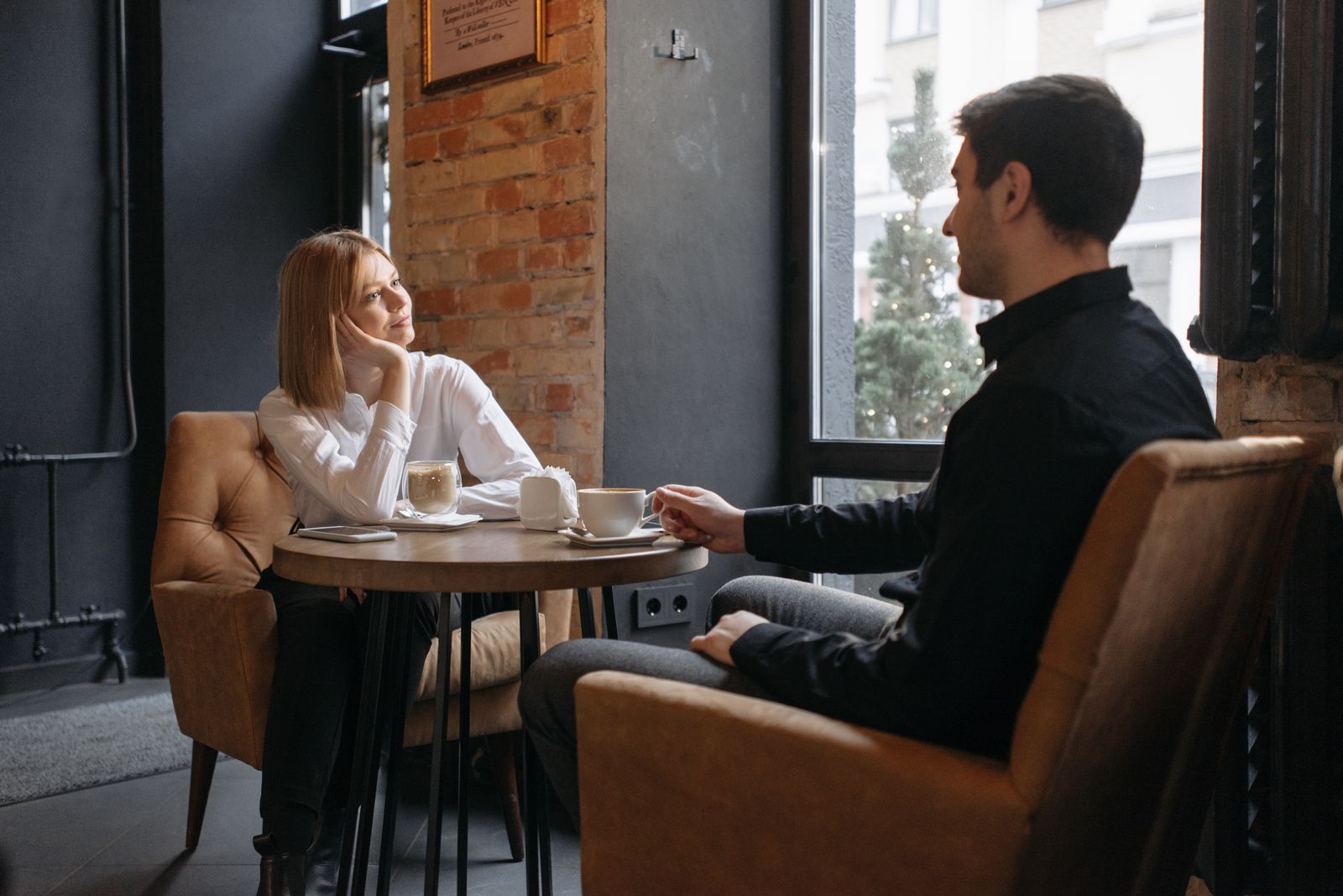
There is a particular feeling you get about forty minutes into a good coffee date, when one of you glances at the time and genuinely cannot believe it. The flat whites are long finished. Neither of you has checked a phone. Somewhere between the first awkward hello and the second round nobody planned to order, an hour folded itself into what felt like ten minutes.
I think about that feeling a great deal, because it is the closest thing dating has to a reliable signal. Not butterflies, which are mostly nerves. Not chemistry, which is mostly a word people use afterwards. Time distortion. When an hour with a stranger evaporates, something real is happening.
And here is what I have learned, both from my own life and from watching hundreds of first meetings happen through SPARK: that feeling is not luck. It is craft. The people who consistently have coffee dates that fly are not more charming than everyone else. They choose better places, ask better questions, carry a lighter mindset, and — crucially — know exactly when the coffee date has done its job and needs to become something else.
This piece is the whole craft, laid out. What coffee is brilliant at, what it is quietly terrible at, how to pick the café, what to actually ask, a few lines worth borrowing, and the upgrade move that turns a promising hour into a story two people tell for years.
Why Coffee Is the Perfect First Meeting — and Where It Fails
Let me make the case for coffee properly, because it gets dismissed as the “safe” option by people who have not thought hard about what a first meeting is for.
A first meeting has one job: to find out whether you enjoy each other’s company in real life. Not whether this person is your future spouse. Not whether the date was impressive. Just — is the person in front of me the person I liked on the screen, and do I want more of them?
For that specific job, coffee is close to a perfect instrument. It is cheap, which removes the quiet transactional pressure that hangs over expensive dinners. It is short by default and long by choice — the natural end point of an empty cup means either of you can leave kindly after forty-five minutes, or stay for three hours because you want to, and both outcomes are graceful. It is daylight and public, which matters enormously for comfort and safety, particularly for women. And it is sober, so whatever connection you find is actually yours, not the Sauvignon Blanc’s.
There is even respectable science on its side. The mere-exposure effect — one of the most replicated findings in social psychology — tells us that we warm to people through repeated, low-pressure contact. Coffee is the lowest-pressure format there is, and it makes the second meeting feel natural rather than negotiated. “Same place next week?” is the easiest follow-up in dating.
But honesty requires the other half of the argument, and this is the part most coffee date guides skip.
Coffee is a conversation format with nothing else in it. Two chairs, a small table, direct eye contact, and no shared activity to absorb the silences. Run badly, it collapses into the interview: where are you from, what do you do, how long have you been here — both of you performing answers you have given fifty times, neither of you present. I have written a whole essay on why first dates go quiet, and the short version is that the format, not the people, is usually the culprit. A table for two is the most demanding social geometry ever devised, and coffee puts you straight into it.
So the honest framing is this: coffee is the ideal audition, and a limited stage. Use it to find out whether you like someone. Do not expect it to build the memory that makes two people a story. That comes later, and I will get to it.
Choosing the Café: The Decision That Does Half the Work
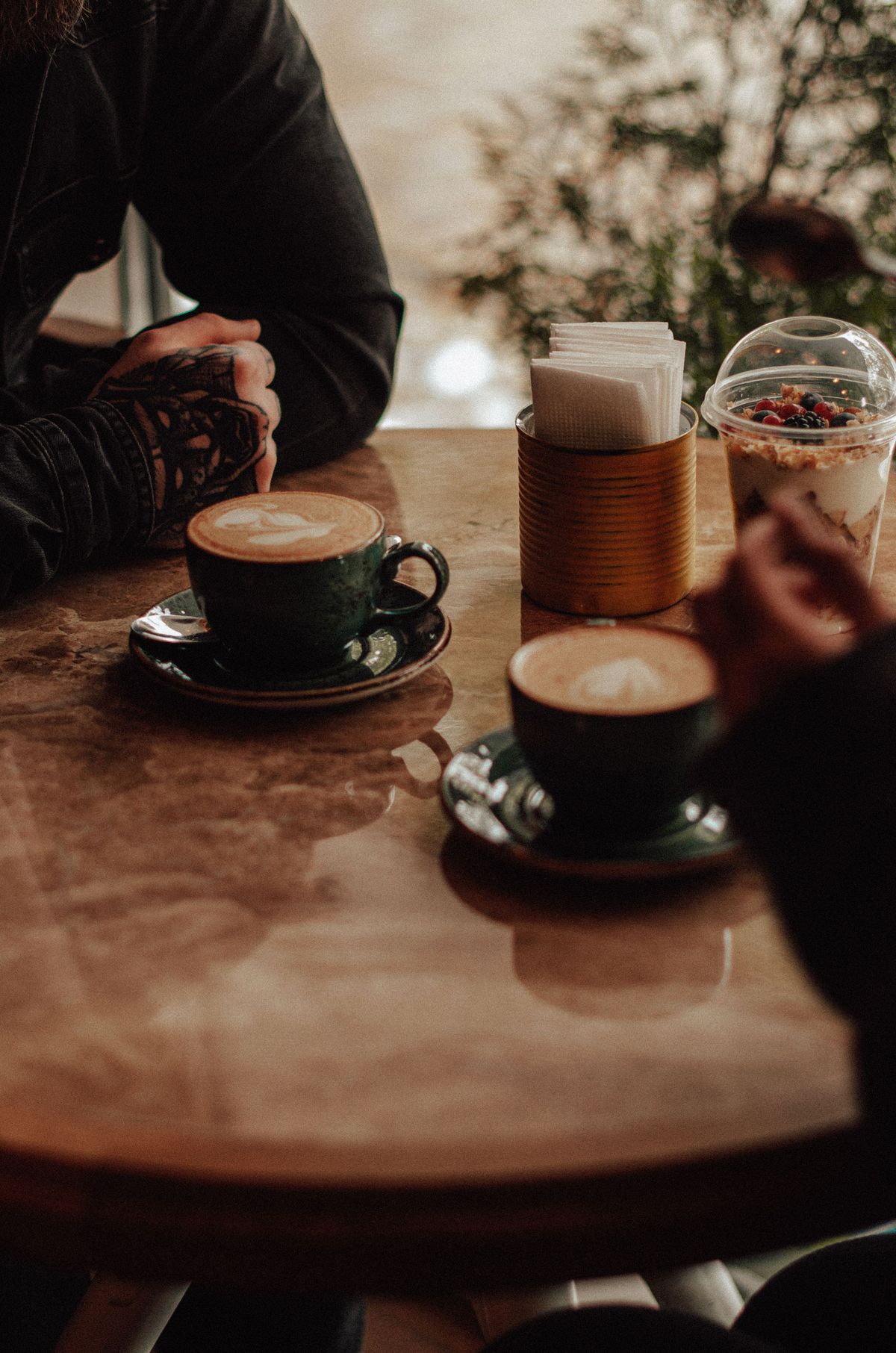
Most people spend their pre-date energy worrying about what to say. Spend it on where to sit instead. The venue does half the conversational work before either of you opens your mouth, and choosing it well is the first genuinely good coffee date idea in this article.
Four things matter far more than the quality of the espresso.
Noise, at the right level. A silent café is a pressure cooker; every word lands like a courtroom statement. A roaring one makes you repeat yourself until the charm dies. You want a gentle hum — enough life around you that pauses feel natural, quiet enough that you never lean in from necessity alone. When in doubt, err slightly towards lively. Silence is the harder enemy.
Something to look at. The best coffee date venues have texture: a window onto a busy street, a courtyard, shelves of odd books, a barista doing theatrical things with a filter. Every one of those is a free conversational prompt, a place for four eyes to rest together for a moment. A blank-walled minimalist box gives you nowhere to go but each other’s faces, which is romantic in films and relentless in life.
Seating you can angle. Here is a small trick with outsized returns: avoid sitting in strict opposition if you can. A corner table where you sit at ninety degrees, a bench, a counter facing the window — anything that lets you be partly side-by-side. Face-to-face is the geometry of negotiation; side-by-side is the geometry of companionship. The difference in how conversation flows is astonishing.
An exit into the world. Choose a café in a neighbourhood worth walking through, because the single best move in the entire coffee date playbook is the walking extension. When the cups are empty and things are going well, “shall we wander?” transforms the date. Movement dissolves the last of the interview energy; the streetscape hands you endless prompts; and the date acquires a plot instead of just a transcript. In Bangkok I would point you to Charoenkrung or Ari, and I have written at length about this in my guide to the best date ideas in Bangkok; in Singapore, Tiong Bahru’s shophouse streets do the same job beautifully, as covered in the best date ideas in Singapore. Whatever your city, the principle holds: pick the café for the neighbourhood, not the neighbourhood for the café.
One more word on timing. Weekend mornings say ease; weekday late afternoons carry a pleasant edge of playing hooky from real life; the 3pm slot leaves a clean runway into “are you hungry?” if the hour flies. There is no wrong answer, but there is a right one for the tone you want.
Coffee Date Questions That Actually Open People Up
Now, the conversation itself — because “be yourself and it will flow” is advice written by people who have never stared into a pause at minute twelve.
The problem with most coffee date questions is that they request information when they should invite feeling. “What do you do?” asks for a job title. Nobody has ever fallen for a job title. The questions that make an hour vanish share one design principle: they are easy to answer and impossible to answer boringly. They give the other person a small stage rather than a form to fill in.
This is not just intuition. Arthur Aron’s well-known research on closeness — the study behind the famous “36 questions” — showed that self-disclosure, gradually escalated and mutually exchanged, is the engine of connection between strangers. You do not need his laboratory protocol at a café table. You need its spirit: start light, trade honestly, deepen gently.
Here are the questions I would actually take to a coffee date — not to recite, but to have in your pocket for when a thread needs pulling:
- “What does a perfect ordinary Saturday look like for you?” (Reveals a life, not a CV.)
- “What are you looking forward to at the moment?” (Instantly points the conversation at joy.)
- “What’s something you’ve changed your mind about in the last few years?” (Curious people light up; incurious people reveal that too.)
- “If you suddenly had a free month and money wasn’t the issue, what would you do with it?” (Dreams, minus the pressure of “goals”.)
- “What’s the best meal you’ve ever had — and who were you with?” (The second half is the real question.)
- “What did you love doing as a kid that you’d secretly still love to do?” (Play is disarming, and disarming is the goal.)
- “Who’s the most interesting person you know, and what makes them interesting?” (People describe their own values when they describe their heroes.)
- “What’s something you’re rubbish at but do anyway, purely for the love of it?” (Invites cheerful vulnerability — the most attractive kind.)
- “What would your closest friend say is your best quality? And your most ridiculous one?” (Warmth and self-awareness in a single move.)
- “If we did this again, what would we do instead of coffee?” (My favourite closing question in all of dating — it tests interest, sparks imagination, and hands you the second date in one stroke.)
Notice what these have in common: none can be answered with a fact, all can be answered with a story, and every answer generates its own follow-up. That last property matters most, because the real skill is not asking — it is following. When she says her perfect Saturday involves a swimming pool at 7am, the date lives or dies on whether you ask about the swimming. Questions open doors; curiosity walks through them. I keep a much fuller armoury in conversation starters that actually work, but the ten above will carry an hour with room to spare.
And a note on balance: a great coffee date is a rally, not a serve. If you have asked four questions in a row, offer something of your own unprompted. Disclosure invites disclosure. Interviews are one-directional; conversations are traded.

A Few Lines Worth Stealing
People search, in surprising numbers, for coffee date quotes and captions — something charming to put under the photo, or a line to soften the ask. Most of what they find is greeting-card mush. So here are a handful of original ones, written fresh, that you are welcome to take without credit:
- “Let’s have coffee — worst case, it’s coffee.”
- “An hour that feels like ten minutes: that’s the whole test.”
- “Good coffee is an excuse. Good company is the point.”
- “First we’ll see if the conversation outlasts the cup. It usually knows before we do.”
- “Two flat whites, one table, no agenda. The best plans are barely plans.”
- “I ordered a second round. The hour disagreed with the clock.”
- “Some people you meet for coffee. Some people you meet, and the coffee goes cold.”
Use them lightly. The truth is that the best line about a coffee date is the one you will not need to write, because the date itself became the story. Which brings me to the most important section in this article.
The Upgrade: When Coffee Has Done Its Job
Here is the thing no coffee date guide will tell you, and the thing I believe more strongly than anything else in this piece.
Coffee finds the connection. It does not build the relationship. Those are different jobs, and the biggest mistake in early dating is asking one format to do both.
I see the failure pattern constantly: two people have a lovely first coffee. So they have a second coffee. Then a third. Each one pleasant, each one a little less alive than the last, until the whole thing dissolves — not because the people were wrong, but because they kept re-running the audition instead of starting the play. Conversation alone, in the same chairs, at the same kind of table, has a ceiling. You cannot talk your way into a shared history. You have to do your way into one.
The psychology here is well established. Aron’s self-expansion model — the same researcher, a different strand of his work — shows that people bond through novel, engaging activities done together; couples who do new things report markedly more closeness than couples who default to the pleasant and familiar. Memory works the same way: it keeps texture, plot and mild adventure, and quietly discards the third identical latte. A relationship, in the end, is a collection of stories two people wrote together. Coffee produces conversation. Experiences produce stories.
So treat the coffee date as a gateway, and have the upgrade ready. The moment the hour flies — the moment you get that time-distortion signal — your next move should not be “coffee again sometime?” It should be a third thing: a cooking class where you can both be cheerfully out of your depth, a gallery evening, a street-food crawl, a padel court where being slightly rubbish together is the whole point, a market wandered at golden hour. Something with a beginning, a middle, an end, and at least one moment neither of you could have scripted.
This conviction is, quite literally, why SPARK exists in the shape it does. We are not a dating app; we are building social discovery — verified people meeting in real life through curated shared experiences, whether they are looking for romance, friendship or something professional. Across the 892 completed real-world meetings our community has clocked up, the pattern is unmistakable: the connections that last are the ones that graduated from conversation to experience early. The coffee was the door. The experience was the room.
If you are short on ideas for that second date, the city guides above are full of them — and if you are short on people to have coffee with in the first place, that is precisely the problem we built SPARK to solve.
Looking to meet interesting people in real life? Download SPARK or join our verified community.
FAQs
How long should a coffee date last? Plan for an hour; let it run if it wants to. The beauty of coffee is the graceful exit — an empty cup is a natural ending, so forty-five good minutes is a success, not a failure. If the hour vanishes and neither of you moves, extend it with a walk rather than a third coffee.
What should I ask on a coffee date? Ask questions that invite stories rather than facts: a perfect ordinary Saturday, something they have changed their mind about, what they loved doing as a kid. Then follow the answers with genuine curiosity — the follow-up matters more than the opener. Avoid running through questions like a checklist; trade disclosures both ways.
Is coffee a good first date, or is it too boring? It is the best possible first meeting and a poor third date. Coffee is cheap, sober, safe and easy to exit, which makes it ideal for finding out whether you enjoy someone’s company. But repeated coffees plateau quickly — once the connection is clear, upgrade to a shared experience with some texture and plot to it.
Founder’s Note
The clock is the most honest judge in dating.
You can talk yourself into chemistry, and out of it. But you cannot fake the feeling of an hour disappearing — and you cannot manufacture it alone, either. It takes a good place, a real question, and two people willing to be curious rather than impressive.
So keep coffee in its rightful place: the beautiful, low-stakes beginning. And the moment the hour feels like ten minutes, do the brave thing. Close the laptop-sized distance of a café table and go build a story instead.
— Sunny Khurana, Founder & CEO, SPARK
Keep Reading
More from the Journal


Looking to meet interesting people in real life?
SPARK is a members’ community for dating, friendship and professional connection — built around curated real-world experiences in Bangkok, Singapore and, from September, New Zealand.
Or read us first — new essays on real-world connection, monthly.